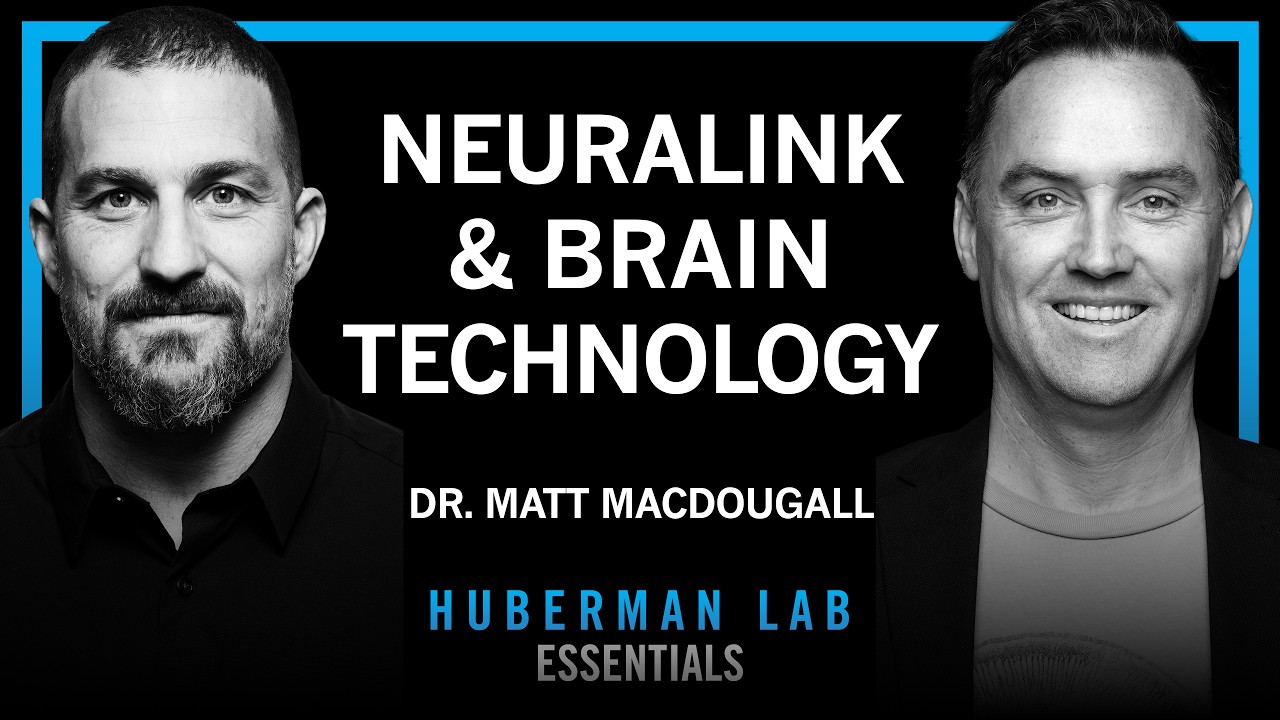
Essentials: Neuralink & Technologies to Enhance Human Brains | Dr. Matt MacDougall
Keywords
Summary
168 words
Critical Evaluation
Value of the Information & Strength of the Argument
The value of this information lies in its direct account from a neurosurgeon actively involved in brain-machine interface development. MacDougall provides concrete explanations of surgical procedures, electrode placement, and the adaptive learning between brain and software, offering a realistic perspective on capabilities and timelines. His arguments are logically structured and grounded in clinical experience, though they are presented without rigorous data or citations, making them more opinion-based than evidence-based. The discussion on animal welfare is thoughtfully presented, acknowledging ethical concerns while justifying the necessity for current research. Overall, the argumentation is persuasive for a general audience but lacks the depth of a scientific review.
Scientific Rigor, Source Quality, Title Accuracy
The video relies on the expertise of a practicing neurosurgeon, which lends credibility, but no specific scientific papers or external sources are cited during the episode. The description provides links to show notes and a disclaimer, but these are not detailed references. The title is accurate and directly mirrors the content. While the information is presented in a conversational and accessible manner, the lack of explicit citations reduces its scientific rigor. The adequacy between title and content is high, with no misleading elements.
202 words
Title / Content Match
The title accurately reflects the content, which focuses on Neuralink and technologies to enhance human brains, featuring Dr. Matt MacDougall.
Quality & Reliability
7/10
The discussion features a neurosurgeon with direct experience in the field, providing insights into brain-machine interfaces, surgical techniques, and animal research. However, potential bias exists due to his association with Neuralink, and the content is presented in a popularized format without peer-reviewed references.
Chapters
- Matt MacDougall
- Brain Function, Frontal Lobes & Impulse Control
- Brain Tumors, Laser Surgery & MRI
- Neuralink, Brain Implants & Paralysis
- Robotic Surgery & Electrode Placement
- Motor Cortex, Controlling Computers With the Brain
- Implant Safety & Brain Augmentation
- RFID Hand Implant & Everyday Uses
- Spinal Cord Stimulation, Reconnecting Brain & Body
- Brain-to-Brain Communication & AI
- Brain-Machine Interfaces, Learning & Adaptation
- Animal Research & Welfare
- Pigs & Monkeys, Device Safety & Function
- Future Applications, Mental Health & Human Cognition
- Acknowledgements
Cited Sources
- Huberman Lab episode page — Official show notes and resources for this episode.
- Huberman Lab disclaimer — Legal disclaimers for the podcast.
External References
Contribution & Novelties
This episode contributes a practitioner’s perspective on the current state and near-term goals of Neuralink, demystifying the technology and addressing common misconceptions. It clarifies that immediate applications are limited to aiding paralyzed individuals in controlling digital devices, not restoring limb function. The discussion on robotic surgery and electrode placement highlights the precision limits of human surgeons. It also brings attention to the adaptive learning process between the brain and software, and the ethical considerations of animal research.
Pour aller plus loin :
- Brain–computer interface — Provides a broad overview of BCIs, their history, and applications.
- Neuralink — Details the company’s development, device design, and clinical trials.
- Robotic surgery — Explores the general field of robot-assisted surgical techniques, relevant to the electrode insertion discussed.
123 words
Radar Profile
The radar profile shows high scores in quantity and quality of information, indicating a content-rich episode. The technical level is moderate, suitable for a general audience. Reliability is slightly lower due to the lack of external citations and potential bias from the guest's affiliation.