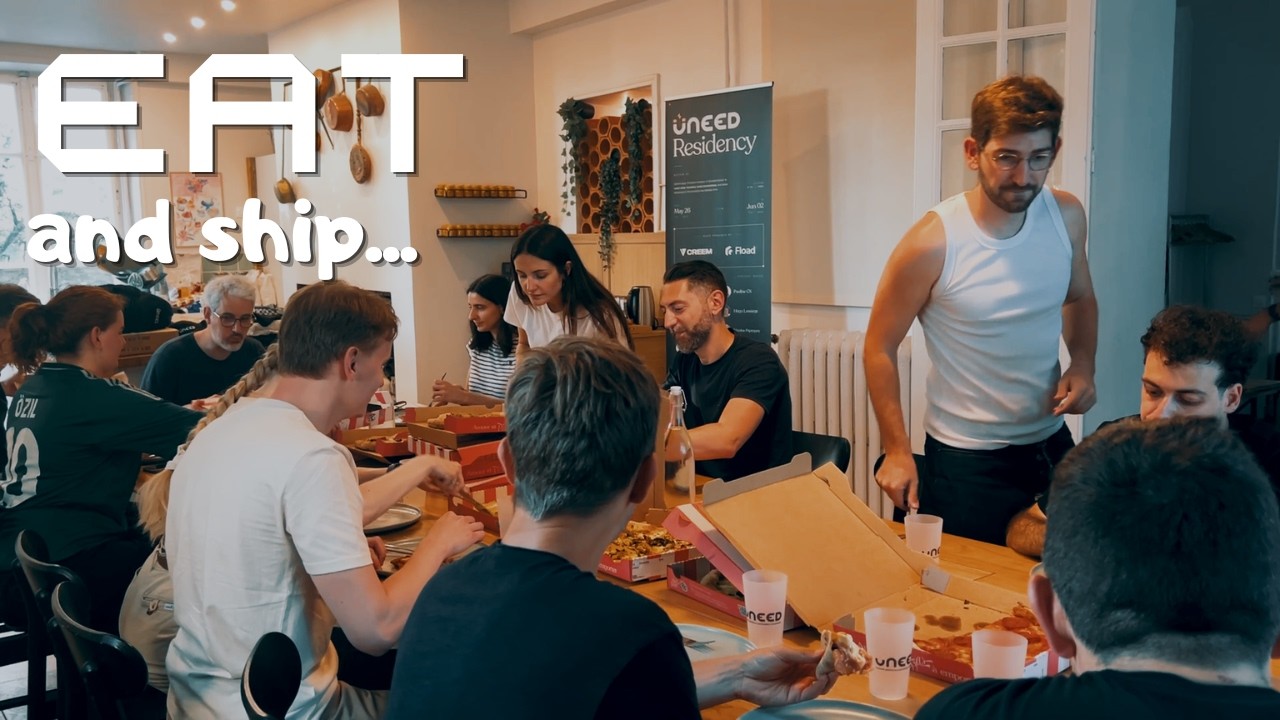
Et si c’était ça le futur du travail ?
What if this were the future of work?
Title history
- Et si c’était ça le futur du travail ? — observed on 20261110-0254 UTC (YouTube)
Keywords
Summary
182 words
Critical Evaluation
Value of the Information & Strength of the Argument
The video offers valuable insider views into the solopreneur lifestyle, with personal stories that illustrate both the appeal and the pitfalls. The argumentation is balanced, acknowledging the difficulties (isolation, delayed income, risk) while celebrating the sense of purpose and flexibility. However, the statistical claims (e.g., median income, share of unsuccessful ventures) are presented without precise sources, weakening the evidentiary basis. The reliance on anecdotal evidence from a self-selected group of relatively successful individuals limits the generalizability. Nonetheless, the video effectively counters online hype by presenting a more sober picture, which is a significant contribution.
Scientific Rigor, Source Quality, Title Accuracy
The video does not cite external studies or reports; its sources are primarily the participants’ experiences and the creator’s own network. The description links to personal tools, the organizer’s website, and social media profiles, but none provide substantive data. The title ‘What if this was the future of work?’ is somewhat misleading as the video portrays a niche lifestyle rather than a broad trend; however, it does raise thought-provoking questions about work models. The rigorousness is moderate: the creator explicitly warns against taking success stories at face value and shows the gap between averages and medians, demonstrating critical thinking. The lack of hard data is a notable weakness, but the honesty and explanatory nature of the video mitigate this.
228 words
Title / Content Match
The title suggests a speculative future, but the video depicts a current, realistic niche of independent workers. It captures the idea of an alternative work model but is somewhat misleading in its framing.
Quality & Reliability
6/10
The video presents personal testimonials and general statistics on online business income, but the statistics lack specific citations and the sample is self-selected. The content is honest and addresses common misconceptions, yet its reliability is moderate due to the absence of verifiable sources.
Chapters
Cited Sources
- YouNeed Residency — Organizer's page for the residency event, mentioned as the setting for the video.
- Bloggrify — Static blog generator developed by the creator, listed as a resource.
- Hakanai — Toolkit for bloggers, including web analytics and newsletter, developed by the creator.
- Writizzy — European blog platform alternative to Medium and Substack, developed by the creator.
- Eventually Coding Blog — Creator's blog, listed for contact and more content.
- Bluesky Profile — Creator's Bluesky account, social media presence.
- Mastodon Profile — Creator's Mastodon account, social media presence.
- Thomas (uneed organizer) on X — Twitter profile of Thomas, organizer of the residency, mentioned as a participant.
- Pauline Cx on X — Twitter profile of Pauline, participant in the residency.
- Max on X — Twitter profile of Max, participant in the residency.
- Luca on X — Twitter profile of Luca, participant in the residency.
- Nicolas Papegaey on X — Twitter profile of Nicolas, participant in the residency.
- Arno on X — Twitter profile of Arno, participant in the residency.
- Oleksandra on X — Twitter profile of Oleksandra, participant in the residency.
- Dmytro Bavikin on X — Twitter profile of Dmytro, participant in the residency.
Contribution & Novelties
The video provides an original, on-the-ground perspective of the indie hacker lifestyle, contrasting with the often-idealized portrayals on social media. It offers concrete data points (e.g., income disparities), personal timelines to profitability, and the psychological benefits of community, filling a gap for those considering this path. While the sample is small and self-selected, the honest discussion of failure rates and time frames is a valuable addendum to the common success-story narrative.
Pour aller plus loin :
- Indie hacker movement — Directly relevant; this community is the focus of the video.
- Digital nomad — Connects to the concept of location independence discussed by several participants.
- Coworking — Explores the social and collaborative aspects that participants seek in residencies and shared spaces.
120 words
Radar Profile
The radar profile shows a relatively high quantity of information (7/10) but lower quality (6/10) and technical depth (4/10), indicating a focus on anecdotal and experiential content rather than rigorous analysis. Overall reliability (6/10) reflects the moderate presence of verifiable data, making the video informative yet not fully robust for scientific reference.