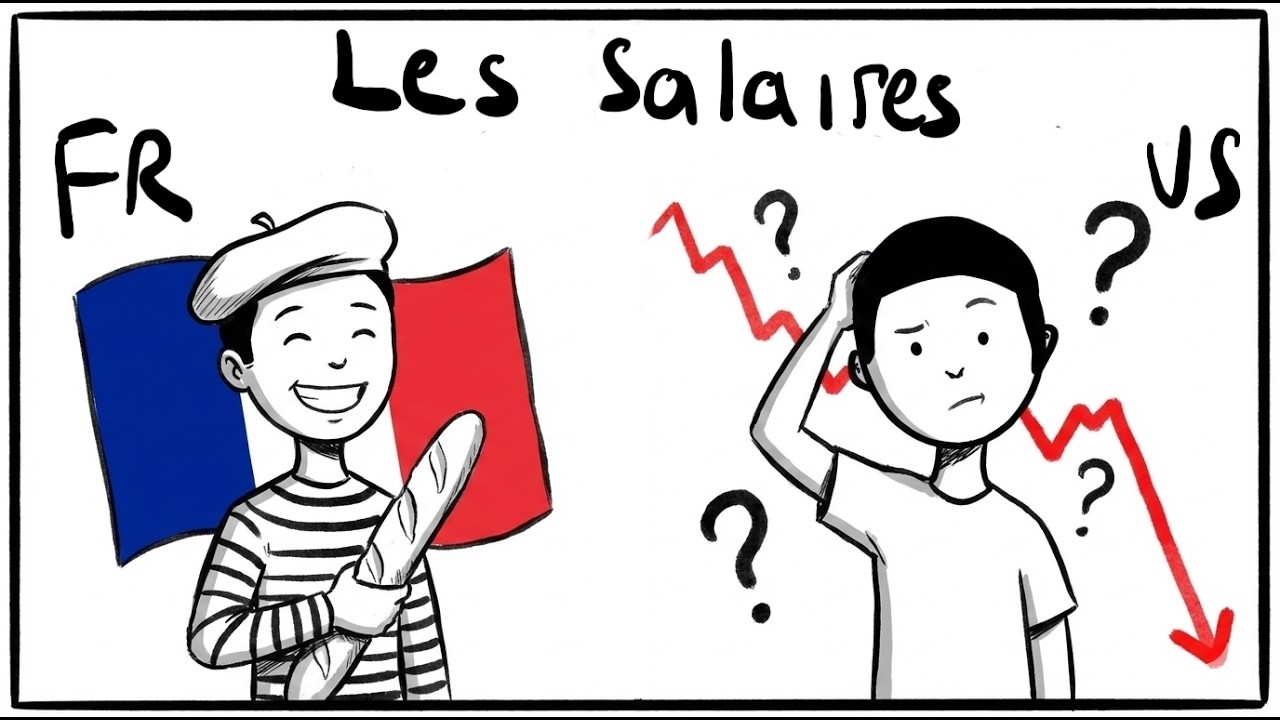
J'ai comparé les salaires tech France vs US. Vous allez être surpris.
I compared tech salaries in France vs. the US. You'll be surprised.
Title history
- J'ai comparé les salaires tech France vs US. Vous allez être surpris. — observed on 20261110-0326 UTC (YouTube)
Keywords
Summary
196 words
Critical Evaluation
Value of the Information & Strength of the Argument
The value of the information lies in its systematic approach to comparing salaries, going beyond the gross figures to include employer costs, working days, cost of living, and public services. The argumentation is coherent and uses a step-by-step method that builds a nuanced picture. However, the analysis is based on aggregated data and personal experiences rather than a rigorous empirical study. Some claims, such as the health care disparities, are supported by examples but lack precise data. The creator acknowledges the limitations and encourages viewers to seek more information. The overall reasoning is solid and provides a fresh perspective, though it could benefit from more explicit citations and a clearer methodology.
Scientific Rigor, Source Quality, Title Accuracy
The scientific rigor is moderate: the creator uses multiple sources but does not always cite them within the video, relying on links in the description. The blog article referenced is periodically updated and includes sources, which adds credibility. The health care videos are external references provided for context. The title is somewhat sensationalist but the content does deliver a detailed comparison, so it is adequately aligned. The video’s arguments are generally well-supported, but there are minor inaccuracies (e.g., a correction about health care quotas). The title/content adequacy is good, and the conclusions are drawn with appropriate caveats.
223 words
Title / Content Match
The title is catchy and the video does compare salaries, revealing some surprising conclusions, so it matches the content.
Quality & Reliability
7/10
The video uses multiple data sources and presents a balanced comparison, but some claims are oversimplified and lack precise citations.
Chapters
Cited Sources
- Comparaison salaires France-US — Source principale de l'analyse, article de blog contenant les données et références.
- American healthcare system explainer — Référence sur le système de santé américain.
- US health insurance — Vidéo sur le système de santé américain.
Concurring Sources
- Levels.fyi — Source de données salariales pour les big tech, utilisée dans la vidéo.
External References
Contribution & Novelties
The video adds value by providing a practical comparison that goes beyond simple salary numbers, incorporating cost of living, public services, and lifestyle factors. It challenges common assumptions and encourages a more nuanced view. The creator’s personal experience and data aggregation offer a fresh perspective.
Pour aller plus loin :
- Big Mac Index — Useful for comparing purchasing power between countries.
- H-1B visa — Relevant for understanding US work visa costs and policies mentioned in the video.
- Numbeo Cost of Living — A practical tool for comparing living expenses across cities.
91 words
Radar Profile
The radar profile shows a balanced video with high information quantity and moderate technical depth. The reliability score is decent but not outstanding, reflecting the use of multiple sources with occasional lack of precision. Overall, the video is strong on data presentation but could improve in sourcing details.
💬 Sur les 30 commentaires analysés, la tendance est globalement positive, avec de nombreux éloges pour la clarté et la pertinence, mais aussi quelques critiques méthodologiques sur les comparaisons et les omissions. Le climat est équilibré, les débats se concentrant sur les défauts de l'analyse plutôt que sur des attaques personnelles.