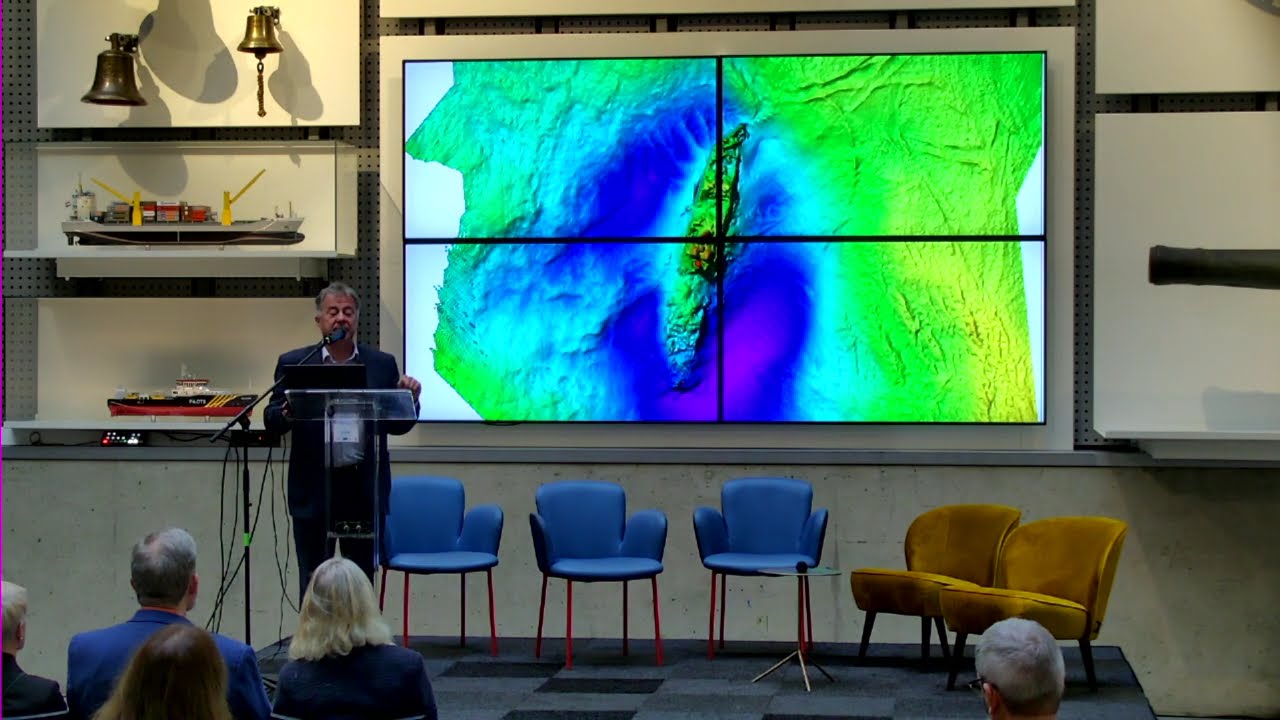
ICMM Congress 2024: Maritime Museums and Underwater Archaeology
Title history
- ICMM Congress 2024: Maritime Museums and Underwater Archaeology (PSI archive)
- ICMM Congress 2024: Maritime Museums and Underwater Archaeology — observed on 20261030-1154 UTC (YouTube)
Keywords
Summary
166 words
Critical Evaluation
Value of the Information & Strength of the Argument
The session provides substantial value by demonstrating how maritime archaeological collections can be repurposed to address broader contemporary issues like climate change and ocean literacy. Each speaker presents a well-structured argument with concrete examples. Garry Momber argues convincingly that shipwrecks are not just historical objects but also function as scientific datum points for understanding seabed changes, using specific instances like the Bouldnor Cliff site. Catherine Green’s case study effectively illustrates the complexities of integrating private collections into public museums, covering legal, ethical, and practical considerations. The argumentation is strengthened by the inclusion of video footage and artifact examples. The presentations are persuasive in advocating for a paradigm shift in maritime heritage management, from object-centric to ecosystem-centric approaches.
Scientific Rigor, Source Quality, Title Accuracy
The scientific rigor is generally high, as the speakers are experienced professionals referencing their own institutional projects and recognised legislation such as the Abandoned Shipwreck Act (1987). However, the presentations are based on experiential knowledge rather than peer-reviewed publications, and specific data sources are not explicitly cited beyond institutional experience. The title of the session accurately reflects its content, covering maritime museums and underwater archaeology comprehensively. The discussion is grounded in real-world case studies, lending credibility. There are no external links provided in the description, so the sources are primarily the speakers’ professional testimonies.
226 words
Title / Content Match
Title accurately describes the session content on maritime museums and underwater archaeology.
Quality & Reliability
8/10
Talks from recognised professionals in maritime archaeology and museum practice, presenting case studies and institutional experiences with clear methodologies.
Key Moments
Markers derived by PSI from the transcript: the creator did not define chapters.
- Welcome and session introduction by Fred Hocker.
- Garry Momber begins his talk on maritime archaeology and ocean literacy.
- Catherine Green presents on bridging museums and shipwreck artifact salvagers in Wisconsin.
- McAllie Givens and Rachel Recuero present on museum archaeology at The Mariners' Museum.
- Group discussion begins.
Cited Sources
- Maritime Archaeology Trust — Mentioned by Garry Momber as his organisation.
- Wisconsin Maritime Museum — Catherine Green's case study institution.
- The Mariners' Museum & Park — Presented by McAllie Givens and Rachel Recuero.
- National Maritime Historical Society — Publisher of Sea History magazine, mentioned by Catherine Green.
Contribution & Novelties
The session contributes original insights by framing underwater archaeological sites as dynamic environmental assets rather than static collections. Garry Momber’s integration of maritime archaeology with UN Ocean Decade outcomes offers a novel educational avenue for museums. The case study of the Klopp collection demonstrates a replicable model for managing legacy collections ethically and publicly. The use of photogrammetry and VR to enhance accessibility is highlighted as a forward-looking practice.
Pour aller plus loin :
- UN Decade of Ocean Science for Sustainable Development — Sets the global framework for ocean-related education and research mentioned in the talk.
- Marine Protected Areas — Relevant to shipwreck protection and ecosystem-based management discussed.
- Underwater Photogrammetry — A key technology used by the speakers to document and share heritage.
123 words
Radar Profile
The profile shows balanced strengths across information quantity, quality, and reliability, with slightly lower technical depth. This indicates a solid, informative session suitable for professional audiences, though not pushing the boundaries of methodological complexity.