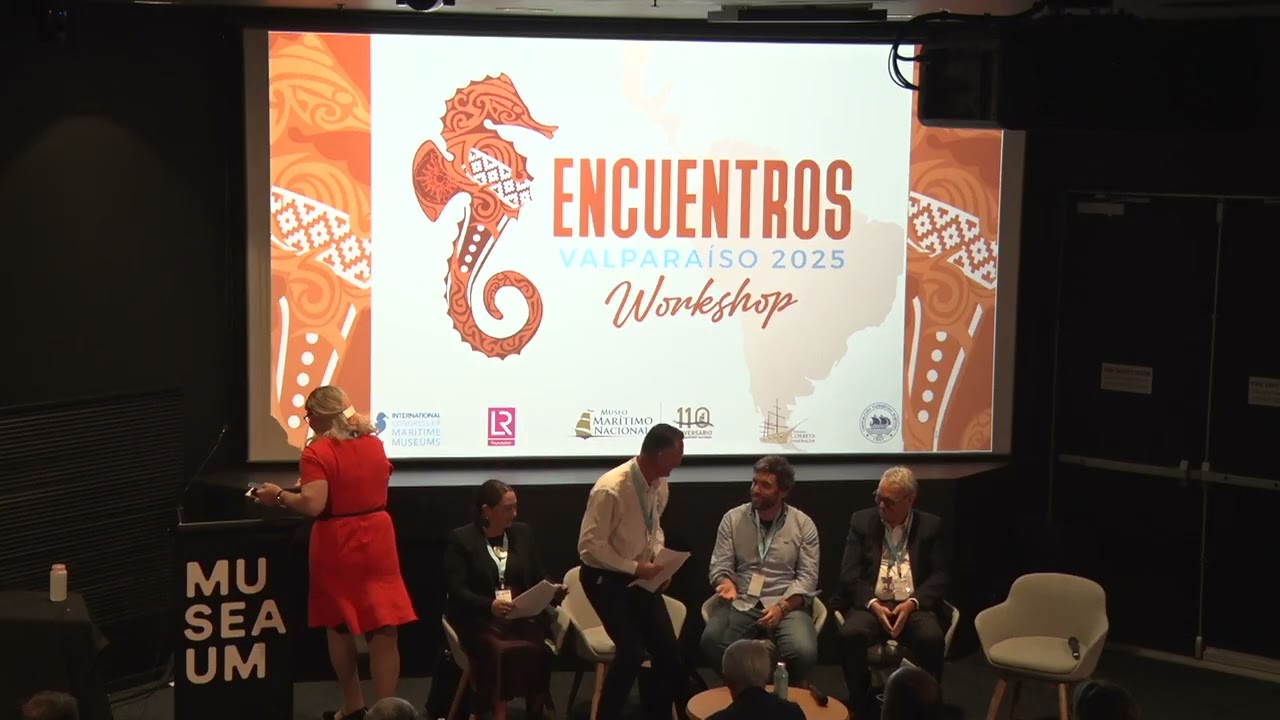
ICMM 2026 Congress: Lloyd's Register Foundation: Global Maritime Histories Project Presentations
Title history
- ICMM 2026 Congress: Lloyd's Register Foundation: Global Maritime Histories Project Presentations — observed on 20261029-1549 UTC (YouTube)
Keywords
Summary
169 words
Critical Evaluation
Value of the Information & Strength of the Argument
The value of the information lies in concrete examples of how targeted funding can catalyze regional cooperation and culturally responsive heritage work. Each speaker provides a clear narrative of objectives, actions, and outcomes, with some measurable results such as the increase in ICMM member museums in Latin America from 5 to 12 and the 80,000 social media views in Chile. The argumentation is persuasive in demonstrating the importance of face-to-face exchanges and mentorship models like the ‘anchor museum’ concept. However, the presentations are primarily descriptive success stories without critical reflection on challenges or failures, and they do not engage with broader scholarly literature on museum practice or cultural heritage, which limits their analytical depth.
Scientific Rigor, Source Quality, Title Accuracy
The presentations rely on the speakers’ professional experience and project documentation rather than external sources. No specific publications or datasets are cited, and the only named funder is the Lloyd’s Register Foundation. The description provides no links or references, so the evidence remains anecdotal. The title is fully adequate, as it accurately reflects the content. Considering the lack of transparent sourcing and the absence of any systematic evaluation, the scientific rigor is moderate. The speakers’ institutional affiliations lend credibility, but the lack of verifiable data and the promotional tone of some remarks temper the overall reliability.
225 words
Title / Content Match
The title accurately describes the content: four project presentations funded by Lloyd's Register Foundation at the ICMM Congress, with no deviation.
Quality & Reliability
7/10
The presentations come from established museum professionals and detail project objectives, activities, and outcomes with clear qualitative evidence. However, they lack robust quantitative data, external citations, or systematic evaluation, limiting the overall reliability.
Key Moments
Markers derived by PSI from the transcript: the creator did not define chapters.
- Andrés Rodrigo begins his presentation on the Latin American and Caribbean Maritime Museums workshop.
- Leichelle Tanoa introduces the Ocean Citizenship project and the importance of Māori values.
- Richard Wesley explains the genesis of the Fiji training course and the challenges of visa processing.
- Paul Stephanus starts his presentation on the Australian Wooden Boat Festival project.
- Concluding remarks and acknowledgments from the chair.
Contribution & Novelties
This session provides an original contribution by showcasing how a single funding stream can support diverse, region-specific initiatives that strengthen maritime heritage networks, particularly in the Global South and Pacific. The projects highlight novel methodologies such as the ‘anchor museum’ model and the integration of indigenous knowledge into museum learning, which are innovative in the field. The presentations also demonstrate tangible legacies, such as new partnerships and increased ICMM membership.
Pour aller plus loin :
- Maritime museum — Provides general context on the role and evolution of maritime museums.
- Ocean literacy — Research-based concept central to the New Zealand project’s educational program.
- Kaitiakitanga — Māori concept of guardianship and environmental stewardship, foundational to the project’s values.
116 words
Radar Profile
The radar profile shows moderate scores for information quantity and quality, with a low technical level, reflecting a practice-oriented session focused on case studies rather than technical or scientific depth. Reliability is moderate, consistent with the lack of external citations.