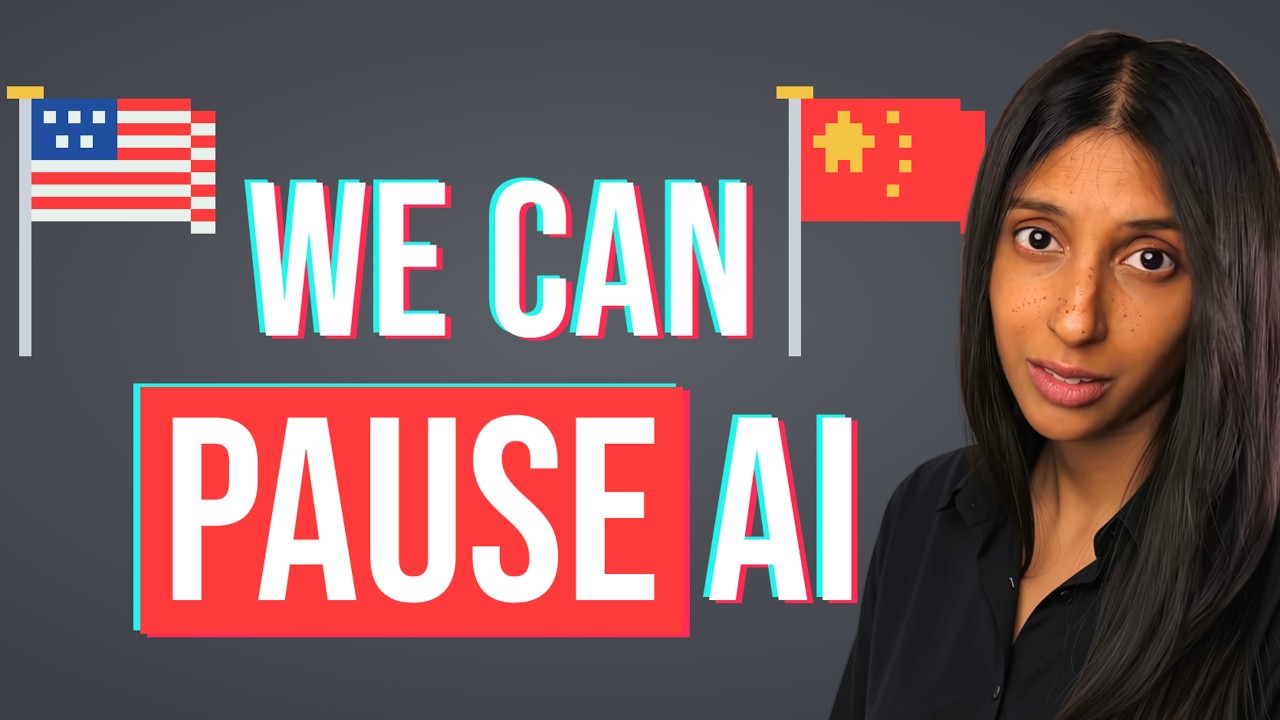
How To Pause AI For A Decade
Title history
- How To Pause AI For A Decade — observed on 20261101-0214 UTC (YouTube)
Keywords
Summary
115 words
Critical Evaluation
Value of the Information & Strength of the Argument
The video provides a novel and concrete proposal for pausing AI, moving beyond vague appeals. It grounds the argument in the physical constraint of chip production, presenting a plausible enforcement mechanism. The interview with the paper’s organizer lends credibility, and the discussion of economic benefits (continued inference revenue) strengthens the case. However, the argumentation is somewhat one-sided, downplaying the political feasibility and potential for covert acceleration. The call to action is clearly motivated, but the reasoning remains coherent and well-structured.
Scientific Rigor, Source Quality, Title Accuracy
The video cites a comprehensive whitepaper, directly linked in the description, which appears to be a collaborative effort by experts across multiple fields. The interview subject is one of the organizers, adding authenticity. The title accurately matches the content, presenting a how-to approach for pausing AI. While the video is clear and well-referenced, it is a promotional piece for a specific policy proposal, which introduces a bias. No external contradictory sources are discussed, but the primary source is transparent and verifiable.
176 words
Title / Content Match
The title accurately reflects the content, which presents a concrete proposal to pause AI development for a decade.
Quality & Reliability
8/10
The video explains a detailed whitepaper co-authored by many experts, and interviews one of its organizers, presenting both technical and political arguments. The source is directly linked and credible, though the presentation includes an advocacy angle.
Key Moments
Markers derived by PSI from the transcript: the creator did not define chapters.
- Introduction of the paper and its organizers from UC Berkeley.
- Explanation of two threat models: covert evasion and overt breakout.
- Description of hardwired pause: replacing GPUs with inference-only chips.
- Discussion on training efficiency as a potential loophole that limits treaty duration.
- Economic implications and the role of continued inference in mitigating market crash.
- Call to action: protests, G20 summit, and public engagement.
Cited Sources
- Hardwired Pause paper — Main paper discussed in the video.
- Pause AI info (global) — International resources for pausing AI.
- London protest March against AI extinction — Specific protest event mentioned.
- Stop the Race (USA) — US-based action site referenced.
Contribution & Novelties
The video adds a fresh perspective by proposing a hardware-based enforcement mechanism for an AI pause, which is more concrete than previous calls. It bridges technical, economic, and diplomatic aspects, showing how chip manufacturing constraints could serve as verification. The proposal to shift to inference-only chips is original and could actually incentivize companies to support a pause due to continued monetization of existing models.
Pour aller plus loin :
- AI safety — Core field related to risks and governance.
- ASML Holding — Company critical to chip lithography, key to the enforcement argument.
- AI winter — Historical context of AI slowdowns and public skepticism.
103 words
Radar Profile
The radar profile shows high information quantity and quality, moderate technical depth, and strong reliability. This suggests a well-substantiated and informative piece, but with a moderate level of technical complexity that may not appeal to a highly specialized audience.
💬 The comments are predominantly negative, with many viewers expressing skepticism about the feasibility of pausing AI, citing geopolitical competition and economic incentives. Sur les 30 commentaires analysés, la majorité doute de la viabilité du plan proposé.