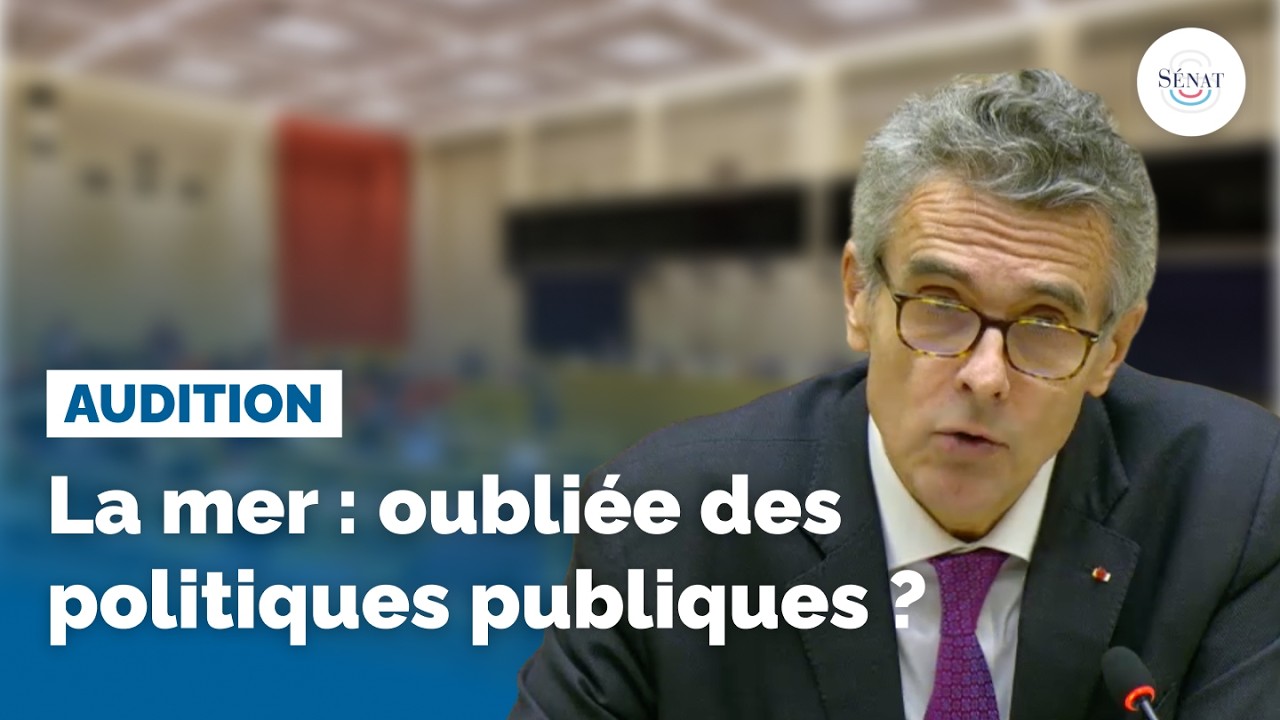
La mer : oubliée des politiques publiques ?
The Sea: Forgotten in Public Policy?
Title history
- La mer : oubliée des politiques publiques ? — observed on 20261106-0937 UTC (YouTube)
Keywords
Summary
152 words
Critical Evaluation
Value of the Information & Strength of the Argument
The value of the information is high, as it comes directly from the Conseil d’État, a prestigious advisory body, and synthesizes a year of extensive consultations and analysis. The argumentation is solid: the speakers diagnose clear weaknesses in the current governance structure, illustrate them with concrete examples (e.g., the proliferation of sectoral strategies and advisory bodies), and propose actionable reforms without imposing political choices. They are careful to distinguish between institutional recommendations and policy decisions that belong to elected officials. The discussion is well-structured, moving from general governance issues to sector-specific implementation, and demonstrates a deep understanding of the complex legal and administrative landscape. The panel also makes effective use of comparative references (e.g., Senate reports) to strengthen their case, though they avoid external academic citations.
Scientific Rigor, Source Quality, Title Accuracy
The scientific rigor is evident in the methodology: the study involved extensive fieldwork and consultations, including visits to Brest, Marseille, and Brussels, and invited representatives from overseas territories. The sources referenced are institutional reports and legal frameworks, which are appropriate for a public policy review. The title ‘La mer : oubliée des politiques publiques ?’ is an engaging question but somewhat misleading: the content shows that the sea is not entirely forgotten but its policy-making is poorly coordinated and lacks strategic coherence. This nuance is acknowledged in the discussion. The presentation is well-referenced with internal documents, but no external URLs were provided; however, the inherent authority of the institution compensates for this. The hearing format allows for direct questioning, enhancing the transparency of the arguments.
266 words
Title / Content Match
The title poses a question that the video addresses by analyzing the place of the sea in public policies. While it suggests neglect, the discussion reveals a fragmented but not entirely absent policy landscape, so the title is somewhat provocative but acceptable.
Quality & Reliability
9/10
The video features senior officials from the Conseil d'État presenting their annual study, based on extensive consultations with over 300 stakeholders and institutional reports. The content is authoritative and well-argued.
Key Moments
Markers derived by PSI from the transcript: the creator did not define chapters.
- Introduction by the commission president, explaining the purpose of the hearing and welcoming the guests.
- Marc Guillaume describes the methodology of the annual study, including consultations with over 300 people and the scope of the 562-page report.
- Rémy Schwartz presents governance challenges, proposing to strengthen the Secrétariat général à la mer and reform advisory bodies.
- Fabien Renault outlines long-term recommendations on maritime strategy, scientific support, ports, naval industry, fisheries, and European cooperation.
- Senator Renaud Dantec asks about political leadership for maritime policy, initiating a discussion on implementation.
Contribution & Novelties
The video provides an authoritative overview of French maritime public policy challenges, presenting a concrete set of institutional reforms. Its originality lies in the proposition to redefine the role of the Secrétariat général à la mer as a true interministerial coordinator, and to establish a formal ‘maritime general interest’ through a tripartite method. This goes beyond generic calls for better coordination by offering specific structural changes and a practical roadmap.
Pour aller plus loin :
- Marine spatial planning — A key concept for managing competing uses of maritime spaces, directly relevant to the study’s proposals.
- Exclusive economic zone — Underpins France’s claim as a major maritime power, central to the discussion on sovereignty and international law.
- Integrated coastal zone management — Connects to the study’s emphasis on linking environmental protection and economic development along coastlines.
135 words
Radar Profile
The radar profile shows high scores in quantity and quality of information, and very high reliability, while the technical level is moderate. This is typical for an expert presentation to an informed audience, balancing depth with accessibility.