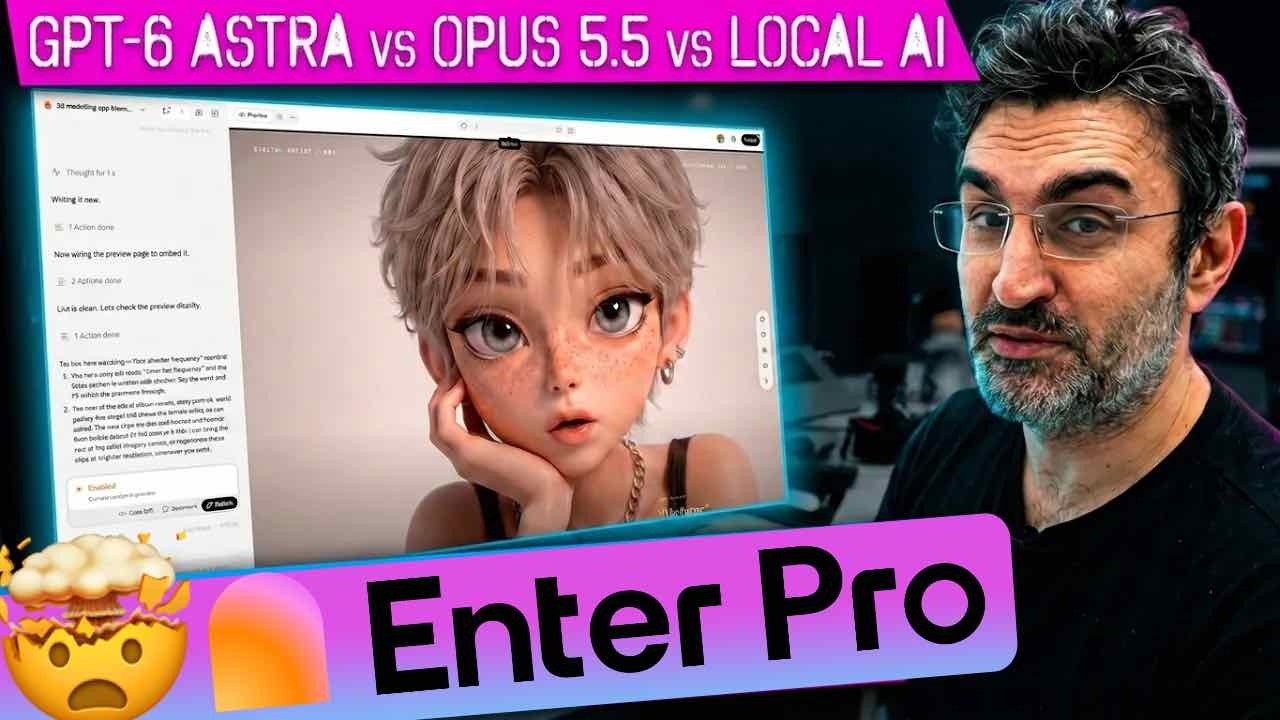
I Used Enter Pro to Compare GPT-6 Astra, Opus 5.5 & Local AI Qwen
Keywords
Summary
140 words
Critical Evaluation
Value of the Information & Strength of the Argument
The video provides valuable practical insights into the capabilities and limitations of leading AI models for coding tasks. It offers concrete examples of output quality, reasoning visibility, and token/credit consumption. However, the argumentation is largely anecdotal, based on single tests without controlled conditions or repeatability. The creator does not present statistical evidence or systematic evaluation, so the conclusions are subjective and may not generalize. The suggestion to combine planning and execution across models is thoughtful but unsupported by rigorous data. Still, the demonstration is engaging and illustrative for viewers interested in AI-assisted development.
Scientific Rigor, Source Quality, Title Accuracy
The video does not cite external scientific sources or benchmarks; it relies solely on the creator’s hands-on experience. The only link provided is an affiliate referral to Enter Pro, which is not a substantive source. The title is accurate in listing the compared models, but the content is a preliminary, non-exhaustive test. The video would benefit from referencing official model documentation or standardized benchmarks to strengthen credibility. The description mentions ‘chapters’ and the creator’s own observations, but no external validation. Overall, the rigor is low, typical of influencer-style technology reviews.
198 words
Title / Content Match
The title accurately reflects the content, but the comparison is informal and subjective.
Quality & Reliability
6/10
Anecdotal but practical demonstration; lacks rigorous scientific methodology, yet provides useful hands-on insights.
Chapters
- Introduction & Enter Pro Overview
- Exploring Templates & Artist Landing Page Remix
- Side-by-Side: Setting Up Local Qwen Test
- Prompting Opus 5.5 to Build a 3D Blender App
- Editing the Artist Website (Changing Character)
- Opus 5.5 Planning Mode & Architecture
- Testing Local Generation Results
- Prompting Astra for a 3D GTA 5 Web Game
- Local vs. Cloud Website Comparison
- Testing the GTA 5 Web Game Built by Astra
- Credit Usage Analysis & Token Cost Strategy
- Exploring More Templates & Final Thoughts
Cited Sources
- Enter Pro referral link (affiliate) — The only link in the description, used to sign up for the platform; not a factual source.
Contribution & Novelties
114 words
Radar Profile
The radar profile shows moderate scores across the board, with a slight emphasis on quantity of information and technical level, reflecting a practical yet informal demonstration. The low reliability score indicates a lack of scientific rigor, while the balanced quality and quantity suggest a decent but not outstanding exploration of the subject.