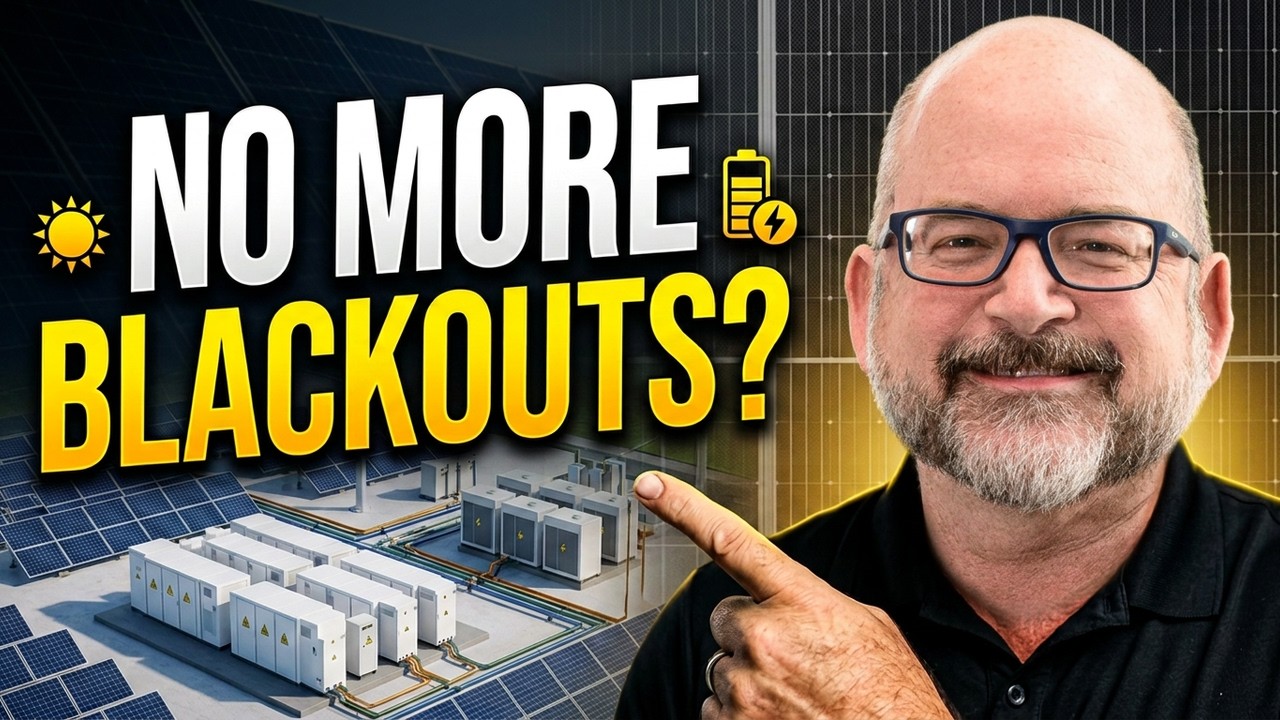
TVA’s Grid Is Under Pressure. Solar, Storage and Microgrids Could Be the Answer
Keywords
Summary
230 words
Critical Evaluation
Value of the Information & Strength of the Argument
The video delivers substantial value by providing an insider perspective on TVA’s procurement processes and the evolving role of local power companies. Gil Hough offers specific data points, such as TVA’s September peak of 33,270 MW and the congressional borrowing cap of $30 billion, which ground the discussion in concrete facts. He argues convincingly that solar and storage can reduce the need for new transmission and distribution infrastructure, citing case studies where circuits with solar and storage remained operational during outages. The argumentation is coherent, presenting a clear case for distributed energy and microgrids as resilience solutions. However, the perspective is clearly from a solar industry advocate, which may overstate the benefits and underplay technical or economic challenges. The reasoning is logical but not rigorously quantified, relying on illustrative examples rather than comprehensive data.
Scientific Rigor, Source Quality, Title Accuracy
The scientific rigor is moderate. While the guest is a credible expert, the discussion is conversational and not backed by formal citations or peer-reviewed sources. The sources cited in the description are primarily promotional or organizational links (TenneSEIA, podcast website), not academic references. The title accurately reflects the content and is not misleading. The arguments are internally consistent but would benefit from more systematic evidence. The video does not engage with opposing viewpoints or potential drawbacks, limiting its scientific balance. Overall, the rigour is acceptable for an expert opinion piece but not at the level of a formal analysis.
248 words
Title / Content Match
The title accurately reflects the content, which centers on the pressure on TVA's grid and the potential contributions of solar, storage, and microgrids.
Quality & Reliability
7/10
The video provides specific numbers and insider knowledge from an industry expert, but is presented from the perspective of a solar trade association, which may introduce bias. Technical details are accurate but not independently verified.
Chapters
Cited Sources
- TenneSEIA — Official website of the Tennessee Solar Energy Industries Association, the organization led by the interviewee, providing information about their work and the regional solar market.
- Clean Power Hour — The podcast's homepage, where the episode is published and additional resources and contact information are available.
External References
Contribution & Novelties
The video offers a unique insider look at TVA’s current policies and the practical pathways for developers, particularly the shift to annual RFPs and the invitation-only Resource Solicitation Cluster. It highlights the often-overlooked role of local power companies and the generation flexibility program, which are not widely discussed in mainstream energy media. The emphasis on community-scale microgrids as a resilience solution and the argument that distributed resources can hedge against rising costs add original perspectives.
Pour aller plus loin :
- Tennessee Valley Authority — Overview of TVA’s structure and history, relevant to understanding the federal utility model.
- Microgrid — Concept and benefits of community-scale microgrids, as discussed in the episode.
- Virtual power plant — Aggregation of distributed energy resources, a key theme for TVA’s future distributed strategy.
127 words
Radar Profile
The radar profile shows above-average technical depth (8), reflecting the detailed discussion of RFP processes and grid management. Information quantity and quality are moderate (7 and 7), while global reliability is also moderate (7), consistent with the expert but advocacy-oriented nature of the content.