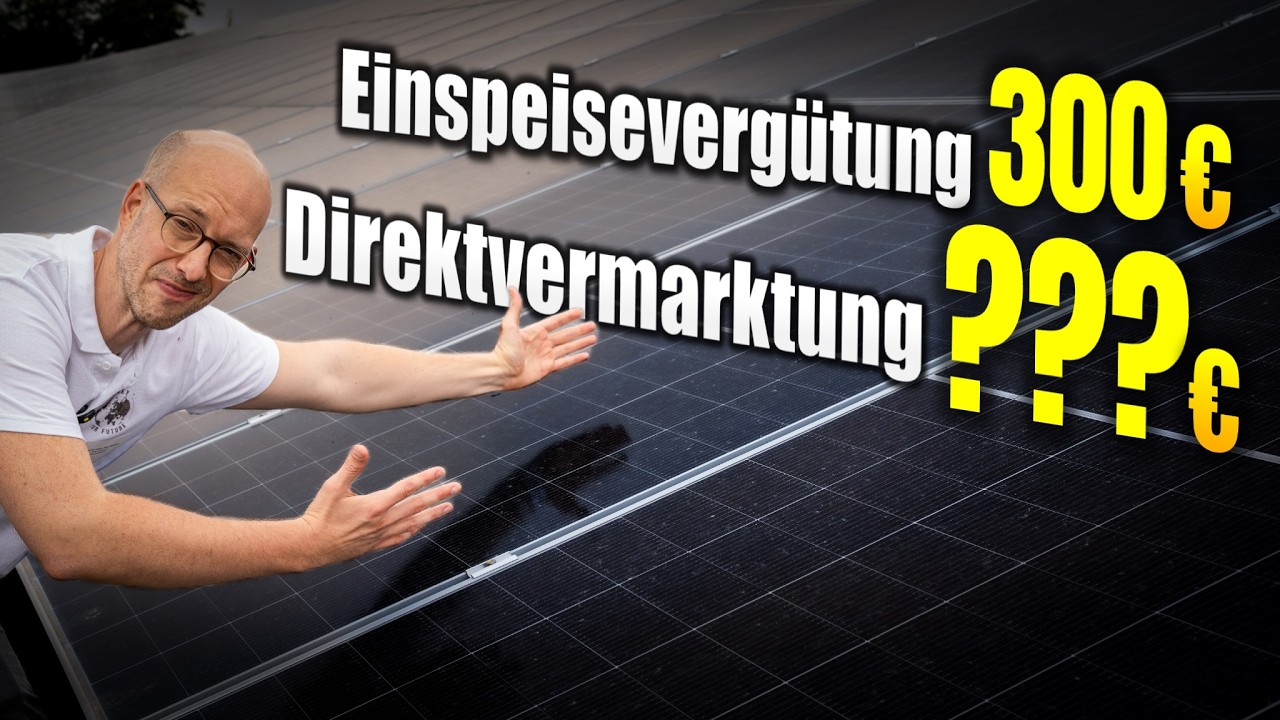
Alles Panikmache? Direktvermarktung löst PV-Förderung ab. Was das für DICH bedeutet
All Just Fearmongering? Direct Marketing Replacing PV Subsidies. What This Means For YOU
Keywords
Summary
152 words
Critical Evaluation
Value of the Information & Strength of the Argument
The video offers valuable practical information for homeowners considering solar panels, backed by a concrete example and expert insights. The argumentation is logical: it breaks down the financial difference between feed-in tariffs and direct marketing, demonstrates that the gap is modest, and redirects attention to more impactful levers like self-consumption and modern energy management. The interview format adds credibility, and the discussion covers both advantages and risks, providing a nuanced view. However, some assumptions (e.g., market price development, direct marketing costs) are not fully detailed, and the sponsor relationship could subtly influence the presentation.
Scientific Rigor, Source Quality, Title Accuracy
The video does not cite official sources directly, but it refers to the EEG draft and uses general knowledge of the sector. The information is consistent with known proposals for the EEG 2027 reform, though specific numbers (like the 5.2 ct transition rate) are presented as current status. The title accurately mirrors the content, addressing the panic and explaining the shift. The presence of a sponsor is disclosed, but it does not seem to distort the core message. Overall, the rigor is acceptable for a popular science format, though deeper sourcing would enhance reliability.
203 words
Title / Content Match
The title accurately reflects the content: it addresses the panic surrounding the end of feed-in tariffs and explains the new direct marketing system, concluding that panic is largely unjustified.
Quality & Reliability
7/10
The video provides a balanced and well-structured analysis of the upcoming EEG 2027 changes, with concrete calculations and an expert interview. However, the guest's company sponsors the video, introducing a potential commercial bias, and some assumptions (e.g., market price, costs) are not deeply sourced.
Chapters
- Intro: DIrektvermarktung von PV-Strom
- Was ist Direktvermarktung?
- Wie funktioniert Direktvermarktung?
- Wen wird Direktvermarktung betreffen?
- Ist das schon Gesetz?
- Wann gilt eine Anlage in Betrieb?
- Sollte ich unbedingt noch 2026 bauen?
- Rechenbeispiel anhand von 10-kWp-Anlage
- Zukünftig noch wichtiger: Fokus auf Energiemanagement und Intelligenz
- Kann Direktvermarktung auch eine Chance sein?
- Worauf achten bei Auswahl des Direktvermarkters?
- Kosten und RIsiken von Direktvermarktung?
- Warum reden überhaupt alle von Einspeisung?
- Was kann schiefgehen?
- Wer sollte jetzt was tun? 3 Szenarien
- Fazit
Cited Sources
- SolarWiebe GmbH — Guest Oliver Ziegler's company, sponsor of the video, offering PV installation services.
- Money for Future – Solaranlage Tool — Free tool for planning solar systems, mentioned as affiliate.
- Alles wird Strom Podcast — Podcast by the channel, related to energy transition topics.
- Tibber dynamic tariff — Affiliate link to a dynamic electricity tariff provider, mentioned in the description.
- Balkonkraftwerk.de — Affiliate link for balcony solar kits.
- Money for Future – PV-Anlage Anfrage — Contact form for PV installation inquiries.
- Related video 1 — Suggested further video on the topic.
- Related video 2 — Suggested further video on the topic.
Concurring Sources
- REN21 Global Status Report — General context on renewable energy policies, supporting trends in Germany.
Contribution & Novelties
The video provides a timely and practical breakdown of the EEG 2027 reform for small-scale PV owners, using a concrete calculation to demystify the change. Its main added value lies in reframing the discussion: instead of focusing on the reduction in feed-in payments, it highlights the growing importance of self-consumption, smart meters, and home energy management systems. The guest’s experience in installing HEMS and smart meters gives actionable advice.
Pour aller plus loin :
- Renewable Energy Sources Act (Germany) — Background on the EEG legal framework.
- Feed-in tariff — General concept of feed-in tariffs and their evolution.
- Smart meter — Technology required for direct marketing, discussed in the video.
109 words
Radar Profile
The profile shows high scores in information quantity and global reliability, reflecting solid content and expert input. Technical level is moderate, making it accessible to a general audience. The overall balance suggests a trustworthy overview, though not deeply technical.
💬 Positive, with some constructive criticism. Many viewers thank the channel for calming the panic and appreciate the focus on self-consumption, while a few question the financial calculations and point out hidden costs or more complex scenarios.