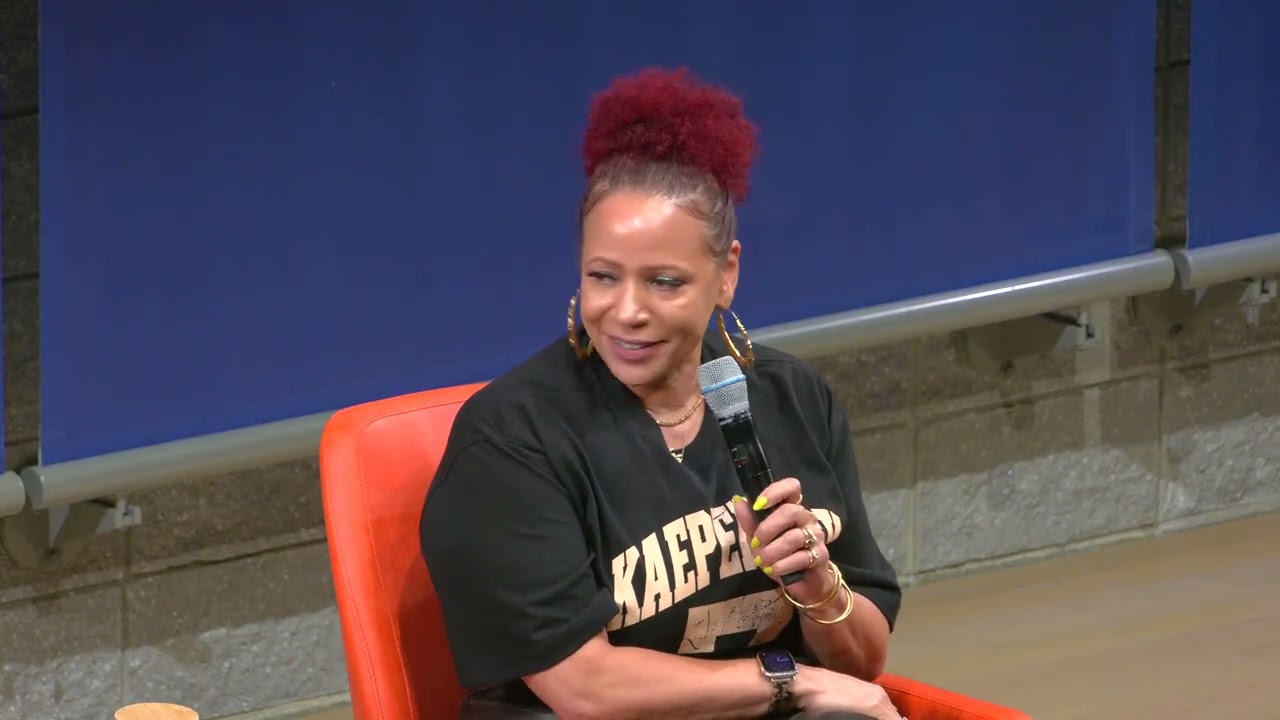
The Shawn "Jay-Z" Carter Lecture With Nikole Hannah-Jones
Title history
- The Shawn "Jay-Z" Carter Lecture With Nikole Hannah-Jones — observed on 20261106-0829 UTC (YouTube)
Keywords
Summary
194 words
Critical Evaluation
Value of the Information & Strength of the Argument
The value of this lecture lies in its insightful framing of current attacks on black history as part of an autocratic playbook. Hannah-Jones and Cobb build a strong argument that controlling historical narrative is a tool for suppressing democratic participation. The discussion is enriched by references to historical events, such as the prohibition of literacy among enslaved people and the gag rule on slavery debates in Congress. The argumentation is cohesive, moving from observations about specific actions by the current administration to broader theories about the utility of memory control. The speakers support their claims with historical and contemporary examples, though they do not provide formal citations. The value is in the synthesis of disparate events into a coherent warning about the dangers of historical erasure.
Scientific Rigor, Source Quality, Title Accuracy
The lecture demonstrates intellectual rigor by grounding its analysis in established historical scholarship, particularly the work of Carter G. Woodson. However, no explicit external sources are cited, and the discussion relies primarily on the speakers’ expertise and publicly known information. The title is fully appropriate, as the video is a formal lecture featuring Nikole Hannah-Jones as the named lecturer. The content aligns with the title, offering a deep dive into themes of black history and current political affairs. The lack of citations is a minor weakness, but the factual basis appears sound, and the conversational format allows for nuanced discussion.
241 words
Title / Content Match
The title accurately reflects the content, as the video features Nikole Hannah-Jones as the distinguished lecturer in conversation with Jelani Cobb, matching the format of the Shawn 'Jay-Z' Carter lecture series.
Quality & Reliability
8/10
The speaker is a Pulitzer Prize-winning journalist and creator of the 1619 Project, with extensive expertise in race and history. The discussion is opinion-led, but grounded in deep historical knowledge and personal experience. While not peer-reviewed, the facts align with established scholarship; however, no explicit sources are cited within the video.
Key Moments
Markers derived by PSI from the transcript: the creator did not define chapters.
- Mabel Wilson introduces the Shawn 'Jay-Z' Carter Lecture series and presents Nikole Hannah-Jones.
- Introduction of Nikole Hannah-Jones with a detailed list of her achievements, followed by the start of the conversation.
- Jelani Cobb and Nikole Hannah-Jones discuss the Trump administration's removal of historical markers and the erasure of black history.
- Hannah-Jones explains the relevance of Carter G. Woodson and why history matters as a defense of democracy.
- Discussion on the erasure of data collection and its role in undermining civil rights enforcement.
- Hannah-Jones reflects on the importance of journalism in the current moment and the need to treat history wars seriously.
Contribution & Novelties
The lecture offers an original perspective on current attacks on black history, framing them as part of an autocratic playbook to control memory. It highlights the utility of erasing historical records to legitimize regressive policies. The discussion also emphasizes the role of data erasure, an angle less commonly highlighted. For deeper exploration, see:
- Carter G. Woodson — He founded Black History Month, central to the discussion.
- The 1619 Project — Nikole Hannah-Jones’ initiative to reframe American history.
- Red Summer — The wave of racial violence that prompted Woodson’s work.
These concepts provide context to the arguments made in the video.
100 words
Radar Profile
The radar chart likely shows high scores in quantity and quality of information, with moderate technical level and high reliability, indicating a well-informed yet accessible discussion.