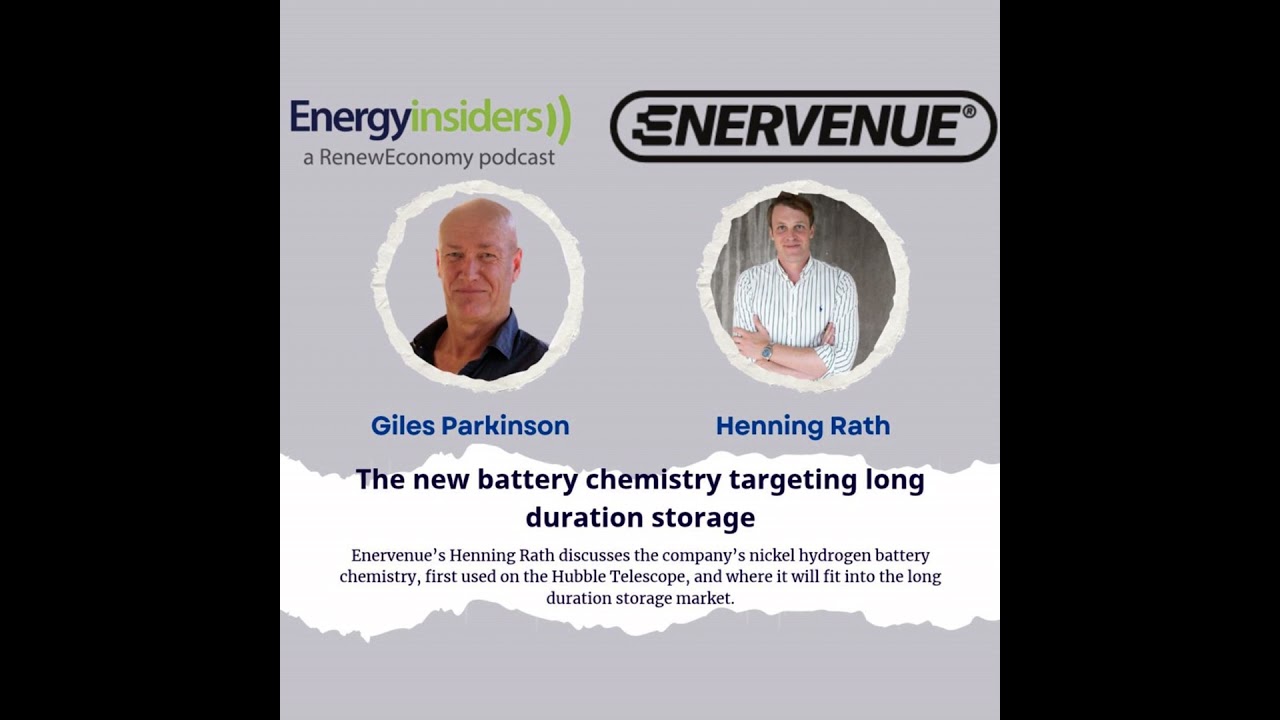
Special Episode: The new battery chemistry targeting long duration storage
Title history
- Special Episode: The new battery chemistry targeting long duration storage — observed on 20261104-0808 UTC (YouTube)
Keywords
Summary
179 words
Critical Evaluation
Value of the Information & Strength of the Argument
The video provides valuable insider information on a niche battery technology, covering chemistry, performance metrics, and market strategy. The argumentation is coherent and logically structured, with the CEO clearly explaining the technology’s advantages and how it fits into the energy storage ecosystem. However, the value is limited by the promotional tone; the claims are unverified and presented as definitive advantages without direct comparison to independent benchmarks. The emphasis on levelized cost of storage is useful, but the given figures are indicative and lack detailed assumptions. Overall, the discussion offers a solid overview for understanding the technology’s positioning, but critical cross-examination is absent.
Scientific Rigor, Source Quality, Title Accuracy
The scientific rigor is moderate: the technology is presented with references to NASA and Stanford University, which lend some credibility, but specific data and performance figures are unverified. The title accurately reflects the content, focusing on the new battery chemistry for long-uration storage. However, the video is essentially a company presentation, so the quality of sources is limited to the speaker’s own claims. No external studies or independent analyses are cited. The title is well-aligned and does not exaggerate the content.
198 words
Title / Content Match
The title accurately reflects the content: an in-depth discussion of a novel battery chemistry intended for long-duration storage, with market placement and technological advantages.
Quality & Reliability
7/10
The interview offers a comprehensive overview of Enervenue's nickel hydrogen battery technology, with technical details and market insights. However, as the speaker is the CEO of the company, the presentation is promotional and lacks independent verification. Performance claims such as cycle life and cost reductions are plausible but not externally validated.
Key Moments
Markers derived by PSI from the transcript: the creator did not define chapters.
- Introduction to battery chemistry context and the emergence of nickel hydrogen.
- Description of nickel hydrogen chemistry using a scuba tank analogy and water splitting.
- Main characteristics: 30,000-40,000 cycles, temperature resilience, and no fire risk.
- Cost reduction and how the technology was reinvented for cheaper materials.
- Market segmentation into three buckets: LFP, sodium, and non-lithium long-duration storage.
- Applications in remote sites, EV charging, petrochemicals, and data centers.
- Funding round, manufacturing plans, and strategic investors.
Cited Sources
- NASA — Technology originally developed for space applications, used in the Hubble telescope.
- Stanford University — Technology incubated at Stanford University before spinning off Enervenue.
- Enervenue — The company producing the nickel hydrogen battery technology.
Contribution & Novelties
The video provides a clear explanation of a niche battery chemistry and its market positioning, particularly the concept of ‘infrastructure grade’ batteries and the focus on levelized cost of storage. It highlights the technology’s unique combination of long cycle life, safety, and temperature resilience, which sets it apart from lithium and sodium alternatives. The discussion of applications in remote and safety-critical environments (mines, EV charging, data centers) is informative, as is the insight into the company’s scaling plans and strategic partnerships.
Pour aller plus loin :
- Nickel–hydrogen battery — Overview of the chemistry and historical use in space, directly relevant to the video’s core topic.
- Levelized cost of storage — Explanation of the metric used by the CEO to justify the technology’s competitiveness.
- Grid energy storage — Broader context of storage technologies and their role in renewable energy integration.
139 words
Radar Profile
The radar profile shows high scores in quantitative and qualitative information, with a moderate technical level and lower reliability due to the source's promotional bias. The video is informative but should be viewed as a company perspective rather than an independent assessment.