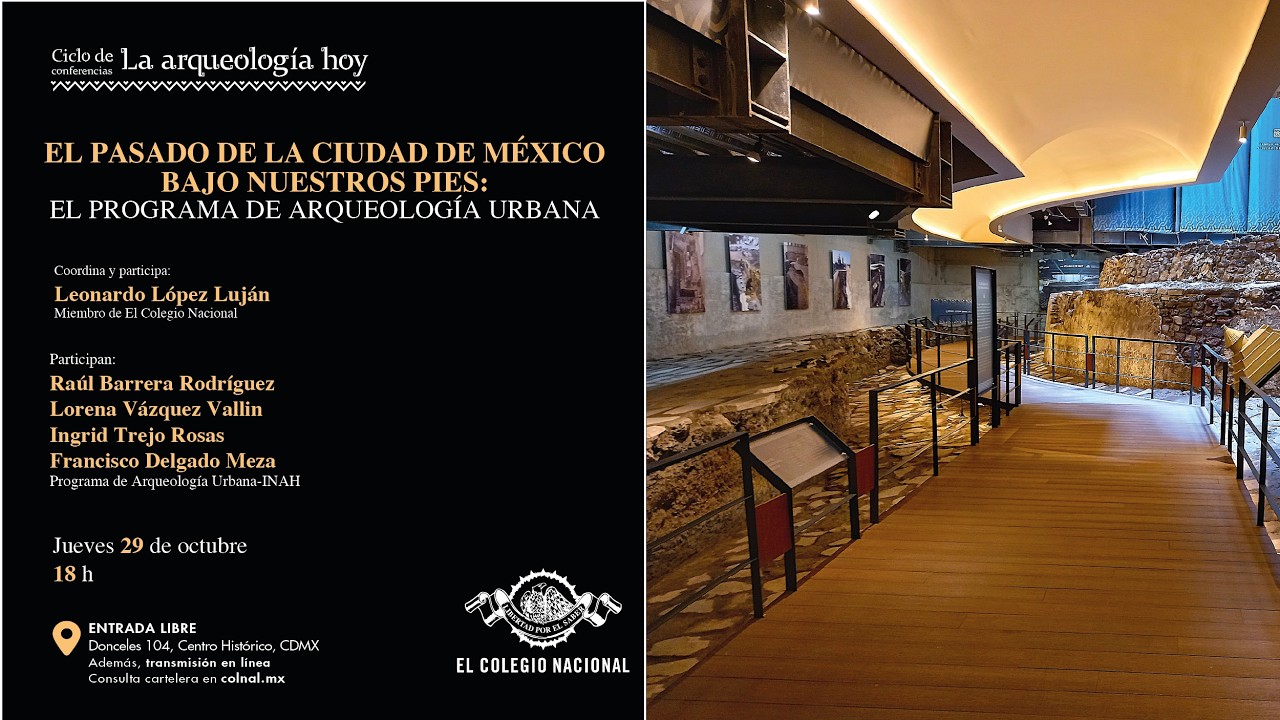
El pasado de la Ciudad de México bajo nuestros pies: el Programa de Arqueología Urbana
The past of Mexico City beneath our feet: the Urban Archaeology Program
Title history
- El pasado de la Ciudad de México bajo nuestros pies: el Programa de Arqueología Urbana — observed on 20261101-0403 UTC (YouTube)
Keywords
Summary
144 words
Critical Evaluation
Value of the Information & Strength of the Argument
The value lies in the detailed presentation of ongoing archaeological research, with concrete examples of finds and their historical significance. The speakers support their arguments with visual evidence (maps, photos) and reference to primary sources like the Memoriales de Sahagún. The argumentation is solid, based on systematic excavation and institutional practices. However, some claims would benefit from more rigorous verification, as they are presented as conclusions from ongoing projects without full data.
Scientific Rigor, Source Quality, Title Accuracy
The presentation demonstrates scientific rigor through systematic excavation methods and reference to historical documents. The sources are primarily the speakers’ own work and the publications of INAH. The title corresponds well to the content, which is entirely about urban archaeology under Mexico City. The lecture also includes a historical review of previous archaeological work, enhancing credibility. Comments are not analyzed, but the presentation appears well-received given the positive applause.
156 words
Title / Content Match
The title accurately reflects the content, which discusses archaeological work beneath Mexico City, focusing on the Urban Archaeology Program's projects and discoveries.
Quality & Reliability
7/10
The lecture is delivered by experts from the INAH Urban Archaeology Program, presenting their own fieldwork and findings. The content is detailed and coherent, with historical context and specific examples. However, it is a conference presentation, not a peer-reviewed publication, so some claims may lack formal verification.
Key Moments
Markers derived by PSI from the transcript: the creator did not define chapters.
- Introduction by Leonardo López Luján, welcoming audience and presenting the conference cycle.
- Discussion of Leopoldo Batres' 1900 excavation and discovery of the Templo Mayor.
- Raúl Barrera introduces the Urban Archaeology Program and its mission.
- Findings at Plaza Manuel Gamio: Cuauhxicalco and sacred tree.
- Excavations at Guatemala 16 and the Temple of Ehécatl-Quetzalcóatl.
- Lorena Vázquez presents research on the Hueyi Tzompantli and related findings.
Contribution & Novelties
The presentation provides firsthand insights into recent archaeological discoveries in Mexico City, highlighting the ongoing work of the PAU. It emphasizes the integration of urban development with heritage preservation and the importance of rescue archaeology. The speakers share novel findings, such as the tree identified as an oak and the Cuauhxicalco, which are not widely known to the public.
Pour aller plus loin :
- Templo Mayor — Context on the main Aztec temple and its excavation.
- Urban archaeology — Overview of the discipline and its methods.
- Tenochtitlan — Historical background of the Aztec capital, relevant to the discussed sites.
99 words
Radar Profile
The profile shows high scores in information quantity and quality, with slightly lower technical level and reliability, reflecting a detailed but accessible expert presentation. The balance between content and technical depth suits a scientific yet general audience.