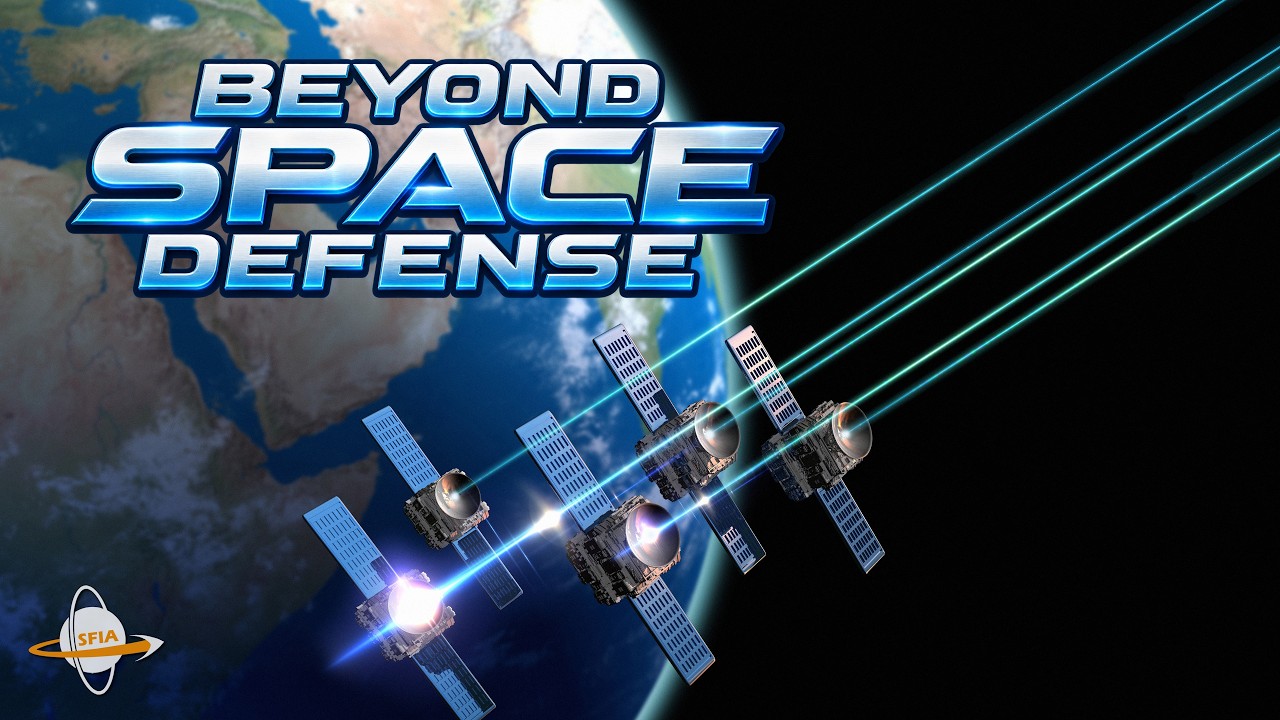
Beyond Space Defense: War, Sabotage & Survival Beyond Earth
Title history
- Beyond Space Defense: War, Sabotage & Survival Beyond Earth — observed on 20261101-1438 UTC (YouTube)
Keywords
Summary
179 words
Critical Evaluation
Value of the Information & Strength of the Argument
The video provides valuable insights by shifting the focus from purely offensive/defensive space warfare to broader security concerns, emphasizing infrastructure, logistics, and resilience. The argumentation is solid, using logical reasoning, concrete examples, and references to real-world military principles (e.g., ’the First Rule of Warfare’). It effectively builds a case that defense is not just about weapons but about the entire support ecosystem. The author’s personal experiences and references to the NSS book add depth, though some arguments are speculative, they are well-grounded in existing trends and plausible future developments.
Scientific Rigor, Source Quality, Title Accuracy
The scientific rigor is high for a speculative topic: the author cites the National Space Society’s book ‘A Dream Renewed’ and draws on established concepts like Kessler syndrome and military doctrine. The arguments are internally consistent and well-reasoned. The title accurately reflects the content, which goes beyond defense to include sabotage and survival, matching the episode’s scope. The video includes a table of contents and chapters, and the production quality is typical of Isaac Arthur’s channel, known for thorough research. The author’s involvement as president of NSS adds authority, though some statements are based on personal opinion and future projections, which are clearly presented as such.
210 words
Title / Content Match
The title accurately reflects the content, which covers war, sabotage, and survival beyond Earth, expanding beyond mere defense to broader security aspects.
Quality & Reliability
9/10
The video presents a well-reasoned, logically structured argument grounded in concepts from space policy and engineering, referencing the National Space Society's book. The author's expertise and the inclusion of specific examples (e.g., Kessler syndrome, sieges) enhance credibility, though the content is inherently speculative about future scenarios.
Chapters
Cited Sources
- A Dream Renewed: Space Settlement in the 21st Century — Book by the National Space Society that inspired this episode's content on space security.
- A Dream Renewed (Book Press Publishing) — Alternative link for the same book.
- Isaac Arthur's Website — Official website of the channel.
- Reddit Community — Community discussion forum for the channel.
- Subscribestar — Support platform for Isaac Arthur.
- Epidemic Sound — Music provider credited in the video.
Concurring Sources
- A Dream Renewed: Space Settlement in the 21st Century — The book's security chapter aligns with the video's core arguments on integrated security.
Contribution & Novelties
The video’s original contribution is its comprehensive framework for space settlement security, integrating military strategy with infrastructure design and economic resilience. It challenges the conventional focus on weapons by highlighting the centrality of logistics, architecture, and human factors. The episode provides a fresh perspective on deterrence and survival in space environments.
Pour aller plus loin :
- Kessler syndrome — Relevant to the debris cascade discussed as a major threat.
- O’Neill cylinder — The type of habitat referenced as a rotating settlement.
- Space warfare — Broader context of military operations in space.
- Gerard K. O’Neill’s The High Frontier — The book that inspired the NSS’s renewal, key to the vision.
- Geneva Conventions — Mentioned in the context of future space law.
120 words
Radar Profile
The radar profile shows high scores in information quantity and quality, with slightly lower but still solid technical level and reliability. This suggests a content-rich video that is accessible yet grounded in established concepts, appropriate for a science communication audience.