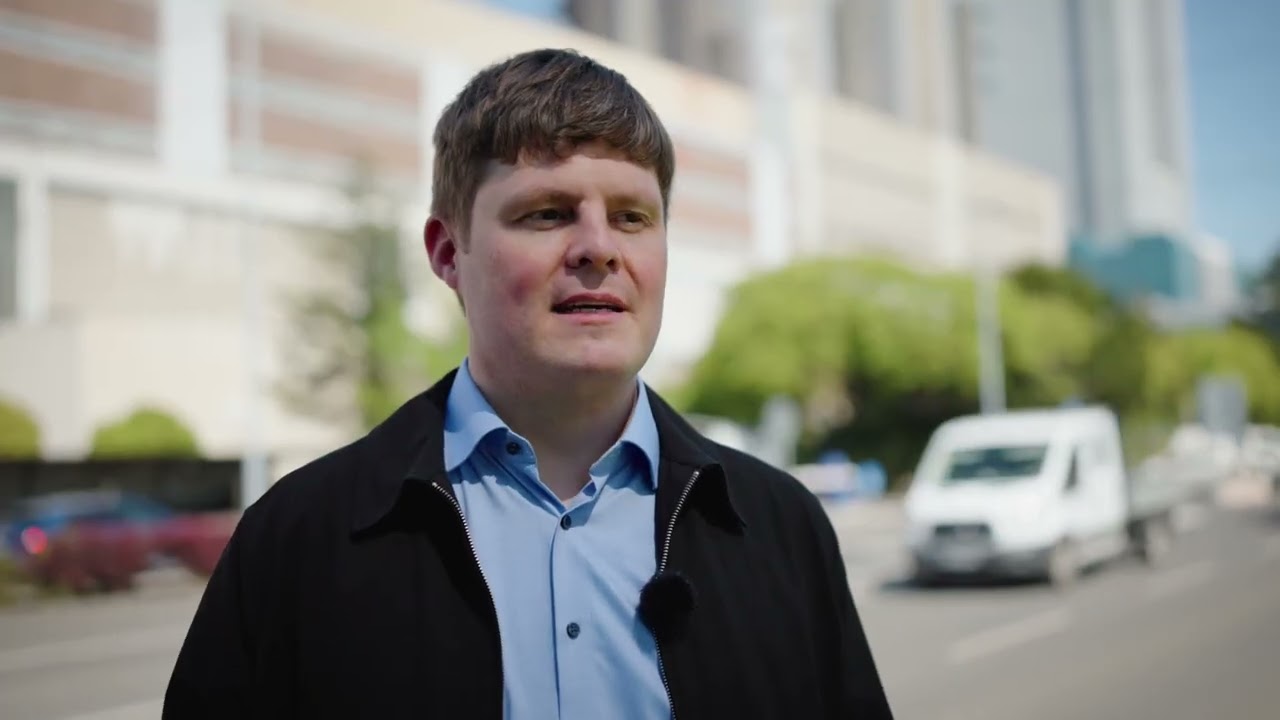
Deutschlands gerechte Energiewende: Wie das Rheinische Revier eine Zukunft ohne Kohle gestaltet
Germany's fair energy transition: How the Rhenish mining area is shaping a future without coal
Keywords
Summary
206 words
Critical Evaluation
Value of the Information & Strength of the Argument
The video offers a valuable overview of a complex regional transformation, providing concrete examples and quantitative data that are not commonly covered in mainstream media. It successfully conveys the multifaceted nature of the just transition, from economic diversification to ecological restoration and community redevelopment. The argumentation is built on interviews with local stakeholders, giving it a grounded, testimonial quality. However, the perspective is largely optimistic and heavily features institutional voices (RWE, Zukunftsagentur), which may overshadow critical concerns such as the adequacy of compensation for affected residents or the long-term economic viability of new sectors. The rationale for the early coal exit is taken as a given, and the video does not explore potential negative externalities in depth. While it convincingly illustrates how the region is moving forward, it lacks a balanced critique of the transition’s challenges, such as the financing of projects or the social costs for those who had already relocated.
Scientific Rigor, Source Quality, Title Accuracy
The video does not reference external scientific sources directly, but it provides two links in the description: one to the project’s news page about the IKI JET capacity building programme and another to an English version of the video. These are institutional and serve as supplementary information rather than rigorous academic citations. The facts presented are consistent with publicly available data, but the lack of citations within the video weakens its scientific rigor. The title is suitably descriptive and matches the content precisely, without misleading or overstating the message. The production quality is professional, with clear narration and interviews, but the absence of critical analysis and reliance on official narratives limits its credibility as an independent scientific resource.
285 words
Title / Content Match
The title accurately reflects the content, which focuses on the just transition in the Rhenish coal region and the concrete measures being taken to shape a future without coal.
Quality & Reliability
7/10
The video is produced by an institutional knowledge hub and features interviews with regional stakeholders, including representatives of RWE and the Zukunftsagentur. The factual claims (e.g., employment figures, area figures, timeline of the coal phase-out) are plausible and consistent with public information, though the video does not provide direct citation to scientific studies and is partly promotional in tone.
Key Moments
Markers derived by PSI from the transcript: the creator did not define chapters.
- Introduction to the decision to end coal mining in the Rhenish region by 2030.
- History of RWE in the region and the decline in employment from 18,000 to 9,000 workers.
- Resettlement of Morschenich and the emotional impact on residents who had prepared to move for decades.
- Renaturalization of mining areas and the creation of the Hambachsee, Germany's largest artificial lake by volume.
- Role of the Zukunftsagentur in mediating between local actors and state ministries in the structural change process.
- Innovation hub Startup Village and the company-building approach with research institutions; expansion of renewable energy projects.
- Bioeconomy initiatives and agrivoltaics on reclaimed land; biodiversity strategy using target species like woodpeckers.
- Vision for Bürgewald as a self-sufficient 'place of the future' and hopes for the village's revival.
Cited Sources
- IKI JET Capacity Building Programme 2026 – Lessons from Germany: Rhenish Coal Region — Provided in the video description as the project's news page for further information.
- English version of the video — Link to the English-language version of this video, mentioned at the end of the description.
Contribution & Novelties
The video provides an insightful local perspective on Germany’s coal phase-out, highlighting concrete mechanisms such as the Zukunftsagentur’s role in coordinating structural change, the innovative Startup Village, and a biodiversity strategy that goes beyond legal requirements. It brings together economic, social, and ecological dimensions of the just transition in a single narrative, making it a useful educational resource for understanding regional transformation.
Pour aller plus loin :
- Just Transition (Wikipedia) — Framework for ensuring social justice in the shift to a low-carbon economy.
- Coal phase-out in Germany (Wikipedia) — Overview of legal and policy measures behind Germany’s coal exit.
- Bioeconomy (Wikipedia) — Concept of replacing fossil resources with renewable biological resources, a key theme in the video.
- Agrivoltaics (Wikipedia) — Practice of combining solar panels with crop production, mentioned as a technology used on reclaimed land.
136 words
Radar Profile
The radar profile shows a relatively balanced document with higher scores on information quantity and quality, moderate technical level, and a slightly lower reliability score. This suggests a well-produced documentary that is informative but not deeply scientific, relying on stakeholder testimonies and lacking external validation.