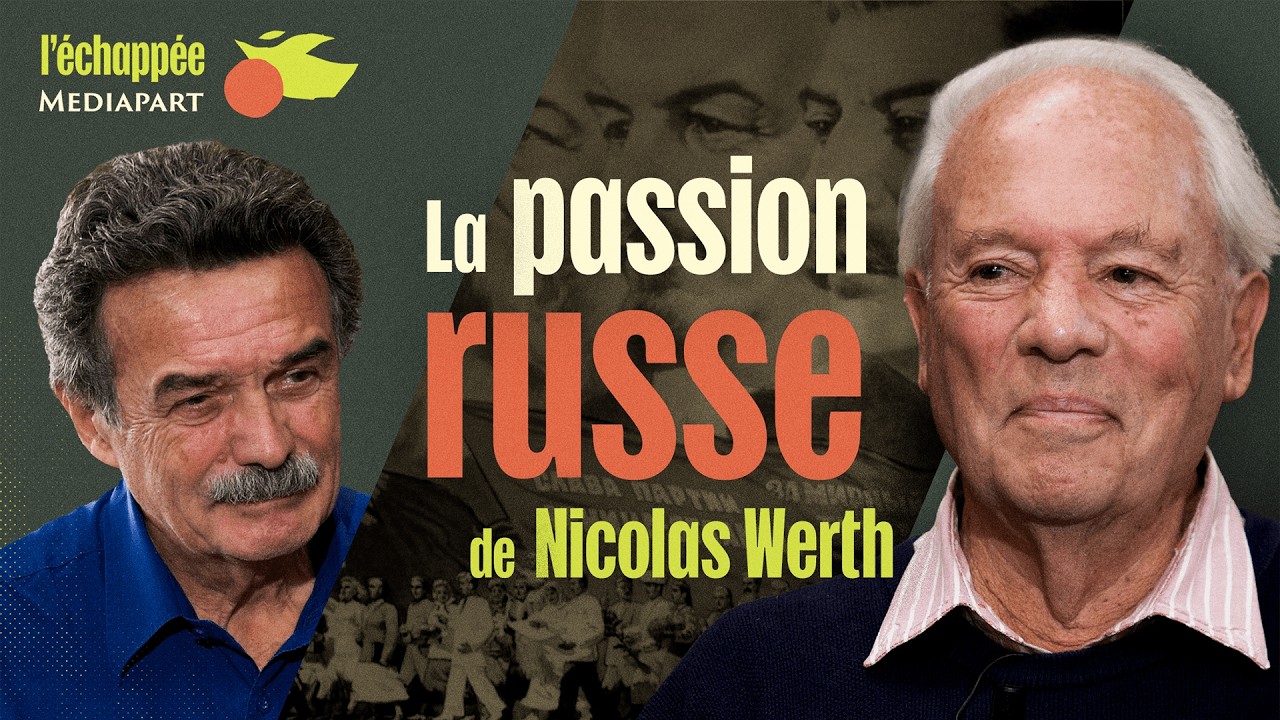
La passion russe de Nicolas Werth
The Russian passion of Nicolas Werth
Keywords
Summary
145 words
Critical Evaluation
Value of the Information & Strength of the Argument
The value of this interview lies in its dual perspective: it offers both a meticulous scholarly account of Soviet terror and an intimate, emotional narrative of a family history intertwined with that tragedy. Werth’s argument is solidly grounded in his extensive archival research and personal experience. He convincingly demonstrates how the current Kremlin’s revisionist history serves to legitimize authoritarian rule and imperial ambition. The discussion is well-structured, moving from personal biography to broader historiographical and political analyses, always maintaining a rigorous and nuanced tone. The interview excels in explaining complex historical processes (e.g., the quota-based mass executions) without oversimplifying, and it provides a powerful moral lesson about the dangers of political blindness.
Scientific Rigor, Source Quality, Title Accuracy
Nicolas Werth’s expertise as a CNRS research director and president of Memorial France lends high credibility. He cites specific historical facts, figures, and documents, and his analysis is consistent with well-established historiography. The sources linked in the description (Mediapart articles) provide supplementary context but are not primary references. The title accurately reflects the content’s focus on Werth’s passionate and painful relationship with Russia, though it slightly underplays the book’s familial angle. No discrepancies between the title and content are apparent. The interview is spontaneous but intellectually rigorous, with no apparent bias beyond the speaker’s own scholarly interpretation.
224 words
Title / Content Match
The title highlights the author's deep, conflicted relationship with Russia, which is the core theme of the interview and the book discussed.
Quality & Reliability
9/10
Nicolas Werth is a leading historian of the Soviet era, with deep archival expertise and a personal connection to the subject. The interview is thoughtful, well-contextualized, and avoids polemic, while offering clear insights into current Russian historical revisionism. The information is reliable and grounded in documented research.
Key Moments
Markers derived by PSI from the transcript: the creator did not define chapters.
- Introduction of Nicolas Werth and the setting at the Tourguenev Library.
- Werth recalls his father's suicide and the note 'Adieu ma Russie'.
- Comparison of his own near-suicide with his father's despair and the invasion of Ukraine.
- Discussion of his father's role as a war correspondent and his blindness to Stalinism.
- The opening of Soviet archives in the 1990s and his textbook becoming official.
- The Great Terror: 800,000 executions and Stalin's quotas against 'socially harmful' categories.
- The current denial of Katyn and rehabilitation of Stalin in Russian textbooks.
- Personal reflections on the role of critical history and the fate of Memorial activists.
Cited Sources
- Dmitry Glukhovsky : « Le pouvoir russe, une fusion entre KGB et crime organisé » — Referenced as an interview on Mediapart about Russian power; mentioned in the description.
- Nicolas Werth : pourquoi le Kremlin veut en finir avec Memorial — Linked as a previous article by Werth on the subject of Memorial.
- La Russie selon Vladimir Poutine (dossier) — Dossier of related Mediapart articles about Putin's Russia.
Concurring Sources
- Nicolas Werth : pourquoi le Kremlin veut en finir avec Memorial — Consistent with the interview's discussion of Kremlin efforts to suppress historical memory.
External References
Contribution & Novelties
This interview provides a unique blend of personal memoir and scholarly analysis, offering insights into how historical knowledge interacts with personal and political traumas. It sheds light on the current manipulation of Soviet history by the Russian state, using the example of Werth’s own career to illustrate the shift from archival openness to controlled lies. The original contribution is the intimate link between Werth’s biography and his historiographical work, which highlights the emotional and moral stakes of historical truth.
Pour aller plus loin :
- Gulag — Essential for understanding the Soviet forced labor camp system discussed throughout the interview.
- Katyn massacre — Directly related to the current symbolic denial in Russian textbooks.
- Memorial (society) — The human rights organization whose work is being dismantled in today’s Russia.
127 words
Radar Profile
The radar profile shows very high scores in information quality and quantity, reflecting the depth and reliability of the interview. Technical level is somewhat lower because the content is accessible to a general audience, but still demands careful attention to historical details. Global reliability is high, placing this among the best historical content.