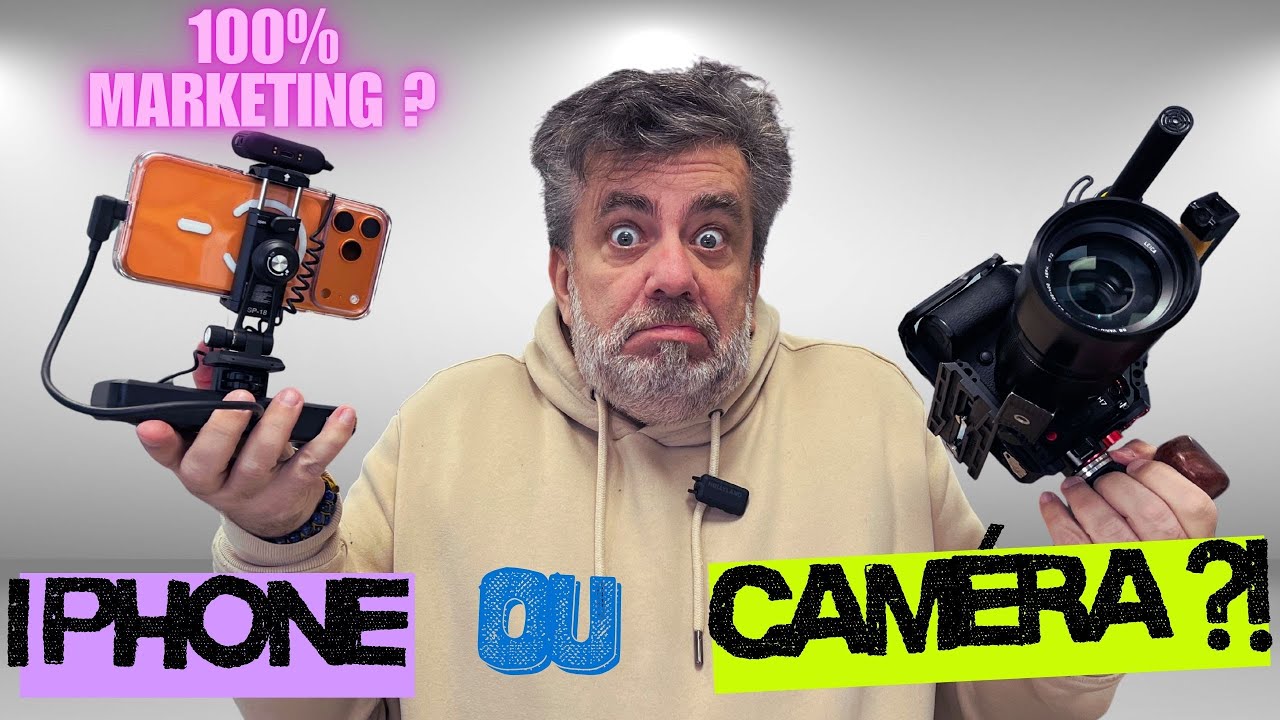
L'iPhone 17 PRO en caméra PRO : QUE DU MARKETING ?
The iPhone 17 PRO as a PRO camera: JUST MARKETING?
Title history
- L'iPhone 17 PRO en caméra PRO : QUE DU MARKETING ? — observed on 20261110-0326 UTC (YouTube)
Keywords
Summary
166 words
Critical Evaluation
Value of the Information & Strength of the Argument
The video offers valuable insights from a seasoned professional, providing an honest and nuanced perspective on the limitations and strengths of smartphone cameras in professional video production. The argument is well-structured: the speaker outlines his initial excitement, describes his rigorous hands-on testing with multiple accessories and formats, and logically explains why the iPhone’s small sensor prevents achieving the shallow depth of field commonly associated with cinematic imagery. He acknowledges the utility of the iPhone for spontaneous shots and high-quality quick content, but clearly distinguishes between marketing claims and practical professional needs. The sponsorship is transparently disclosed, and the speaker’s opinions are grounded in direct experience rather than speculation. The argumentation is persuasive, albeit subjective, and could benefit from more objective metrics or controlled tests, but it remains coherent and credible given the speaker’s expertise.
Scientific Rigor, Source Quality, Title Accuracy
The video demonstrates scientific rigor in its methodology: the speaker performs side-by-side comparisons, controls lighting and settings, and clearly describes the equipment used. However, it relies primarily on anecdotal evidence and personal judgment rather than citing scientific studies or independent benchmarks. The majority of the content is an opinion piece grounded in practical experience, which is valid but limited in scope. The title accurately reflects the content, as the video directly questions the marketing narrative surrounding the iPhone 17 Pro’s professional camera features. The description provides links to the sponsor (Hollyland) and the channel’s other resources, but these are commercial and promotional rather than substantive references. Overall, the source quality is acceptable for a practical review, but the lack of external validation or data reduces its robustness as a rigorous scientific analysis.
281 words
Title / Content Match
The title accurately reflects the content: a critical examination of whether the iPhone 17 Pro can truly replace a professional camera, questioning the marketing hype.
Quality & Reliability
7/10
The speaker is a professional with 30 years of experience in image making, providing hands-on tests and honest observations. However, the video is sponsored and heavily reliant on personal opinion, with limited objective measurements or third-party sources.
Key Moments
Markers derived by PSI from the transcript: the creator did not define chapters.
- Introduction to the video and disclosure of sponsorship by Hollyland microphones.
- Description of the full professional setup: iPhone, SSD, HDMI monitor, and audio gear.
- Side-by-side comparison between iPhone 17 Pro Max (ProRes) and Lumix S1R2, highlighting shallow depth of field differences.
- Discussion of computational photography and AI's potential to simulate cinematic looks in the future.
- Conclusion: iPhone is excellent for quick shots but not a replacement for professional cameras; alternative cheaper camera bodies offer better value.
Cited Sources
- Hollyland Store — The presenter uses and praises the Hollyland LARK MAX2 wireless microphone, and the video is sponsored by this company.
- Mac4Ever website — The channel's main site for Apple/Tech news and additional resources.
Concurring Sources
- Hollyland LARK MAX2 product page — The presenter recommends this wireless microphone and notes its high audio quality, which aligns with his positive assessment.
- Mac4Ever channel — The video is hosted on this channel, and the presenter's views align with the channel's focus on Apple products and professional usage.
External References
Contribution & Novelties
The video provides a personal, hands-on evaluation of the iPhone 17 Pro Max’s professional video features, challenging the marketing narrative with practical tests. Its original contribution lies in the perspective of an experienced professional who is simultaneously impressed by the technology and critical of its real-world applicability, especially regarding depth of field control and overall cinematic feel. It also sparks important considerations about the future of computational photography and AI-driven image processing in mimicking traditional film aesthetics.
Pour aller plus loin :
- Computational photography — This concept underpins Apple’s approach to depth simulation and image processing, directly related to the video’s discussion of ‘computational’ tricks.
- Depth of field — The video extensively explains how sensor size affects depth of field, making this a fundamental concept for understanding its arguments.
- Film emulation — The presenter dreams of AI simulating film looks; this describes current methods of mimicking analog aesthetics digitally.
149 words
Radar Profile
The radar profile shows a relatively balanced distribution, with the highest scores in technical level and quality of information, reflecting the speaker's expertise and detailed testing. Lower scores in quantity of information and reliability are due to the subjective nature of the review and the limited scope of objective measurements. Overall, this indicates a technically strong but personally opinionated analysis.