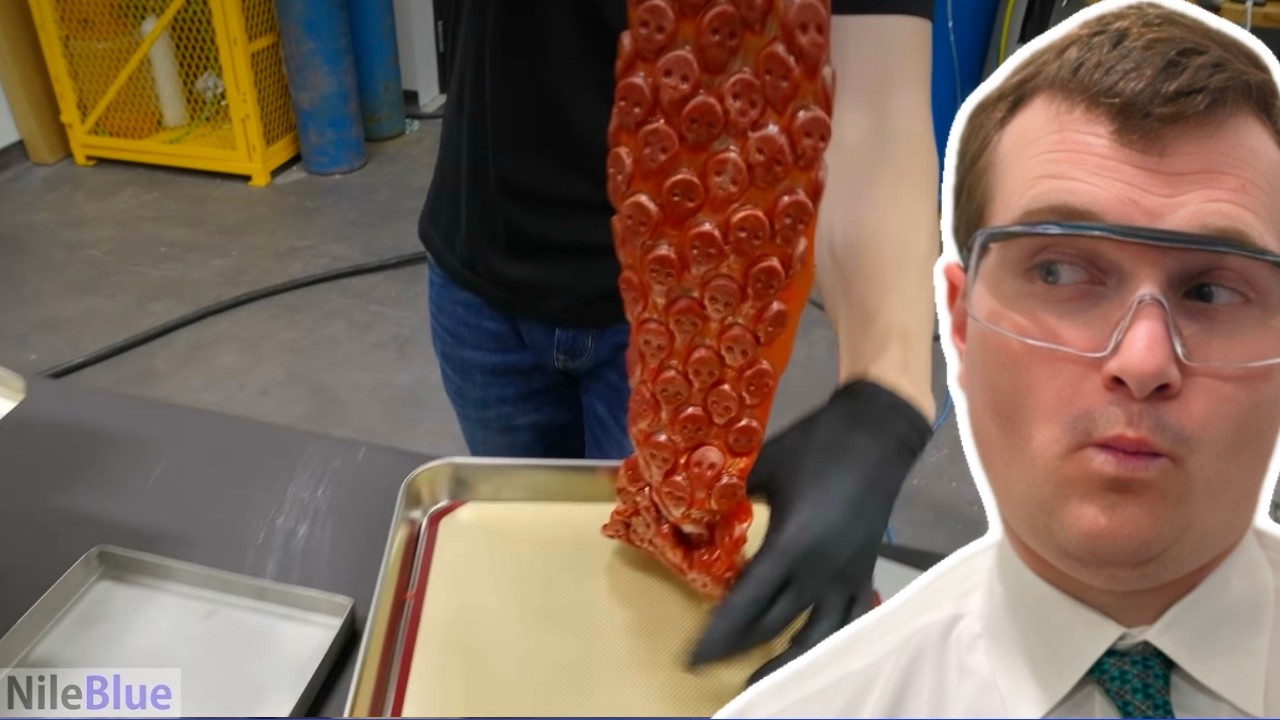
Why a Candy With Every Taste Sensation is a Bad Idea - Nuclear Engineer Reacts to NileBlue
Title history
- Why a Candy With Every Taste Sensation is a Bad Idea - Nuclear Engineer Reacts to NileBlue — observed on 20261106-1837 UTC (YouTube)
Keywords
Summary
124 words
Critical Evaluation
Value of the Information & Strength of the Argument
The video provides substantial value by translating complex nuclear engineering concepts into a relatable example. The engineer’s argumentation is solid, using clear analogies to illustrate principles like thermal inertia and control theory. He effectively demonstrates that maximizing individual variables often leads to system failure, advocating for a balanced approach. The reasoning is logical and well-structured, making the content both educational and engaging.
Scientific Rigor, Source Quality, Title Accuracy
The engineer relies on his professional expertise and the original video as the sole source. While no external references are cited, his explanations are consistent with established engineering principles. The title is accurate and appropriately reflects the content, which explores the pitfalls of overloading sensory input. The video does not present original research but offers a credible expert commentary on the presented experiment.
140 words
Title / Content Match
The title accurately reflects the content: the video explains why combining all taste sensations leads to a poor result.
Quality & Reliability
8/10
The engineer provides accurate analogies and explanations, but the analysis is subjective and based on personal expertise.
Key Moments
Markers derived by PSI from the transcript: the creator did not define chapters.
- Introduction and context of the reaction
- Discussion of temperature control and thermal inertia
- Adding dry ingredients and impact on material properties
- Adding capsaicin and handling irritants
- Forming the candy and issues with stickiness
- First taste test and immediate overwhelming experience
- Second attempt with reduced spice
- Final tasting and conclusion on optimization
Cited Sources
- Original video by NileBlue — The video being reacted to, which shows the candy-making process
Contribution & Novelties
The video offers a unique interdisciplinary perspective, applying nuclear engineering principles to a culinary experiment, demonstrating how systems thinking can reveal flaws in naive optimization. It provides insight into process control, safety analysis, and sensory integration.
Pour aller plus loin :
- PID controller — Relevant to the discussion of control systems and rate-of-change responses.
- Thermal inertia — Directly connected to the explanation of temperature overshoot in candy making.
- Multisensory integration — Explains how the brain processes simultaneous sensory inputs, central to the video’s argument.
84 words
Radar Profile
The radar profile shows high scores in quality and reliability, with moderate levels of information quantity and technical depth. This indicates a balanced, credible analysis that is technically sound but not overly dense.