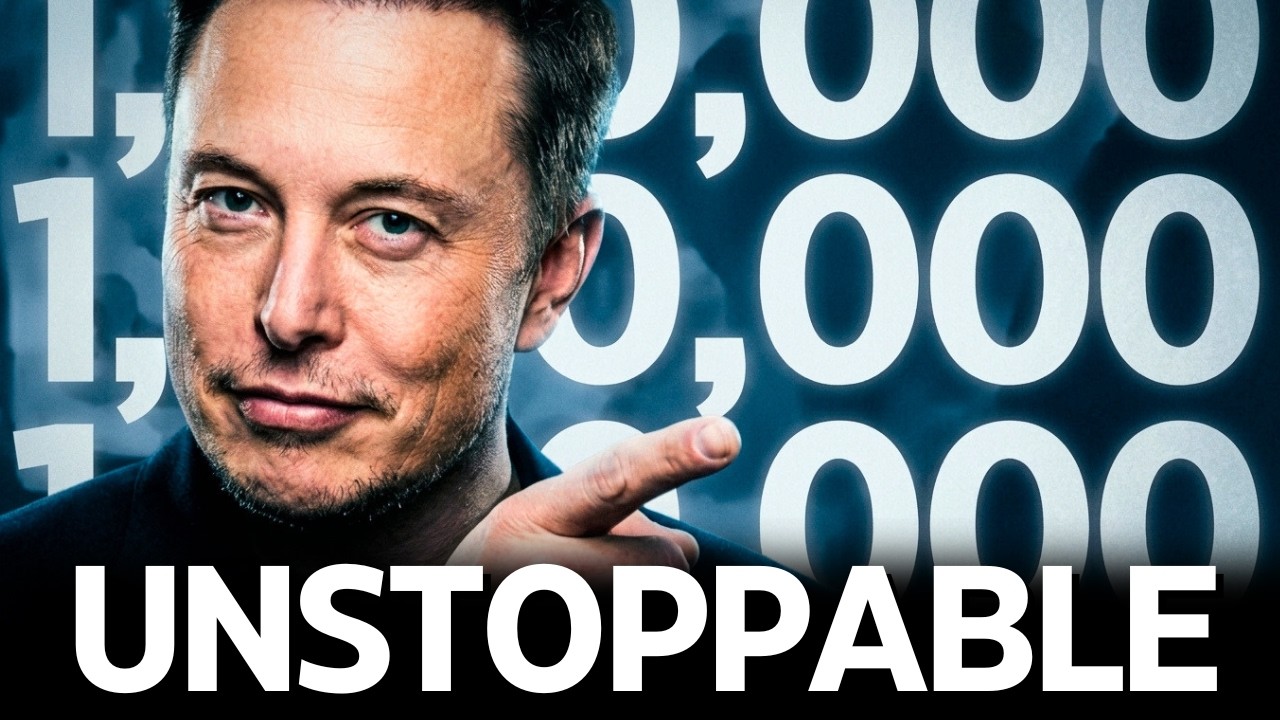
Elon's Other Trillion Dollar Bet
Title history
- Elon's Other Trillion Dollar Bet — observed on 20261110-0304 UTC (YouTube)
Keywords
Summary
182 words
Critical Evaluation
Value of the Information & Strength of the Argument
The value of the information lies in the synthesis of recent announcements and private data, providing a coherent picture of the space-based compute trend. Farzad effectively connects dots between energy constraints, launch costs, and corporate strategies. However, the argumentation is one-sided and highly speculative, often relying on projection and analogy rather than empirical evidence. He uses persuasive rhetoric and personal conviction, but the logic is sound within its own framework: cheap launches solve maintenance and refresh problems, and solar power is abundant in space. The discussion of cooling via radiative heat transfer is physically plausible, though oversimplified. The video lacks a balanced treatment of risks such as space debris, radiation, and orbital congestion, which are mentioned only briefly.
Scientific Rigor, Source Quality, Title Accuracy
The video shows moderate scientific rigour. It references public filings (FCC, IPO documents) and quotes from executives (Dario Amodei, Jeff Bezos), but these are not linked directly. The quality of sources is weak: the description includes only personal books, a YouTube video, and affiliate links, with no peer-reviewed studies or official institutional reports directly cited. The title is well-matched with the content, clearly indicating the central theme. Adequation is high. The author’s background in Tesla supply chain lends some credibility, but the absence of independent verification and the promotional tone reduce the overall trustworthiness.
227 words
Title / Content Match
The title accurately reflects the content, focusing on Musk's ambitious bet on orbital data centers as a trillion-dollar opportunity.
Quality & Reliability
6/10
The video presents a compelling argument backed by specific figures and public announcements, but relies heavily on personal interpretation and promotional material rather than peer-reviewed sources. The author's bias towards SpaceX and Musk is apparent, and the lack of direct citations to primary data weakens the overall reliability.
Key Moments
Markers derived by PSI from the transcript: the creator did not define chapters.
- Introduction: 1 million satellites, trillion-dollar payout, and energy equivalent to 85 billion homes.
- The electricity problem: IEA projects 1,100 TWh for data centers, equal to Japan's consumption.
- Anthropic's 80x growth and Dario Amodei's admission of compute shortage; deal with SpaceX for orbital compute.
- Starcloud's H100 chip in orbit, running a full AI model – proof that commercial chips can work in space.
- SpaceX's Terrafactory: $55B chip plant for space-based data centers, plus Colossus with 555,000 GPUs.
- SpaceX IPO milestone: Elon gets 60M shares for 100 TW of orbital compute; target valuation over $6.6T.
- Amazon's Project Sunrise and Blue Origin's reusable New Glenn, framing the competition.
Cited Sources
- Master Plan: What Elon Musk is Actually Building (book) — Linked in the video description as a resource for understanding Musk's broader vision.
- Abundance or Collapse (book) — Recommended by the author for context on future scenarios.
- Farzad's exclusive article on Elon's other trillion-dollar bet — Companion content with additional analysis.
- Why Most People Could Never Hold Tesla (video) — Mentioned at the end for investing psychology.
- Farzad's community — Promoted as a place for deeper engagement.
Concurring Sources
- SpaceX official website — Relevant for launch capabilities and Starship development.
- International Energy Agency (IEA) — Provides energy consumption data for data centers, as referenced in the video.
- Federal Communications Commission (FCC) — Context for satellite licensing filings mentioned in the video.
Dissenting Sources
- Kessler syndrome - Wikipedia — Raises the issue of space debris, which could make large satellite constellations untenable.
External References
Contribution & Novelties
The video provides a unique synthesis of recent but disparate news items (FCC filing, Starcloud, Anthropic’s growth, SpaceX IPO) to argue that orbital compute is not only possible but inevitable. It reframes the energy bottleneck as the primary driver, shifting the focus from chip availability to electricity. The author also highlights the competitive dynamics between SpaceX and Amazon/Blue Origin, which is rarely covered in such detail.
Pour aller plus loin :
- Space-based solar power — Directly related to the idea of using solar energy in orbit for data centers.
- Kessler syndrome — A critical risk for mega-constellations, relevant to the proposed 1 million satellites.
- Starship (SpaceX) — The launch vehicle that could make $200/kg orbital costs possible.
- Nvidia H100 — The chip used in Starcloud’s orbital experiment.
127 words
Radar Profile
The radar chart indicates a high quantity of information (8) but a moderate quality (7) and technical depth (6), with a fiabilité of 6. This suggests a content-dense but opinion-driven presentation, where the arguments are engaging but not grounded in peer-reviewed data, leading to a balanced yet not fully reliable profile.
💬 Sur les 30 commentaires analysés, l'orientation est très positive, avec une forte admiration pour Elon Musk et l'enthousiasme pour les projets spatiaux, bien que quelques commentaires expriment des inquiétudes sur la congestion orbitale ou les risques.