Yuliya V. Ladygina — Beyond the Battlefield
Title history
- Yuliya V. Ladygina — Beyond the Battlefield — observed on 20261026-0051 UTC (YouTube)
Keywords
Summary
175 words
Critical Evaluation
Value of the Information & Strength of the Argument
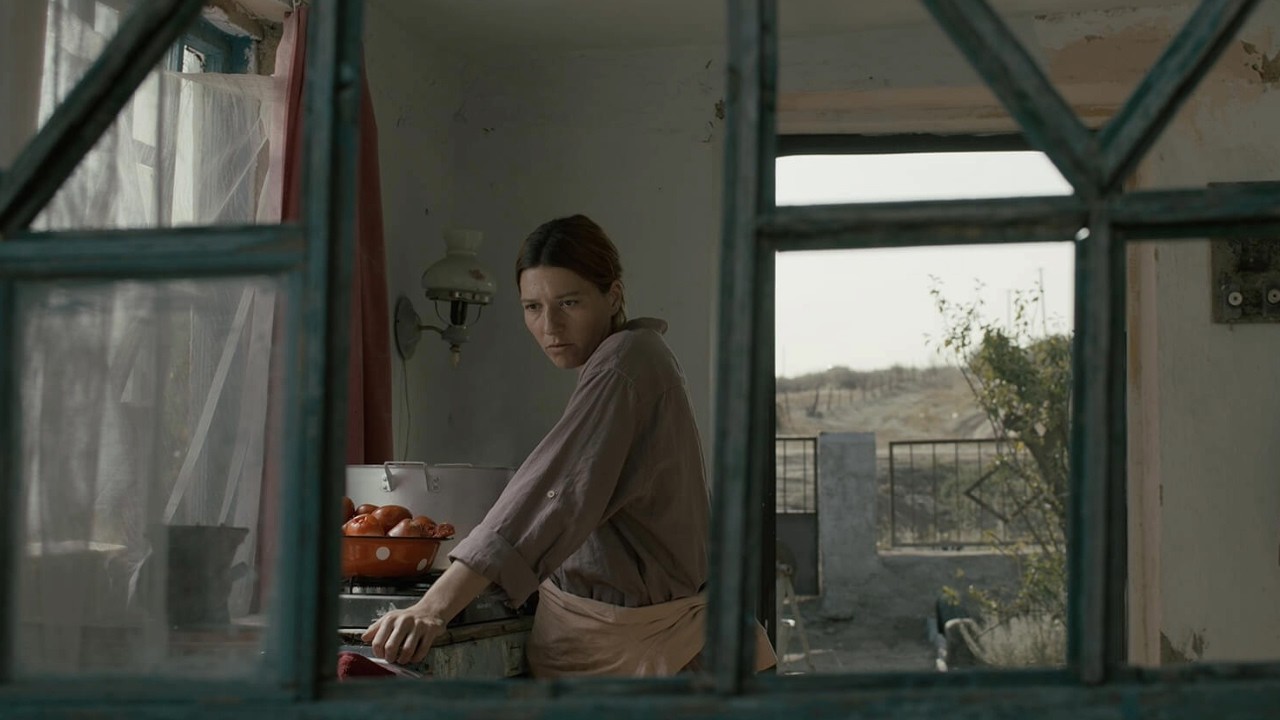
The lecture offers a compelling and original argument that war cinema must be understood beyond the battlefield, integrating insights from media studies, gender studies, and memory studies. Ladygina’s close reading of Klondike is meticulous, demonstrating how formal choices — the persistent frame of the ruined wall, the emphasis on mundane chores, and the depiction of Irka’s pregnant body — work against the conventional spectacles of war. Her argument is well-supported by references to theorists like Farocki, Pomerantsev, and Oksana Kis, and she provides concrete examples from the film to illustrate her points. The lecture successfully challenges the viewer to reconsider what counts as war experience and visibility, while also situating the film within broader cultural and political contexts.
Scientific Rigor, Source Quality, Title Accuracy
The lecture is rigorously grounded in scholarly sources, though it relies primarily on the speaker’s own analysis and concepts from existing literature. Ladygina explicitly cites works by Galeotti, Singer, Pomerantsev, Farocki, and Kis, and provides a clear theoretical basis. The event is hosted by the Harvard Ukrainian Research Institute, lending credibility. The title accurately reflects the content: the lecture indeed explores ‘Beyond the Battlefield’ by focusing on Klondike’s depiction of domestic and everyday life as a site of war. The only piece of external evidence is the event page link in the description, which provides context but no additional sources; this is typical for a lecture. Overall, the sources are relevant and appropriately used, though the lack of a broader source list limits immediate verification.
258 words
Title / Content Match
The title accurately captures the lecture's focus on extending war cinema beyond battlefields, using Klondike as a case study to explore how domestic spaces and everyday life become integral to conflict representation.
Quality & Reliability
8/10
Lecture delivered at Harvard by a recognized scholar, presenting original research on Ukrainian war cinema. Theoretical framework is well-defined, close reading is meticulous, and the argument is supported by references to established scholars. The event is hosted by a reputable institution.
Key Moments
Markers derived by PSI from the transcript: the creator did not define chapters.
- Introduction by Oleh Kotsyuba, including speaker bios and the Jacyk Distinguished Fellowship.
- Ladygina begins her lecture: outlines her book project and argues that cinema participates in the extended battlefield.
- Discusses theoretical framework: hybrid warfare, operational images, and the role of media in wartime.
- Close reading of Klondike: analysis of Irka's domestic labor, the hole in the wall, and the representation of her pregnant body.
- Discussion of the film's international circulation and its role in the cultural and informational struggle over the war.
Cited Sources
- Event Page – Beyond the Battlefield — Official event description and speaker biography from the Harvard Ukrainian Research Institute.
Contribution & Novelties
This lecture offers a fresh perspective on war cinema by proposing that contemporary Ukrainian films, particularly Klondike, operate as active agents in the warfare of images and narratives. Ladygina innovatively applies the concept of the ‘operational image’ to cinema, showing how films circulate across functions like evidence, advocacy, and aesthetic representation. Her close reading of the film’s formal strategies — the recurring hole in the wall, the emphasis on domestic chores, and the unglamorous depiction of pregnancy — provides a new model for analyzing war films beyond combat spectacle. The lecture also contributes to gender studies by connecting domestic labor to wartime resistance, building on Oksana Kis’s work. This research is timely and significant for understanding the cultural dimensions of the Russia-Ukraine war.
Pour aller plus loin :
- Hybrid warfare — Key concept used by Ladygina to frame the extended battlefield.
- Cultural memory — Central to the film’s engagement with history and identity.
- Women’s cinema — Relevant to the film’s formal choices and thematic focus on the female body and domesticity.
171 words
Radar Profile
The radar profile shows high scores in information quality and quantity, reflecting the lecture's depth and scholarly rigor. The technical level score is moderate, indicating accessibility to an informed non-specialist audience. Global reliability is high, consistent with the academic setting and the speaker's credentials.