The Hidden Problem With Battery Breakthroughs
Title history
- The Hidden Problem With Battery Breakthroughs — observed on 20261103-1438 UTC (YouTube)
Keywords
Summary
189 words
Critical Evaluation
Value of the Information & Strength of the Argument
The video provides a valuable synthesis of multiple battery technologies, updating their status with concrete examples and a systematic TRL scoring. The argumentation is solid: it uses a clear framework, cites company announcements, and includes a cautionary tale from an MIT professor. The host effectively contrasts successes (sand, brick, graphite) with failures (liquid metal), supporting the thesis that commercialization is the hardest step. The inclusion of specific metrics (e.g., 94% efficiency, 75% capacity retention, 70% emission reduction) adds credibility. However, some claims, like GMG’s 10C rating and 94% efficiency, are presented without independent verification, relying on company reports. Overall, the argument is coherent and persuasive, though the lack of external sources within the video itself limits immediate verification.
Scientific Rigor, Source Quality, Title Accuracy
The video demonstrates reasonable rigor by referencing the TRL scale and providing a link to the script and citations in the description. It openly acknowledges limitations, such as the pending TRL for Antora until full operation. The title accurately sets expectations by focusing on the ‘hidden problem’—the gap between announcements and market reality. The content aligns with the title, as it systematically evaluates each technology’s readiness. The host also references an MIT professor’s quote, adding authority. However, the video does not formally cite academic papers or independent studies; it relies on company statements and the host’s own tracking. Despite this, the presentation is transparent about its methods, and the description offers additional resources. Overall, the rigor is adequate for a science communication channel, but not at the level of a peer-reviewed source.
265 words
Title / Content Match
The title accurately reflects the content, which highlights the gap between battery research breakthroughs and their real-world commercialization.
Quality & Reliability
8/10
The video provides a well-structured review of multiple battery technologies, using the Technology Readiness Level scale and referencing company statements. The host includes citations in the show notes, but the video itself does not present verifiable data beyond anecdotal claims, yet the analysis is reasonable and based on publicly available information.
Chapters
Cited Sources
- Video script and citations — Official script and citation list for this video, providing references to sources mentioned.
- Undecided website — Channel's website with additional articles and resources.
- Solar guide — Guide on achieving energy security with solar.
- Podcast — Follow-up podcast audio version.
- Related video: World's Most Efficient Solar Panel — Another video by the same channel on solar panels.
- Discord server — Community discussion server.
- Patreon — Support page on Patreon.
- Energysage portal — Service for researching solar and heat pumps.
- EnergyPal — Service for personalized solar quotes.
- Epidemic Sound — Music provider.
- Bluesky profile — Author's Bluesky social media.
- Mastodon profile — Author's Mastodon social media.
Contribution & Novelties
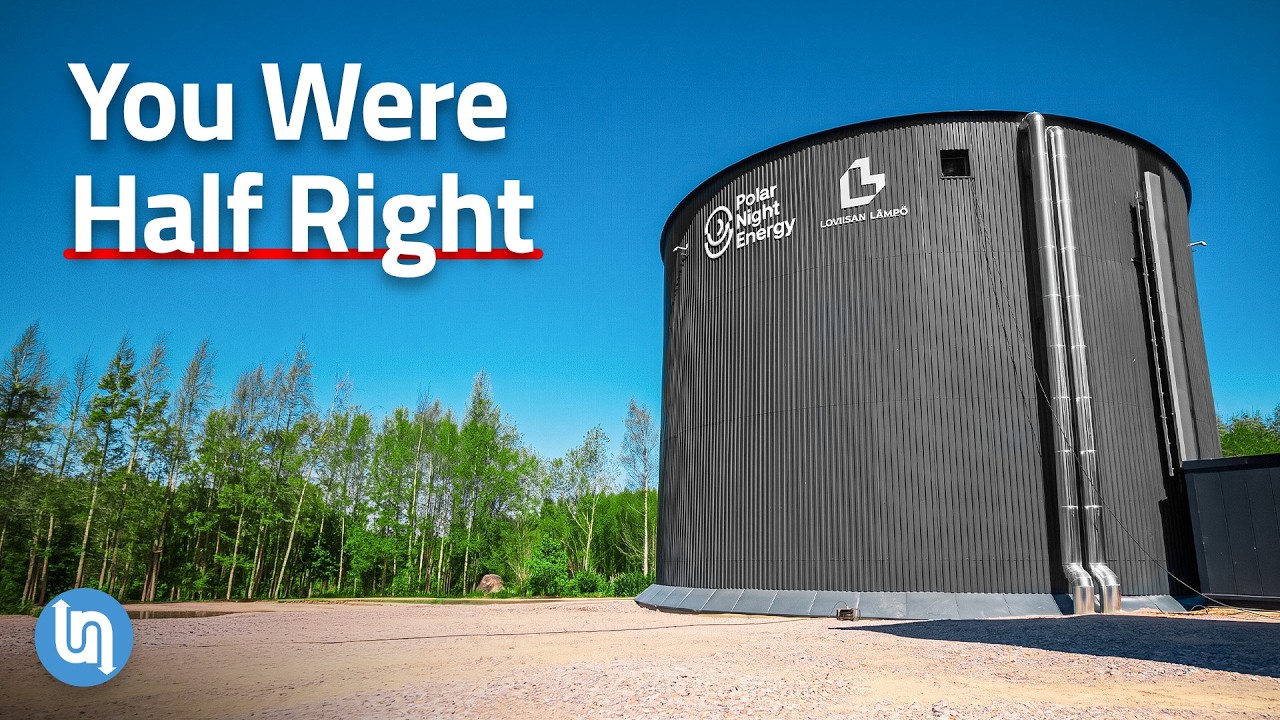
This video adds value by applying a standardized TRL evaluation to a range of battery innovations covered over several years, offering a longitudinal perspective on their commercialization progress. It highlights the economic and scaling barriers that often doom promising technologies, using concrete examples. The host’s personal tracking and updates provide a unique synthesis not found in isolated news reports.
Pour aller plus loin :
- Technology Readiness Level — Provides a detailed explanation of the TRL scale used in the video to assess technology maturity.
- Thermal energy storage — Explains the principles behind sand, brick, and graphite batteries, including heat storage and conversion.
- Lithium–sulfur battery — Discusses the chemistry and potential of sulfur-based batteries, relevant to Gelion and Lyten’s developments.
119 words
Radar Profile
The scores indicate a high quantity of information and good reliability, with moderate technical depth, suggesting a balanced and accessible analysis.