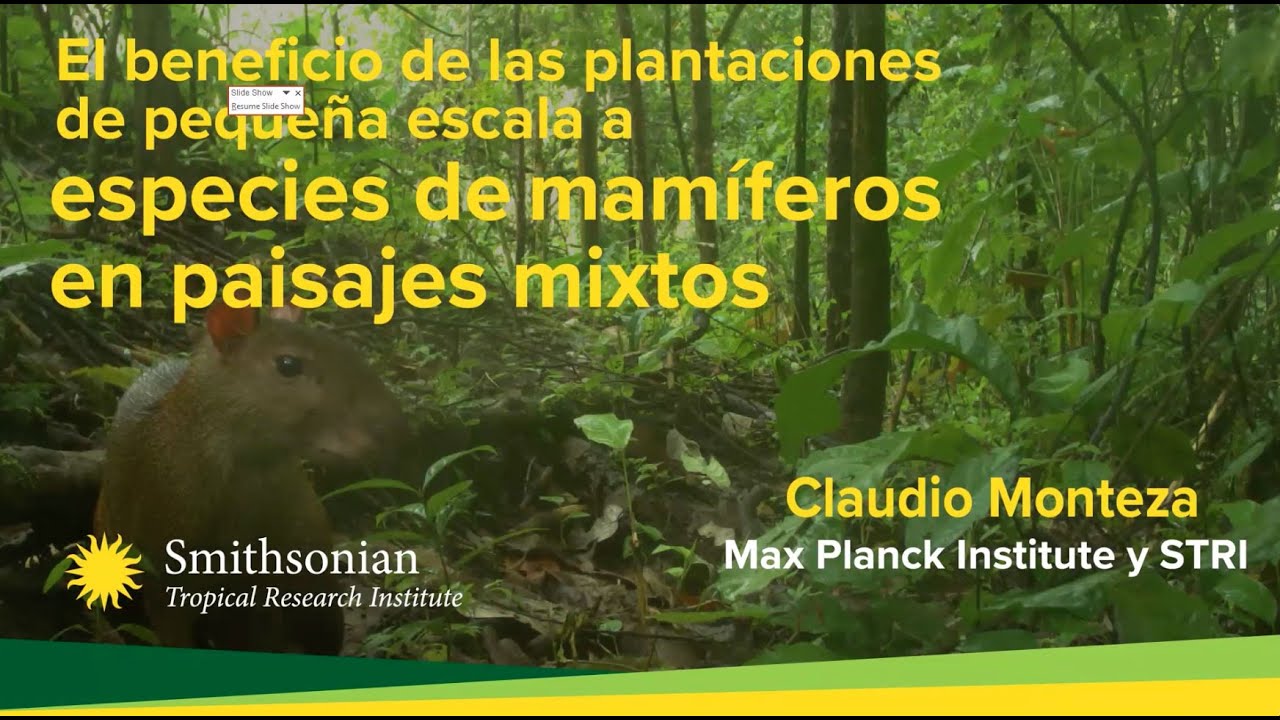
El beneficio de las plantaciones de pequeña escala a especies de mamíferos en paisajes mixtos
Title history
- El beneficio de las plantaciones de pequeña escala a especies de mamíferos en paisajes mixtos — observed on 20261026-2337 UTC (YouTube)
Keywords
Summary
174 words
Critical Evaluation
Value of the Information & Strength of the Argument
The information value is significant: the video presents original field data on mammal communities in small-scale plantations, a topic underrepresented in conservation debates often dominated by carbon metrics. The argumentation is solid, methodical, and transparent about limitations. Monteza thoroughly explains the camera-trapping methodology, including random sampling, detection distance measurement, and handling of data anomalies like battery failures. He contextualizes his findings within broader conservation discussions, arguing that plantations’ value should be assessed through multiple indicators, not just carbon sequestration. His reasoning is cautious, avoiding overgeneralization and explicitly stating that his study offers one contribution to a larger debate.
Scientific Rigor, Source Quality, Title Accuracy
Scientific rigor is high: the study is collaborative with established institutions (STRI, UC Davis, Max Planck), and the speaker is a PhD candidate with extensive field experience. He describes the study design in detail, acknowledges potential biases (e.g., camera distance, sampling effort), and uses appropriate methodology for small-scale areas. No formal sources are cited in the talk, but the methodology appears robust. The title accurately reflects the content, focusing on mammal benefits in small-scale plantations. Overall, the presentation adheres to scientific standards, though without explicit references to prior literature, the sourcing relies on the speaker’s expertise.
209 words
Title / Content Match
The title accurately reflects the content: the talk details the study of mammal diversity and habitat use in small-scale plantations within a mixed landscape.
Quality & Reliability
8/10
Based on the transcript, the presentation describes original research conducted by the speaker, a PhD candidate at the Max Planck Institute, with collaborators from STRI and UC Davis. The methodology is explained in detail, including camera trapping protocols, random sampling design, and handling of technical/logistical challenges. The findings are presented as one indicator among many, cautiously framing conclusions. No formal peer-reviewed citations are given in the speech, but the institutional affiliations and rigorous field methods support reliability.
Key Moments
Markers derived by PSI from the transcript: the creator did not define chapters.
- Introduction of speaker and background of the study.
- Discussion of global land use change and importance of protected areas.
- Comparison of native forests and monoculture plantations, introducing the debate on carbon capture.
- Description of the study site in Colón, Panama, and the mixed landscape.
- Explanation of sampling design with camera traps, including random points and rotation.
- Field anecdotes and challenges with camera equipment and logistics.
- Importance of measuring detection distance for each camera trap.
- Data collection over one year, including variations in sampling effort.
Cited Sources
- Description: STRI (Smithsonian Tropical Research Institute) — Mentioned as the host institution and research center.
- Max Planck Institute of Animal Behavior — Affiliation of the speaker for his PhD.
Concurring Sources
- Smithsonian Tropical Research Institute — Host institution, likely supporting similar research on biodiversity.
- Max Planck Institute of Animal Behavior — Speaker's affiliation, known for behavioral ecology research.
Contribution & Novelties
The video contributes original empirical data on mammal use of small-scale plantations, a relatively understudied topic compared to large-scale monocultures or natural forests. It highlights the potential role of such plantations as biological corridors between protected areas in Panama. The methodological transparency regarding camera trap limitations adds practical value for future studies.
Pour aller plus loin :
- Camera trap — Reference for the primary data collection method.
- Landscape ecology — Key framework for studying species in mixed landscapes.
- Reforestation — Context for plantation benefits and debates.
86 words
Radar Profile
The radar profile shows high scores in 'quantity of information' and 'quality of information', indicating a content-rich presentation with thorough explanations. The technical level is moderately high, suitable for a scientific audience. Reliability is strong given the speaker's credentials, but the absence of cited literature slightly lowers the global fiability.