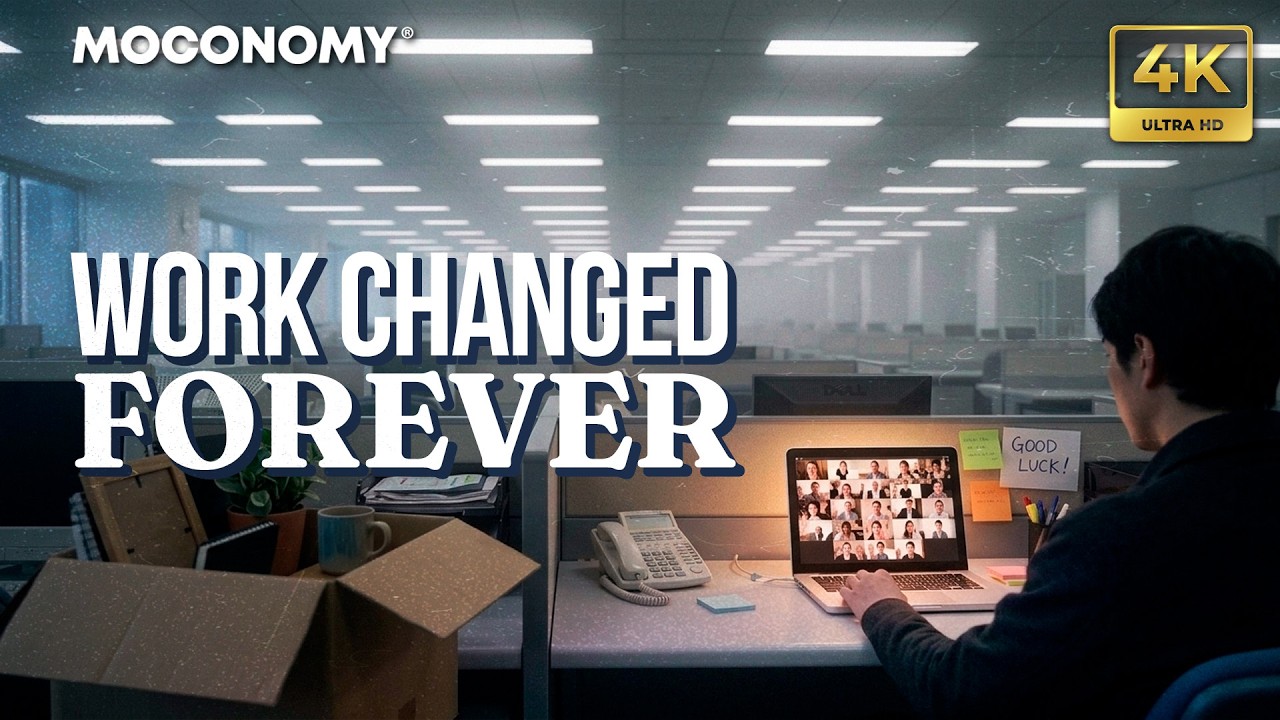
Work & Business Debunked | The work you knew no longer exists | 4K
Keywords
Summary
132 words
Critical Evaluation
Value of the Information & Strength of the Argument
The value of the information lies in its compilation of expert opinions from various industries, offering a multi-faceted view of how work is changing. The argumentation is generally solid, with experts providing reasoned explanations for trends such as the shift to remote work and the impact of automation. For instance, the manufacturing expert notes that automation replaces tasks, not jobs, and cites research from the Manufacturing Institute to support this. The film also presents counterpoints, such as the potential for increased isolation and the difficulty of balancing flexibility with productivity. However, some arguments are presented as assertions without empirical backing, and the documentary does not critically evaluate the data it mentions, such as the 40% freelancing statistic. Overall, the value is substantial for a general audience, though the depth of analysis is limited by the documentary format.
Scientific Rigor, Source Quality, Title Accuracy
The rigor is moderate; the documentary relies on expert testimony rather than peer-reviewed studies. Sources are not explicitly cited within the film, but the description provides links to related playlists and other documentaries on the channel. The title suggests a debunking approach, but the content is more expository, which creates a slight mismatch. The film does not cite academic or official sources, but the experts’ credentials are implied through their roles. The adequacy between title and content is partial: the title promises to debunk work myths, but the documentary instead outlines trends and expert predictions. This does not significantly detract from the content’s value, but it affects the note_globale by half a point.
265 words
Title / Content Match
The title suggests a debunking of work-related myths, but the content is more of a forward-looking analysis of how the pandemic accelerated changes in work. It partially fits but is somewhat misleading.
Quality & Reliability
7/10
The documentary features multiple experts from consulting, manufacturing, and technology, providing a broad perspective on the future of work. While some claims lack direct citations, the overall tone is balanced and acknowledges both opportunities and challenges.
Key Moments
Markers derived by PSI from the transcript: the creator did not define chapters.
- Introduction by Ian Khan on the evolving nature of work.
- Consulting expert discusses the shift to 100% virtual delivery and resilience.
- Manufacturing expert on automation replacing tasks, not jobs, and technology adoption.
- Discussion on the end of the 40-hour workweek and radical flexibility.
- Remote work trends and the rise of freelancing, with statistics mentioned.
- Challenges of isolation and engagement in a distributed workforce.
- Future predictions including 5G, AI, and the war for talent.
Cited Sources
- World Economy Playlist — Related playlist from the same channel.
- Originals Playlist — Playlist of original documentaries.
- Another Documentary — Referenced as another documentary by the channel.
- Another Documentary 2 — Additional documentary reference.
- Another Documentary 3 — Additional documentary reference.
Contribution & Novelties
The documentary’s main contribution is its synthesis of expert perspectives on the immediate post-pandemic work environment, providing a snapshot of how organizations adapted. It highlights the concept of ‘radical flexibility’ and the shift from location-based work to skills-based tasks. While not groundbreaking, it consolidates widely discussed ideas into a coherent narrative.
Pour aller plus loin :
- Remote work — Provides a comprehensive overview of remote work trends and history.
- Gig economy — Explores the growing freelance and gig-based workforce.
- Automation — Discusses the role of automation in replacing tasks and creating new roles.
93 words
Radar Profile
The radar profile shows a fairly balanced documentary with strong information quantity and moderate technical depth. Reliability is adequate but not exceptional, with a slight dip in rigor due to lack of explicit sources. The overall impression is that of a well-rounded overview for a general audience.