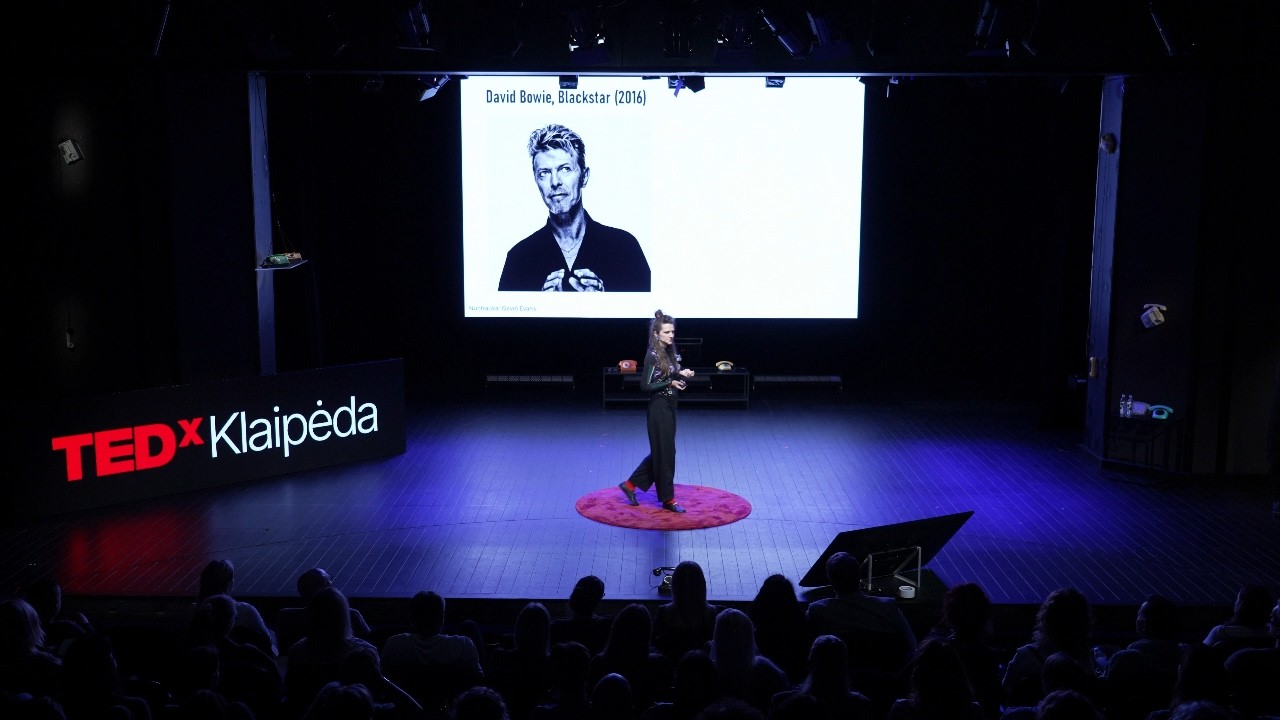
Su Mirtadieniu! | Milda Pivoriūtė | TEDxKlaipėda
Happy Birthday! | Milda Pivoriūtė | TEDxKlaipėda
Title history
- Su Mirtadieniu! | Milda Pivoriūtė | TEDxKlaipėda — observed on 20261106-1628 UTC (YouTube)
Keywords
Summary
173 words
Critical Evaluation
Value of the Information & Strength of the Argument
The talk offers valuable insights into death as a social and existential phenomenon. The speaker’s argumentation is coherent, moving from societal observations to personal anecdotes and philosophical references. She effectively uses examples like David Bowie and the anthropologist’s text to illustrate her points. However, some arguments rely on personal experience and broad generalizations rather than systematic evidence. The claim about ‘93% of historical humans being dead’ could benefit from source citation. The talk’s value lies in its accessible and thought-provoking presentation, encouraging reflection on a topic often avoided.
Scientific Rigor, Source Quality, Title Accuracy
The speaker does not explicitly cite specific academic sources, but her background in sociology and existential psychotherapy is apparent. She references concepts like ‘awe’ (a term associated with figures like Dacher Keltner) and mentions existentialists like Michel de Montaigne (‘who has learned to die has unlearned to serve’). The talk includes some demographic statistics, though without precise references. The title ‘Su Mirtadieniu!’ is catchy and aligns with the talk’s central proposal to ‘celebrate’ one’s death, but it may not fully capture the broader themes discussed. Overall, the talk is based on expert opinion and personal reflection rather than a systematic review of literature.
206 words
Title / Content Match
The title 'Su Mirtadieniu!' (Happy Deathday?) is somewhat creative and intriguing, matching the talk's theme of celebrating death and reflecting on mortality.
Quality & Reliability
7/10
The speaker is a PhD in social sciences and lecturer, presenting a thoughtful personal and academic perspective on death, supported by some statistics and references. While grounded in sociology and existential psychotherapy, the talk relies heavily on personal anecdotes and subjective reflections.
Key Moments
Markers derived by PSI from the transcript: the creator did not define chapters.
- Introduction: universal experiences of birth and death; asks audience for two universal experiences.
- Discusses statistics: ~117 billion humans lived, 93% dead, 7% alive.
- Death as a taboo in modern society; contrast with traditional practices.
- Modern deaths in institutions; missing the moment of death; examples of property rental.
- Unrealistic deaths in media; culture values youth and success, not aging and death.
- Shift from natural acceptance to technical solution; cryonics mention (700 people frozen).
- Introduces the concept of 'awe' (pagarbi nuostaba) and its importance; examples of nature, Olympics, altruistic acts.
- David Bowie's death: hiding illness, releasing 'Black Star' and 'Lazarus' video; reflection on death as freedom and creativity.
- Anthropologist Thomas Hylland Eriksen's reflection on dying; shift from productive 'hare' to 'turtle'; intense focus on the present moment.
- University seminar discussion with students: therapy through talking about death; idea of celebrating 'mirtadieniai' (deathdays).
- Concluding thoughts: death gives life meaning; existentialist view; encouragement to initiate conversations about death.
Cited Sources
- TEDx Program — General TEDx event description and disclaimer.
Concurring Sources
- Existentialism - Wikipedia — The talk aligns with existentialist views on death giving life meaning.
Dissenting Sources
- Wikipedia: Cryonics — The talk's brief mention of cryonics as a technical solution could be seen as oversimplifying the scientific and ethical complexities.
Contribution & Novelties
The talk offers a personal and sociological perspective on death acceptance, highlighting the therapeutic role of discussing mortality. It contributes to the discourse on death positivity and its potential to enhance life quality. The speaker’s integration of personal examples with broader societal analysis is engaging.
Pour aller plus loin :
- Death awareness Wikipedia — Related to accepting mortality.
- Existential therapy Wikipedia — The talk references existential psychotherapy concepts.
- Awe (emotion) - Wikipedia — The concept of ‘awe’ as explored in the talk.
- Thanatology - Wikipedia — Academic study of death.
90 words
Radar Profile
The scores are balanced with high reliability and information quality. The level of technicality is moderate, reflecting its accessible academic style. The main area of potential improvement is the specificity of sources.