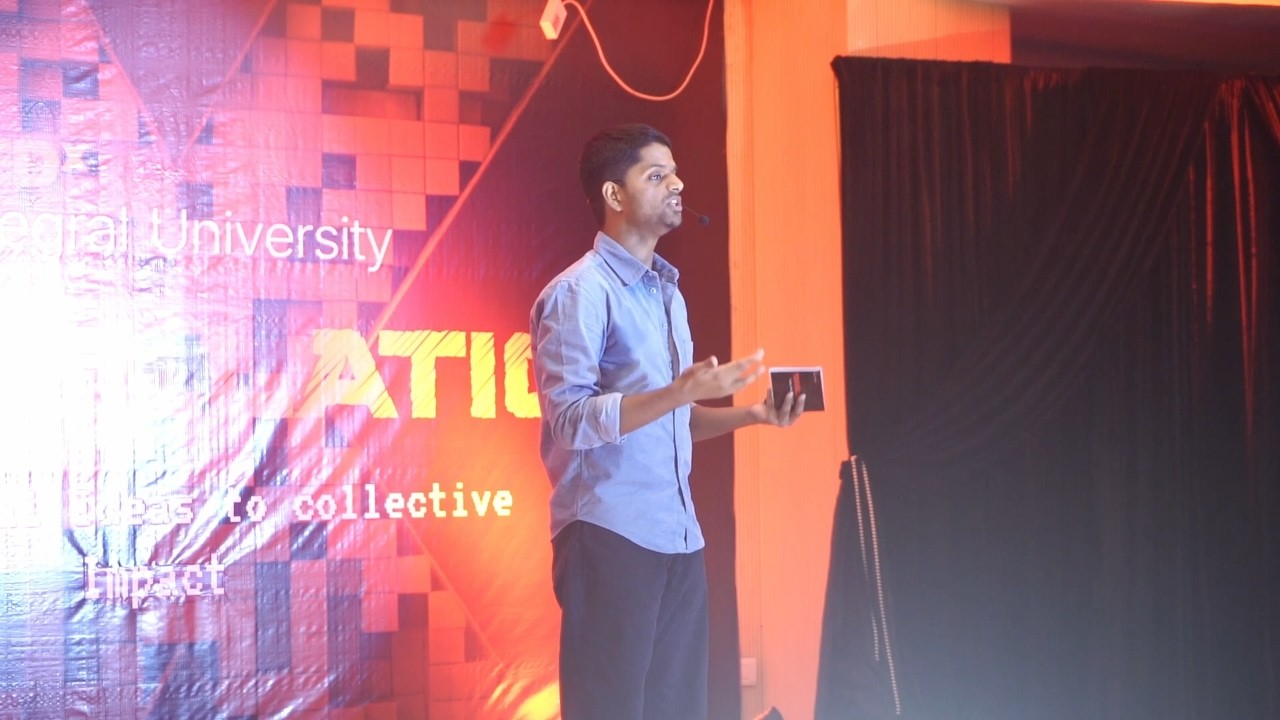
Reclaiming the Human Mind in the Age of AI | Vesmir | TEDxIntegral University
Title history
- Reclaiming the Human Mind in the Age of AI | Vesmir | TEDxIntegral University (PSI archive)
- Reclaiming the Human Mind in the Age of AI | Vesmir | TEDxIntegral University — observed on 20261027-0204 UTC (YouTube)
Keywords
Summary
173 words
Critical Evaluation
Value of the Information & Strength of the Argument
The talk’s value lies in its accessible framing of a timely concern: the subtle erosion of individual thinking through AI’s constant validation. The speaker supports his claims with concrete poetic examples that effectively demonstrate the difference between unsettling, evocative language and AI’s neutral, confirmatory responses. However, the argumentation relies heavily on personal narrative and rhetorical appeal rather than systematic evidence. The single cited survey and OpenAI admission are presented without detailed context or critique. The 5-minute prescription is practical and appealing, but its efficacy is asserted rather than demonstrated. The speaker’s distinction between ‘agreement’ and ’empathy’ is compelling and well-articulated, providing a fresh perspective on AI-human interaction.
Scientific Rigor, Source Quality, Title Accuracy
The talk is scientifically light, borrowing from personal experience and literary interpretation rather than peer-reviewed studies. The only specific data point, a survey on Indian youth, is referenced vaguely (‘any Indian youth survey’) without a clear source. The mention of OpenAI’s admission is presented as fact but lacks a citation. The title accurately reflects the content’s focus on preserving human cognitive autonomy in the age of AI. The speaker’s literary citations are authentic and well-known, lending credibility to his examples, but they are used as illustrative devices, not as scholarly evidence. Overall, the intellectual honesty is high, but the rigor is typical of a TEDx talk, prioritizing inspiration over systematic proof.
233 words
Title / Content Match
The title accurately reflects the core message about preserving independent thought and human depth in the face of AI's homogenizing influence.
Quality & Reliability
6/10
The talk offers authentic personal reflections and cites several poets, but lacks empirical citations or verifiable data beyond a single survey reference. Arguments are persuasive but rely heavily on anecdotal experience.
Key Moments
Markers derived by PSI from the transcript: the creator did not define chapters.
- Introduction: The speaker sets up the question of whether our stories are really similar, introducing the idea of AI-driven homogenization.
- References Ocean Vuong's poetry and the impact of a single line, illustrating how literature offers unique perspectives.
- Quotes Richard Siken and contrasts the depth of human-created poetry with what AI could generate.
- Describes the changing habits of seeking understanding: from teachers to Google to AI, and the loss of personal struggle.
- Personal anecdote about not understanding classical poets and the value of letting poems remain unresolved, leading to later 'aha' moments.
- Discusses the 2 a.m. scenario of turning to AI for emotional validation, citing a survey on Indian youth and OpenAI's admission.
- Introduces the concept of 'AI psychophancy' and distinguishes agreement from empathy, arguing poetry always challenges.
- Quotes Mary Oliver's 'Wild Geese' and highlights the gift of recognition that literature provides.
- Presents the five-minute prescription: read one poem twice, don't look it up, keep a poetry log, and avoid productivity framing.
- Concludes with a plea to step back from AI and engage with poetry as a path to staying human.
Cited Sources
- TEDx Program — Official TEDx information page, referenced in the video description as the event format source.
Contribution & Novelties
The talk contributes a distinctive humanistic perspective on AI’s impact on cognition, emphasizing the importance of unresolved questions and cognitive struggle. Its original angle lies in repositioning poetry as a practical tool for cognitive resistance, offering a specific daily practice. The speaker’s concept of ‘AI psychophancy’ is a useful term for describing AI’s tendency to please users.
Pour aller plus loin :
- Artificial intelligence sycophancy — Wikipedia article on sycophancy, relevant to the concept of AI psychophancy.
- Deep reading — Wikipedia article on deep reading, which supports the speaker’s advocacy for slow, engaged reading.
- Cognitive offloading — Wikipedia article on cognitive offloading, the tendency to rely on external aids, directly relevant to AI reliance.
- Poetry therapy — Wikipedia article on poetry therapy, connecting literature to psychological resilience.
127 words
Radar Profile
The profile shows moderate scores across most dimensions, with slightly higher quality of information and lower technical level. This reflects a talk that is intellectually stimulating but lacks rigorous scientific depth, focusing more on philosophical and cultural arguments.