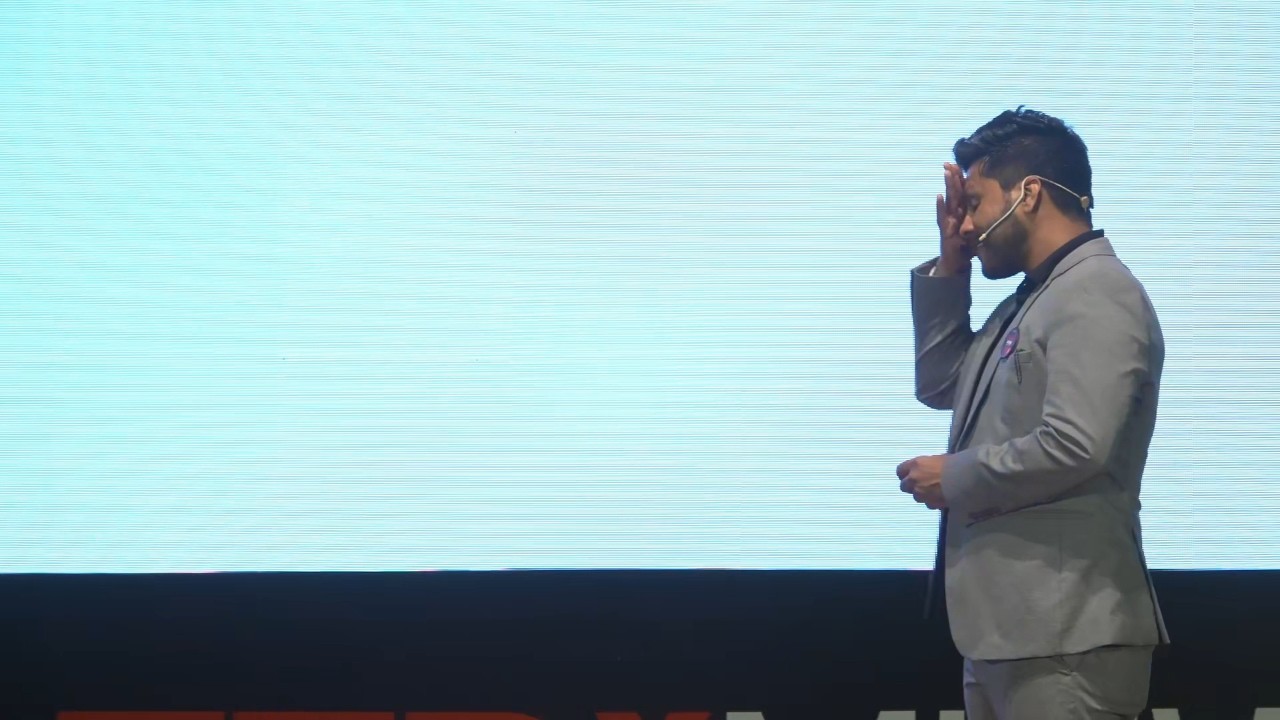
How a Strong Mindset Turns Challenges into Opportunities | Roshan Shetty | TEDxMITWPU
Keywords
Summary
185 words
Critical Evaluation
Value of the Information & Strength of the Argument
The value of this talk lies in its relatable anecdotes and practical advice from a successful sports broadcaster. The argumentation is built on personal experience, which makes it engaging and persuasive but lacks broader empirical support. The speaker’s use of neuroplasticity and prefrontal cortex development adds a scientific veneer, yet these concepts are presented superficially without citations. The structure of the ‘five powers’ provides a clear framework, but the reasoning is anecdotal rather than systematic. The call to action is inspiring, but the logical chain from anecdote to universal principle is weak.
Scientific Rigor, Source Quality, Title Accuracy
The talk offers no direct citations or references to scientific studies, despite mentioning institutions like Harvard Business School and the University of Zurich. The only source provided in the description is the generic TEDx link, which offers no specific evidence. The title faithfully represents the content, and the talk stays on topic. However, the scientific credibility is limited due to the absence of verifiable sources and the reliance on popular self-help concepts. The audience’s engagement, as inferred from applause and laughter, suggests emotional resonance rather than scholarly scrutiny.
195 words
Title / Content Match
The title accurately reflects the content, focusing on mindset and turning challenges into opportunities.
Quality & Reliability
5/10
The talk relies heavily on personal anecdotes and pop-psychology concepts with limited empirical depth. Scientific references are mentioned but not detailed or sources cited.
Key Moments
Markers derived by PSI from the transcript: the creator did not define chapters.
- Opening countdown and description of live broadcast pressures, presenting the two mindset scenarios
- Introduction of neuroplasticity and the brain's similarity to an Instagram algorithm in shaping thought patterns
- Discussion of childhood backgrounds and the activation of defense mechanisms when pressed against the wall
- First ingredient: Power of a guru, with the story of his school coach Sanjay Kamble who discovered his commentary talent
- Second ingredient: Power of belief, illustrated by Sunil Chhetri's encouragement and the 'burning desire' to succeed
- Third ingredient: Power of discipline, emphasizing prefrontal cortex development, saying no, and controlling inputs
- Fourth ingredient: Power of self-imagery and manifestation, showing photos of his goals and urging action to realize them
- Fifth ingredient: Power of giving, citing studies on happiness, and concluding with the message to keep the inner child alive
Cited Sources
- TEDx Program — Official TEDx information page, indicating the event format and independent organization
Contribution & Novelties
The talk’s original contribution is the personal narrative of a sports commentator who applies mindset principles to high-pressure live broadcasting. It integrates common self-help themes into a cohesive ‘five powers’ framework, making them accessible through vivid sports-related stories. The emphasis on neuroplasticity and giving adds a scientific flavor, though not deeply substantiated.
Pour aller plus loin :
- Neuroplasticity — Foundational concept explaining brain adaptability, directly relevant to the talk’s central claim.
- Growth Mindset — Carol Dweck’s research on fixed vs. growth mindsets, complementing the idea of turning challenges into opportunities.
- Prefrontal Cortex Development — Neuroscience behind decision-making and impulse control, supporting the talk’s advice on discipline during adolescence.
108 words
Radar Profile
The radar profile shows moderate quantity and quality of information, with notably low technical depth and moderate reliability. This indicates a motivational talk that is engaging and informative on a personal level, but lacks rigorous scientific backing or advanced technical content.