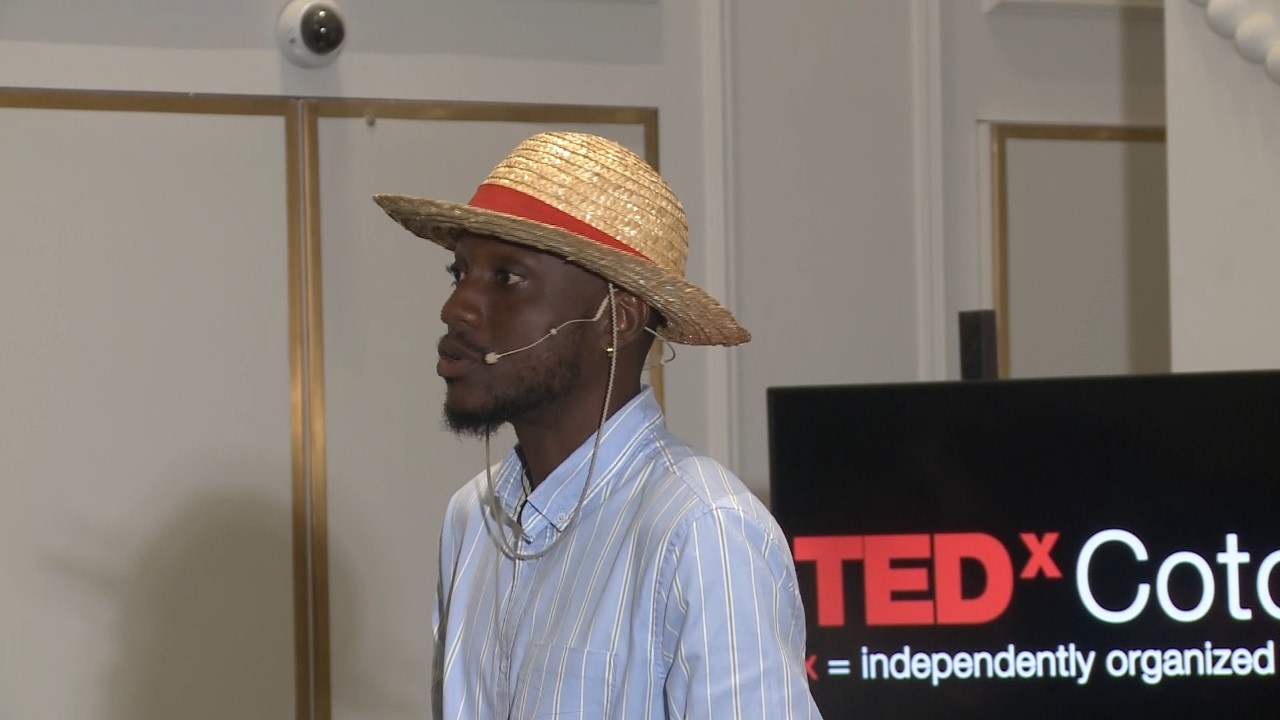
Rire de notre passé pour bâtir le futur | KENNETH YANNICK | TEDxCotonou
Laughing at Our Past to Build the Future | KENNETH YANNICK | TEDxCotonou
Title history
- Rire de notre passé pour bâtir le futur | KENNETH YANNICK | TEDxCotonou — observed on 20261026-1551 UTC (YouTube)
Keywords
Summary
151 words
Critical Evaluation
Value of the Information & Strength of the Argument
The talk’s value lies in its raw emotional authenticity and the powerful personal narrative that frames humor as a coping mechanism for trauma. The argumentation is built on anecdotal evidence rather than empirical data, but the speaker effectively demonstrates how his own failures and subsequent re-interpretation of those failures led to personal growth. The progression from tragedy to depression to comedy and eventual success is presented with vivid storytelling, which makes the message compelling even if not scientifically rigorous.
Scientific Rigor, Source Quality, Title Accuracy
The talk offers no external sources or citations; it is based solely on the speaker’s lived experience. The title is well-suited to the content, as the speaker explicitly revisits his past with humor and suggests that this approach can help build a future. Without any scholarly references, the scientific rigor is low, but the talk is not intended as an academic contribution. The adéquation between title and content is strong, with the speaker repeatedly tying his personal story to the theme of laughing at the past.
180 words
Title / Content Match
The title accurately reflects the content: the speaker recounts his own past trauma and uses humor as a lens to advocate for building a better future.
Quality & Reliability
6/10
The talk is a personal testimony without scientific references, but the narrative is coherent and the proposed mechanism of humor as a coping tool is plausible, though not empirically backed.
Key Moments
Markers derived by PSI from the transcript: the creator did not define chapters.
- Opening: request for a minute of silence for his 'lost son', followed by the joke that he misplaced him at a supermarket.
- First confession: 'The one standing before you has killed someone.'
- Narrative of the fatal accident on 8 August 2016 and the aftermath.
- Discovery of comedy as therapy after watching Gad Elmaleh, and the first failed stage performance.
- Recounting early successes, then being cut from a TV broadcast, and the subsequent depression and addiction struggles.
- Birth of his son, realization that one must rekindle their own flame, and concluding message of perseverance.
Cited Sources
- TEDx Program — This talk was given at a TEDx event using the TED conference format but independently organized by a local community.
Contribution & Novelties
The talk offers a deeply personal perspective on the use of humor to process grief and traumatic experiences, a topic rarely addressed with such openness in mainstream media. It contributes to the discourse on resilience by illustrating, through lived experience, how reframing failure as a privilege can shift one’s mindset. The novelty lies in the raw confession of a serious crime and the subsequent transformation into a successful comedian, tying the theme of ’laughing at the past’ directly to a concrete example.
Pour aller plus loin :
- Post-traumatic growth — A concept explaining how individuals can experience positive change after traumatic events, directly relevant to Yannick’s journey of finding humor and purpose after the accident.
- Humor as a coping mechanism — The psychological literature on humor’s role in stress and trauma, which underpins the talk’s central claim.
- Resilience (psychology) — The ability to bounce back from adversity, which Yannick demonstrates in multiple instances throughout his narrative.
156 words
Radar Profile
The radar profile shows a talk with moderate information quantity and quality, low technical depth, and moderate reliability, indicating a personal narrative that is emotionally engaging but lacks scientific substantiation.