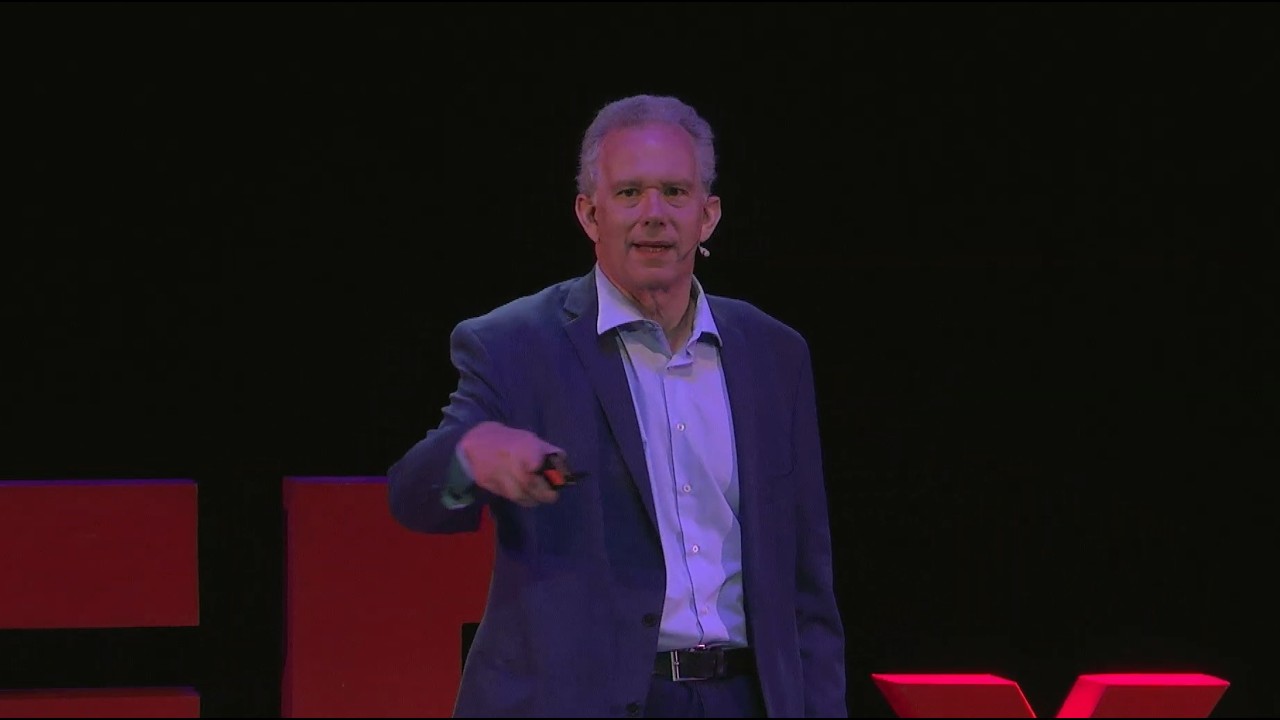
Leadership Analytics: Medir lo que realmente importa | Juan Pablo Ventosa | TEDxTecDeMty
Leadership Analytics: Measuring What Really Matters | Juan Pablo Ventosa | TEDxTecDeMty
Title history
- Leadership Analytics: Medir lo que realmente importa | Juan Pablo Ventosa | TEDxTecDeMty — observed on 20261105-1737 UTC (YouTube)
Keywords
Summary
187 words
Critical Evaluation
Value of the Information & Strength of the Argument
The talk provides a persuasive, well-structured argument for a data-driven approach to leadership measurement. Ventosa uses striking statistics and relatable examples to highlight the gap between rhetoric and practice. However, the argument is largely a personal viewpoint rather than a systematic review; the cited statistics are presented without full context or verification, and the proposed ‘Leadership Analytics’ framework is introduced at a conceptual level without concrete implementation details. The reasoning is logical and engaging, but its strength lies more in rhetoric than in empirical evidence.
Scientific Rigor, Source Quality, Title Accuracy
The speaker references reputable organizations (Gallup, World Economic Forum) and shares personal anecdotes and observations. Yet no specific reports or links are provided in the talk, reducing verifiability. The title is faithful to the content, which directly addresses measuring what matters in leadership. The talk does not engage with counterarguments or alternative views, and the discussion of ‘Leadership Analytics’ remains at a high level. Adéquation between title and content is strong, but scientific rigor is limited by the lack of precise citations and a clear methodology.
186 words
Title / Content Match
The title accurately reflects the core theme: using analytics to measure leadership impact. It matches the content well.
Quality & Reliability
6/10
The talk is an opinionated presentation rather than a peer-reviewed study. It cites several statistics (Gallup, World Economic Forum, Spanish Social Security) without precise references, and uses anecdotal examples. The argument is coherent but relies on persuasive rhetoric more than verifiable data.
Key Moments
Markers derived by PSI from the transcript: the creator did not define chapters.
- Introduction and the 'good news / bad news' frame about change exceeding adaptation capacity.
- Examples of global change: electric cars, autonomous vehicles (Waymo), and labor market challenges.
- World Economic Forum statistic: 39% of skills will be affected in five years; describes widening adaptation gap.
- Gallup data: two-thirds of employees prefer losing boss over pay raise; Spanish Social Security data on 300% increase in disciplinary dismissals and voluntary quits.
- Critique of subjective leadership evaluations (360 reviews, climate surveys) and call for objective measures.
- Introduces Leadership Analytics and argues for measuring leader impact on team development, retention, and diversity.
- Uses soccer coach analogy; emphasizes results with the team for sustainable outcomes.
- Final questions to executives about linking bonuses to people development and willingness to have children work at their company.
Cited Sources
- TEDx Talks – Official programme — Reference to the TEDx event format and organization.
Contribution & Novelties
The talk proposes a novel, systematic approach – ‘Leadership Analytics’ – to quantify leadership effectiveness using objective team results, moving beyond traditional subjective evaluations. It reframes the talent conversation from ‘human resources’ to ‘human assets’, and advocates tying executive incentives to people development outcomes. The concept is presented as a new discipline combining data science and organizational strategy.
Pour aller plus loin :
- Leadership – Provides an overview of leadership theories and attributes relevant to the talk’s core subject.
- 360-degree feedback – A traditional subjective evaluation method that the talk critiques; useful for understanding the context.
- People analytics – The use of data analytics in human resource management, directly related to the proposed Leadership Analytics.
115 words
Radar Profile
The profile shows moderate scores across all dimensions, with a slight emphasis on availability of information over technical depth. The talk is accessible but not deeply researched, balancing engagement with a somewhat generic message.