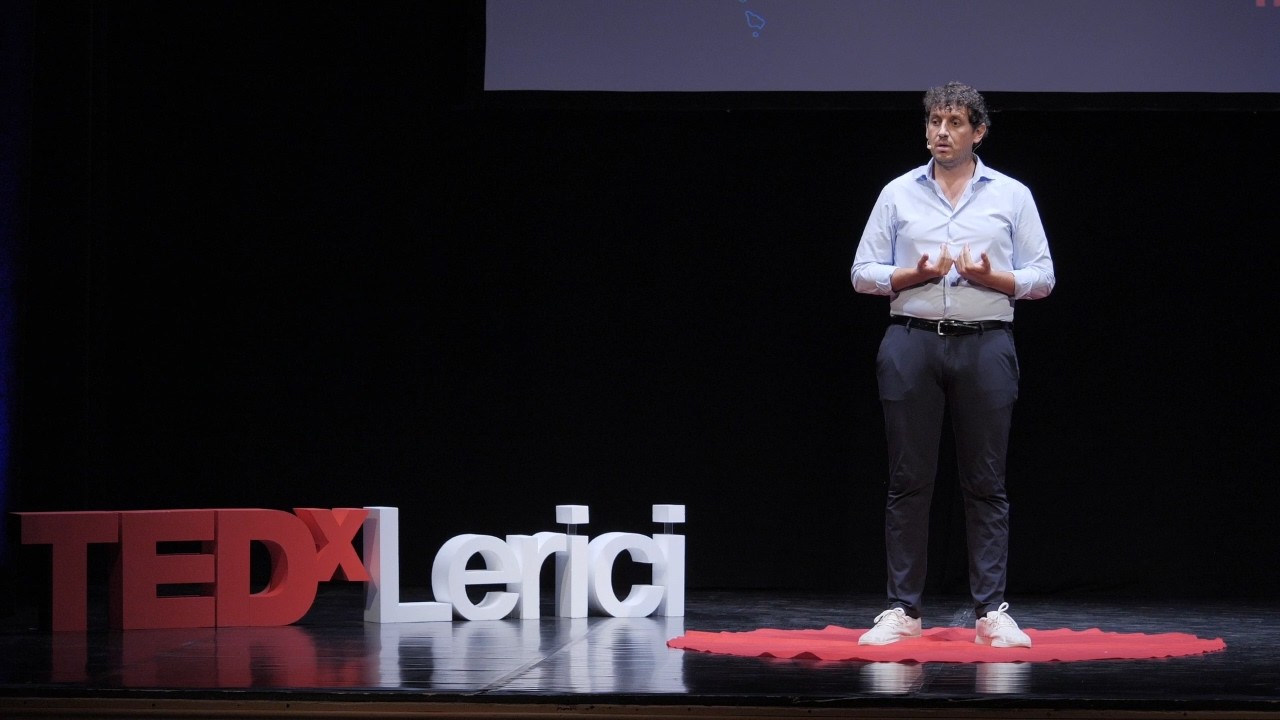
La statistica non sa chi sei, figuriamoci chi sarai | Gian Luca Comandini | TEDxLerici
Statistics doesn't know who you are, let alone who you will be | Gian Luca Comandini | TEDxLerici
Title history
- La statistica non sa chi sei, figuriamoci chi sarai | Gian Luca Comandini | TEDxLerici — observed on 20261027-0212 UTC (YouTube)
Keywords
Summary
212 words
Critical Evaluation
Value of the Information & Strength of the Argument
The value of the talk lies in its compelling personal narrative that humanizes abstract statistical concepts, making them relatable and emotionally resonant. The speaker effectively uses his own extraordinary circumstances to illustrate the gap between probabilistic predictions and individual agency. However, the argumentation is primarily anecdotal and motivational rather than rigorously analytical. He does not systematically compare different life-saving policies or delve into ethical trade-offs, and the cited study on cooperation percentages lacks a specific reference. Nevertheless, the narrative is coherent and persuasive, appealing to shared human values and common sense.
Scientific Rigor, Source Quality, Title Accuracy
The talk demonstrates moderate scientific rigor. It references well-known concepts (Taleb’s antifragility, VSL, QALY, Bhutan’s GNH) and the speaker’s personal experiences are presented as qualitative evidence. However, no specific scholarly sources are provided beyond the link to TEDx, and numerical claims (e.g., the 20% threshold) are not credited to original studies. The title accurately captures the central thesis, but the content is more inspirational than densely factual. Overall, the sources are appropriate for a TED talk, but the audience would need to independently verify the figures and references mentioned.
195 words
Title / Content Match
The title directly reflects the talk's central argument: statistics cannot predict individual fate, as demonstrated by the speaker's improbable survival and subsequent success.
Quality & Reliability
7/10
The talk accurately references established concepts such as Value of Statistical Life (VSL), QALY, and Taleb's antifragility, but relies heavily on personal anecdotes and omits precise citations for numerical claims (e.g., the 20% non-cooperation threshold). The speaker's testimony is credible but not formally verified, leading to moderate-to-high reliability.
Key Moments
Markers derived by PSI from the transcript: the creator did not define chapters.
- Birth emergency: esophagial injury and incubator story
- Diagnosis of leishmaniasis and unlikely survival
- First lesson: wind determines conditions, not destination
- Childhood introversion and refuge in books
- Introduction of antifragility and Taleb's three systems
- Explanation of VSL (Value of Statistical Life) and its implications
- Alternatives: Bhutan's GNH, UK's QALY, Ireland's Future Generations Commissioner
- Final probability calculation (1 in 600 million) and call to action
Cited Sources
- TEDx Talks official website — The talk was given at a TEDx event organized by TED, and this link provides general information about the TEDx format.
Contribution & Novelties
This talk offers a fresh perspective by merging personal survival testimony with a critique of statistical dehumanization. It uniquely proposes an alternative measure of human worth based on altruistic actions rather than economic metrics. The speaker’s distinction between resilience and antifragility as practical life strategies adds a motivational angle to a well-known concept.
Pour aller plus loin :
- Antifragility (Wikipedia) — Explains Taleb’s concept of systems that benefit from shocks, central to the talk’s second lesson.
- Value of Statistical Life (Wikipedia) — Details the economic metric discussed when critiquing how governments assign monetary value to lives.
- Quality-Adjusted Life Year (QALY) — Describes the health measurement mentioned as an alternative to VSL.
- Gross National Happiness (Wikipedia) — Provides background on Bhutan’s happiness index, used as a contrasting country example.
128 words
Radar Profile
The scores indicate a talk that is moderately informative and reliable, but with a relatively low technical depth (5/10). The quality of information (7/10) and reliability (7/10) suggest the speaker is credible and uses accurate concepts, yet the quantitative amount is limited (6/10). This profile fits a motivational or inspirational TED talk that prioritizes emotional engagement over rigorous factual density.