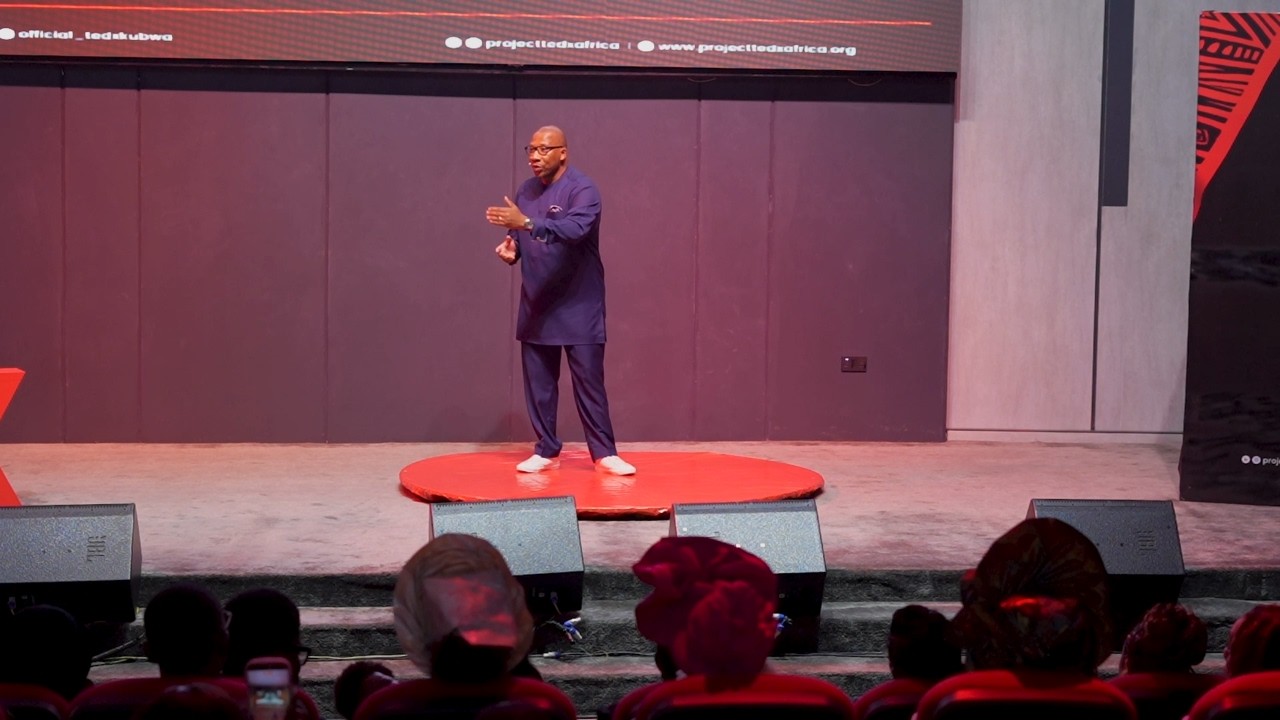
The Power of Mentorship | David Villa-Clarke BEM, MBA | TEDxKubwa
Keywords
Summary
192 words
Critical Evaluation
Value of the Information & Strength of the Argument
The value of the information lies in the combination of a firsthand account of impactful mentorship and references to empirical studies. The personal narrative illustrates the mechanisms of mentorship—access, belief, and confidence—making abstract concepts tangible. The argumentation is logically structured, moving from anecdote to evidence, and effectively demonstrates that mentorship goes beyond advice to create systemic change. However, the cited studies are mentioned briefly without methodological detail, weakening the scientific depth. The speaker’s authority as CEO of the Aleto Foundation and his award (BEM) add credibility, but the reliance on a single compelling story limits generalizability. Overall, the argument is persuasive and well-supported, though not exhaustive.
Scientific Rigor, Source Quality, Title Accuracy
The talk demonstrates moderate scientific rigor: the speaker references specific studies but does not provide citations or URLs, making verification difficult. The description includes only a link to TEDx, not the individual research works. The title aligns perfectly with the content, which is a clear exposition of mentorship’s power. No comments were provided, so public reception trends cannot be assessed. The speaker’s professional background and recognition (British Empire Medal) lend authority, but the lack of detailed source information prevents full scholarly evaluation.
203 words
Title / Content Match
The title accurately reflects the content, which focuses on the transformative impact of mentorship through personal experience and cited evidence.
Quality & Reliability
7/10
The talk blends a compelling personal anecdote with references to specific research studies (Raposa et al. 2017, Dubois 2011, Sun Microsystems), but detailed citations are not provided, limiting verifiability. The speaker’s credibility and clear structure support the narrative.
Key Moments
Markers derived by PSI from the transcript: the creator did not define chapters.
- Introduction: question about mentors, setup of the talk
- Meeting Andrew at a conference dinner; initial discomfort
- Lunch invitation and request for career help
- MBA request and Andrew’s investment of £60,000
- Impact of mentorship on career and giving back via Aleto Foundation
- Reference to research studies (Raposa, Dubois, Sun Microsystems)
- Conclusion: 'Whose door are you going to open?'
Cited Sources
- TEDx — General information about TEDx events; the talk was presented at TEDxKubwa.
Contribution & Novelties
The talk offers a personal, emotion-driven perspective on mentorship, emphasizing the bidirectional nature of the relationship and its role in social mobility. It also connects individual experience to broader research, making a case for mentorship as a tool for institutional change.
Pour aller plus loin :
- Mentorship (Wikipedia) — Overview of mentorship concepts and research.
- Social mobility (Wikipedia) — Discussion of how mentorship can influence class mobility.
- Impostor syndrome (Wikipedia) — Psychological phenomenon relevant to the speaker’s initial nervousness.
79 words
Radar Profile
The radar profile shows strong qualitative aspects (quality and fiabilité) but moderate quantitative (quantité) and technical depth. This reflects a talk that is insightful and credible but not heavily technical or data-rich, focusing on narrative and anecdotal evidence.