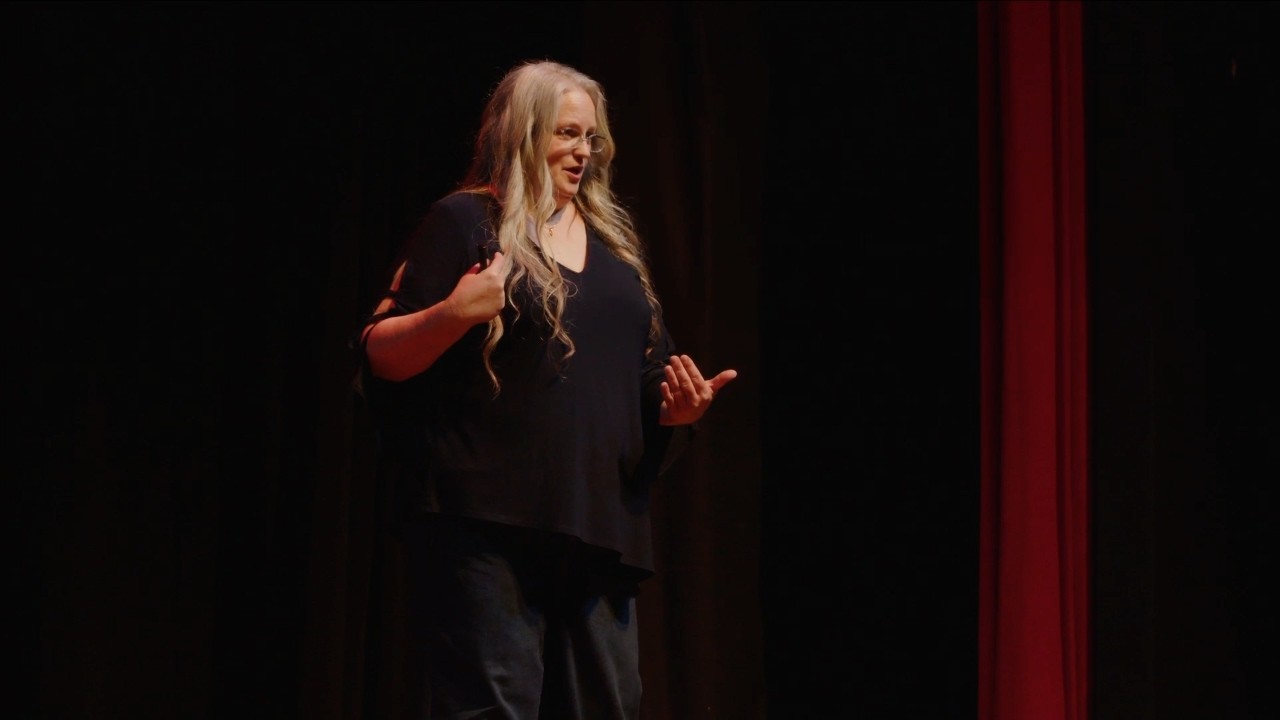
What the Most Extraordinary Leader Taught Me Without Saying a Word | Tanya McCready | TEDxColumbiana
Title history
- What the Most Extraordinary Leader Taught Me Without Saying a Word | Tanya McCready | TEDxColumbiana — observed on 20261106-0136 UTC (YouTube)
Keywords
Summary
159 words
Critical Evaluation
Value of the Information & Strength of the Argument
The talk’s value lies in its accessible, story-driven approach to leadership, offering a memorable metaphor that resonates emotionally. The argumentation is persuasive but not scientifically rigorous; it relies on anecdotal evidence and a few broad statistics (e.g., 79% of employees distrust leaders) without referencing studies or sources. The logical progression—from anecdote to principle—is coherent, yet the principles are presented as universal truths without empirical validation. Overall, the argument is compelling for a motivational audience, but it lacks the depth and evidence expected in a scientific or evidence-based discussion.
Scientific Rigor, Source Quality, Title Accuracy
The talk exhibits low scientific rigor; it does not cite academic literature, research, or expert validation, instead drawing solely on personal experiences. The statistics mentioned are unsupported, and no references are provided for verification. The title is accurately aligned with the content, as the narrative centers on an extraordinary leader (Lily) and the non-verbal lessons learned. The speaker’s credibility rests on her background as a professional engineer and business owner, but the talk itself is not a systematic review or data-driven analysis. The only external link provided is the TEDx platform, which offers general context but no specific evidence.
202 words
Title / Content Match
The title accurately reflects the content: a compelling story about an extraordinary leader (a sled dog) and the lessons learned without verbal communication, matching the talk's focus on non-verbal leadership.
Quality & Reliability
5/10
The talk relies heavily on personal anecdotes and a few unverified statistics, which limits its scientific reliability. The core insights are presented as experiential wisdom rather than evidence-based findings, though the structure is coherent and engaging.
Key Moments
Markers derived by PSI from the transcript: the creator did not define chapters.
- Introduction to Lily and the Eagle Summit climb, establishing her as a leader.
- Discussion of the leadership crisis and introduction of the 'posture' concept.
- First principle: Unshakeable trust—the Yukon Quest whiteout blizzard story.
- Second principle: Protective courage—the moose encounter and Hank's selfless action.
- Third principle: Unwavering belief—Lily's decision to step back from the Iditarod.
- Final challenge: Carry the weight, lead when it counts, and leave a lasting mark.
Cited Sources
- TEDx — Platform hosting this TEDx talk, providing general information about the TEDx program.
Contribution & Novelties
This talk offers a novel perspective on leadership by equating it with a physical posture rather than a formal position, drawing powerful metaphors from dog sledding. It challenges traditional leadership metrics such as titles and authority, emphasizing presence, trust, and selflessness. The stories, while anecdotal, provide a memorable framework that could inspire reflection and behavioral change in leaders. The talk does not introduce new scientific data but reframes existing leadership concepts in an accessible narrative.
Pour aller plus loin :
- Servant leadership — This leadership philosophy prioritizes the needs of others, aligning with McCready’s emphasis on serving the team and enabling their success.
- Psychological safety — A key factor in team performance, relevant to the trust and openness McCready advocates for building.
- Trust (social science) — Understanding trust as a social mechanism helps contextualize the bond between a leader and team, as illustrated in the Yukon Quest story.
148 words
Radar Profile
The radar profile shows a moderate quantity of information with a slightly lower quality, reflecting the anecdotal nature of the talk. Technical level is low, indicating a non-specialist audience, while overall reliability is limited due to the lack of verifiable sources. This suggests a motivational speech with persuasive storytelling rather than an evidence-based analysis.