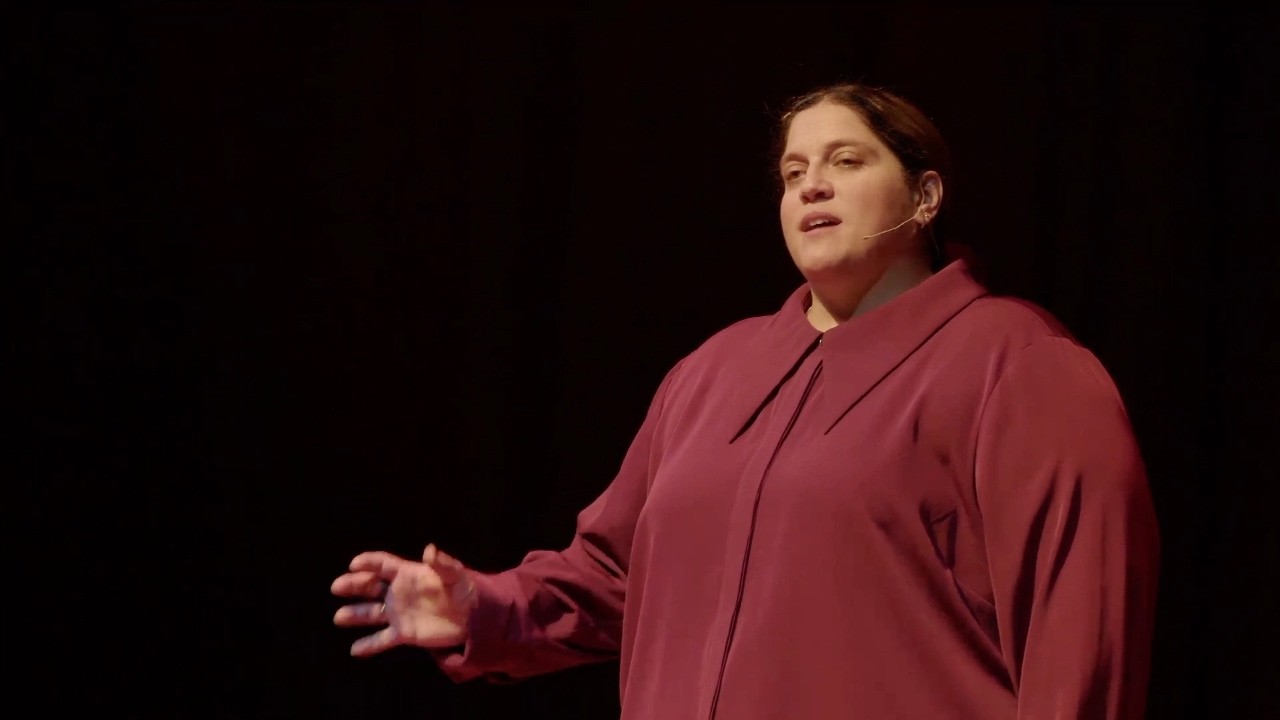
Hope Begins When We Stop Hiding the Darkness and Start Sharing It | Courtney Stasko | TEDxColumbiana
Title history
- Hope Begins When We Stop Hiding the Darkness and Start Sharing It | Courtney Stasko | TEDxColumbiana — observed on 20261106-0137 UTC (YouTube)
Keywords
Summary
159 words
Critical Evaluation
Value of the Information & Strength of the Argument
The talk’s value lies in its authentic and moving personal testimony, which humanizes the topics of grief, domestic violence, and suicide. The argumentation is primarily emotional and anecdotal, relying on the speaker’s experience to convey a powerful message about the therapeutic power of vulnerability and connection. However, it lacks empirical evidence or logical rigor, and cannot be generalized as a scientific prescription. The strength of the argument rests on the credibility of the speaker’s lived experience and her ability to connect with the audience emotionally.
Scientific Rigor, Source Quality, Title Accuracy
The talk is not a scientific presentation; it contains no citations, data, or references to research. The only sources referenced are the TEDx guidelines and TEDx website, provided in the description. The title accurately captures the central thesis, and there is no mismatch between the title and content. While the personal nature of the talk limits its scientific rigor, it is well-structured and consistent with the TEDx format. The talk does not claim to offer scientific evidence but rather a personal philosophy, which is appropriate for its genre.
188 words
Title / Content Match
The title accurately reflects the core message that hope arises from sharing pain rather than hiding it.
Quality & Reliability
5/10
The talk is a personal narrative without external evidence or citations. It offers subjective insights on grief, resilience, and hope, which are valuable but not scientifically rigorous.
Key Moments
Markers derived by PSI from the transcript: the creator did not define chapters.
- Courtney begins her story on May 29, 2019, describing the normal evening that turned tragic.
- The violent incident unfolds: Todd shoves her against the wall and presses a gun to her forehead.
- The aftermath: Todd dies by suicide, and Courtney is left with grief and isolation.
- Courtney reflects on the movie Romeo and Juliet and the simplicity of truth, leading to a turning point.
- She connects with Holly Higgins and begins sharing her story, which gradually breaks her chains of shame.
- The founding of Starry is Hope and the decision to reclaim May 29 as a day of hope and giving back.
Cited Sources
- TEDx Content Guidelines — Reference to TEDx guidelines mentioned in the description.
- TEDx — General information about TEDx events provided in the description.
Contribution & Novelties
The talk offers a personal perspective on healing from trauma, emphasizing the act of sharing pain as a route to hope rather than seeking definitive answers. This resonates with existing psychological concepts. To explore further:
- Post-traumatic growth — This psychological concept describes positive change after adversity, complementing the idea that hope can emerge from suffering.
- Narrative therapy — The practice of re-authoring one’s story, which aligns with Courtney’s experience of sharing her story to break chains.
- Social support — The role of connection (e.g., Holly’s presence) in mitigating grief and fostering resilience, which is a key element in her message.
100 words
Radar Profile
The radar profile shows a moderate score in information quantity and quality, but very low technical level and low reliability, reflecting the personal and non-scientific nature of the talk. The talk would be strong on emotional engagement but weak on data-driven substance.