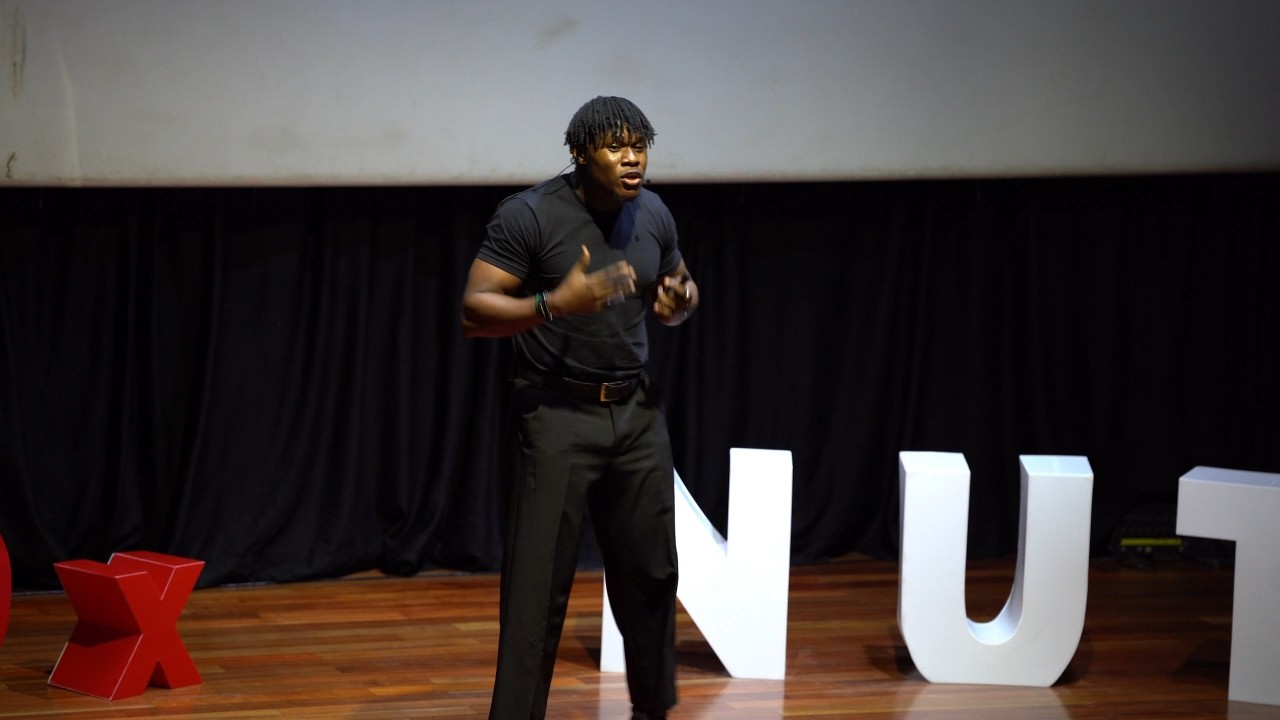
Building before recognition | Michael Oyewusi | TEDxNUTM
Title history
- Building before recognition | Michael Oyewusi | TEDxNUTM — observed on 20261029-0052 UTC (YouTube)
Keywords
Summary
150 words
Critical Evaluation
Value of the Information & Strength of the Argument
The talk provides motivational value through a personal success story, arguing that sustained effort and small daily actions lead to significant outcomes. The argumentation is coherent and persuasive, using the iceberg metaphor and concrete anecdotes to support the idea that recognition is the result of invisible work. However, the argument relies entirely on anecdotal evidence and lacks empirical backing, making it more inspirational than scientifically rigorous. The speaker’s conviction and relatable experiences strengthen the message, but the reasoning is primarily narrative rather than analytical.
Scientific Rigor, Source Quality, Title Accuracy
The talk contains no scientific citations or external references, relying solely on the speaker’s personal testimony. This limits its factual reliability but is acceptable for a motivational TEDx talk. The title is well-chosen, accurately capturing the core message about building before recognition. The description confirms the theme and includes a link to TEDx general information, but no specific studies are referenced. The speaker’s background as a practicing designer lends some authority, but the content is not presented as research or expert consensus.
181 words
Title / Content Match
The title accurately reflects the central theme of building one's skills and character before public recognition arrives.
Quality & Reliability
5/10
Personal narrative with motivational insights; lacks scientific evidence or external references, but offers authentic experience and actionable advice.
Key Moments
Markers derived by PSI from the transcript: the creator did not define chapters.
- Introduction: Michael's childhood interest in drawing and his father's desire for him to be an engineer.
- Introduction of the 'two timelines' concept: visible success vs. invisible preparation.
- Story of learning design with a phone and free Canva account, emphasizing starting with limited resources.
- The decision to create one design daily during COVID, focusing on showing up rather than quality.
- Discussion of imposter syndrome and comparing one's beginning to others' 'highlight reels'.
- Tribute to his late father and the connection between engineering and design, concluding with a call to action.
Cited Sources
- TEDx Program — General information about TEDx events, provided in the video description.
Concurring Sources
- TEDx Talks — The talk is part of TEDx, which generally supports motivational and personal development content.
Contribution & Novelties
The talk offers a refreshing perspective on the relationship between action and confidence, arguing that belief is a consequence of action rather than a prerequisite. It introduces the ‘invisible timeline’ concept as a way to appreciate the unseen effort behind success. While not ground-breaking from a scientific standpoint, it provides a motivating narrative for personal growth.
Pour aller plus loin :
- Impostor syndrome — Relevant to the speaker’s discussion of self-doubt despite achievements.
- Practice (learning method) — Deliberate practice and repetition align with the ‘one design per day’ strategy.
- Implicit theories of intelligence — Growth mindset versus fixed mindset relates to the belief that action fosters improvement.
107 words
Radar Profile
The radar profile shows low technical level and moderate information quality, reflecting the talk's focus on motivation rather than technical depth. The credibility score is modest, consistent with the absence of external citations. Overall, the talk is strong on personal relevance but weak on empirical rigor.