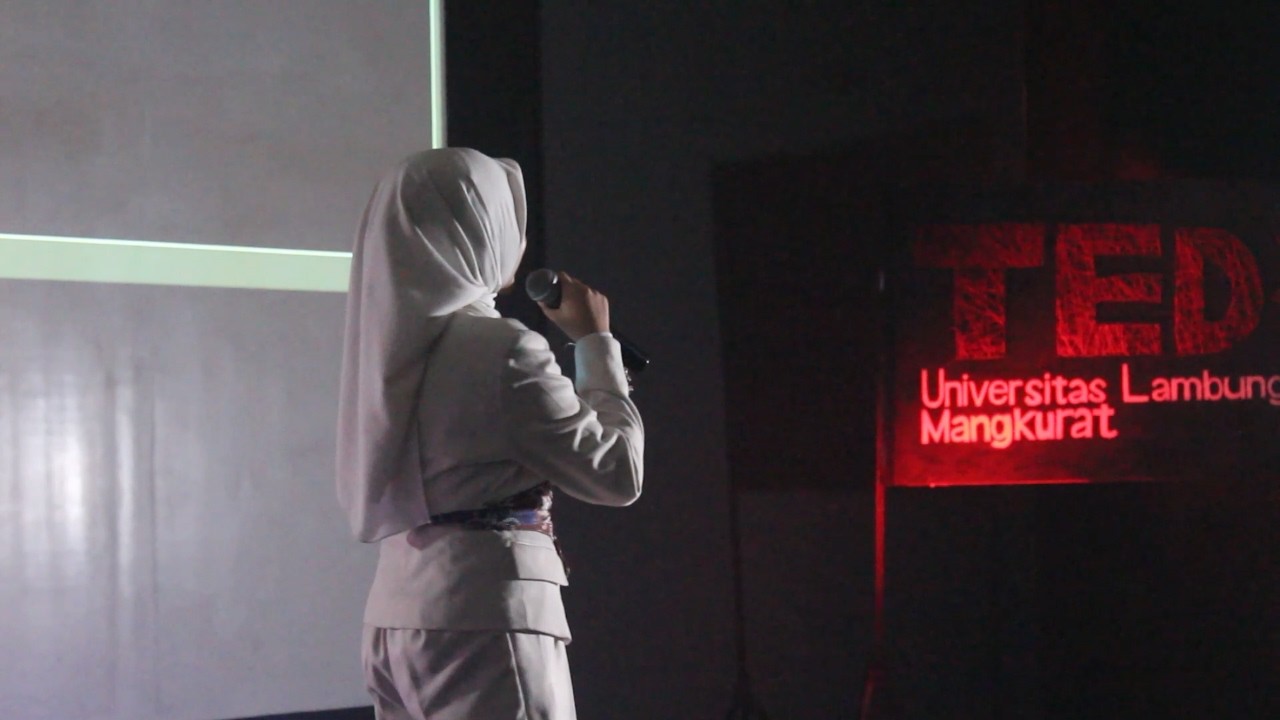
Living Heritage : Evolve to Endure | Adira Alisyaban Zamluni | TEDxUniversitas Lambung Mangkurat
Title history
- Living Heritage : Evolve to Endure | Adira Alisyaban Zamluni | TEDxUniversitas Lambung Mangkurat — observed on 20261104-2234 UTC (YouTube)
Keywords
Summary
191 words
Critical Evaluation
Value of the Information & Strength of the Argument
The talk provides a thoughtful and accessible perspective on cultural change, using personal experience as a springboard. The argument is structured logically, moving from a specific tradition to broader theory and back to practical implications. The speaker effectively uses cultural evolution theory and social identity theory to support her claims, though the treatment is introductory. The appeal to UNESCO’s living heritage concept adds authority. However, the argumentation relies heavily on personal insight and does not engage with counterarguments or provide empirical evidence, which limits its scientific depth. The call to focus on passing on roots and values is compelling and actionable.
Scientific Rigor, Source Quality, Title Accuracy
The speaker references UNESCO’s concept of living heritage and social identity theory, which are legitimate and relevant frameworks. However, no specific publications or direct sources are cited within the talk itself, only the general TEDx platform link. The description mentions the speaker’s background, which lends some credibility but does not substitute for rigorous sourcing. The title is well-aligned with the content, accurately summarizing the core thesis. The talk is a personal opinion piece rather than a systematic review, but it is scientifically informed and consistent with established ideas in cultural anthropology and social psychology.
210 words
Title / Content Match
The title accurately reflects the core message: culture as a living entity must evolve to endure, and change in form does not mean loss of identity.
Quality & Reliability
6/10
The talk is a personal reflection supported by references to cultural evolution theory and UNESCO's concept of living heritage. While the speaker is a psychology student and community organizer, not a professional anthropologist, the argument is coherent and grounded in recognized frameworks. However, it remains largely anecdotal and lacks empirical data or citations beyond general concepts.
Key Moments
Markers derived by PSI from the transcript: the creator did not define chapters.
- Story about the 'Jujuran' tradition and initial confusion
- Discovery of deeper meaning of Jujuran as respect for women
- Introduction of cultural evolution theory
- UNESCO's 'living heritage' concept and culture as fluid
- Social identity theory explains sensitivity to cultural criticism
- Call to preserve roots and values, allowing cultural adaptation
Cited Sources
- TEDx Program — Official TEDx platform, mentioned in the description as the event organizer.
Contribution & Novelties
The talk offers a personal and relatable perspective on how individuals can engage with cultural traditions that may feel outdated, arguing that questioning is a form of care and that cultural change does not necessarily imply loss of identity. It synthesizes concepts from cultural evolution and social identity theory to advocate for a forward-looking approach to heritage.
Pour aller plus loin :
- Intangible cultural heritage (UNESCO) — This Wikipedia article explains the official definition and examples of living heritage.
- Cultural evolution — Overview of the theory that cultures change through transmission and adaptation.
- Social identity theory — Key psychological framework explaining why group membership and culture are central to personal identity.
111 words
Radar Profile
The radar profile shows moderate scores across all dimensions, with information quality slightly higher than quantity and technical level. This reflects a talk that is intellectually engaging but not deeply technical or exhaustive, balancing personal insight with established concepts.