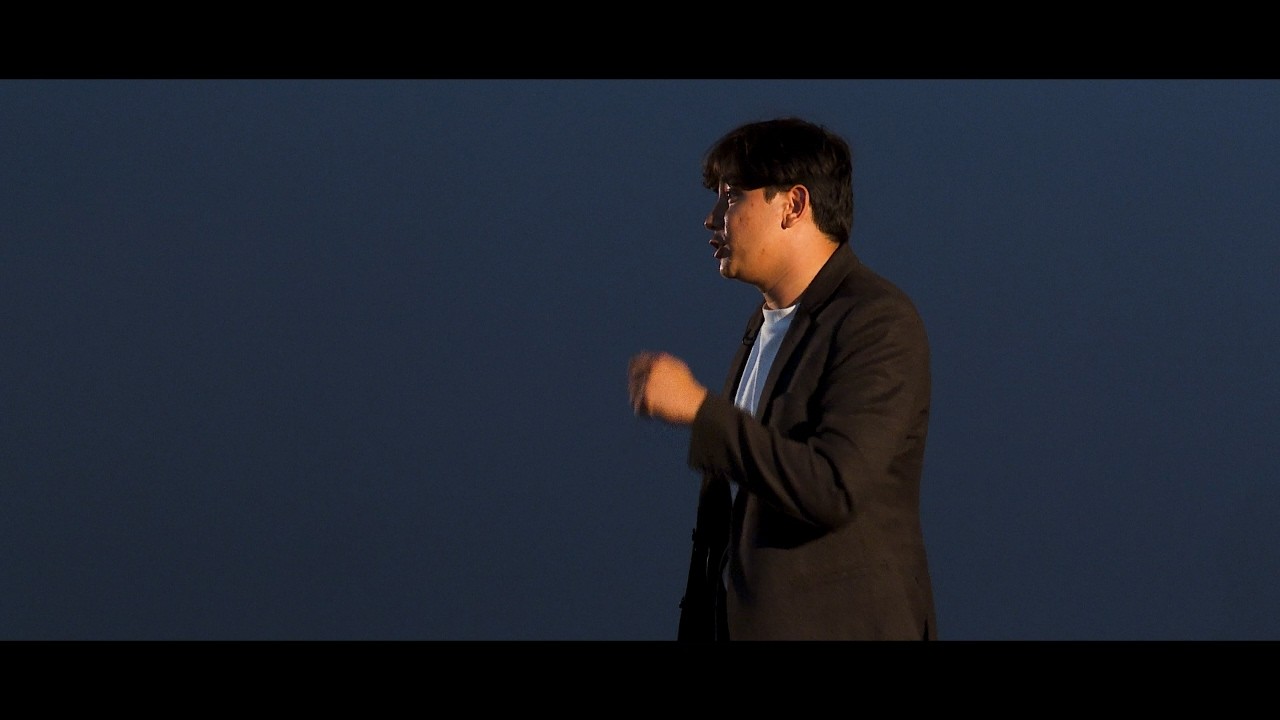
I learned how to live by learning how to make films | Ankur Singh Thapa | TEDxIslington College
Keywords
Summary
161 words
Critical Evaluation
Value of the Information & Strength of the Argument
The talk offers valuable insights into the psychological struggle with impatience and the societal pressure to constantly move forward. The speaker’s argument is built on personal anecdotes that are relatable and authentic, weaving a narrative that connects filmmaking’s inherent waiting with life’s unpredictability. He effectively uses his life story as evidence, and the metaphor of writing a script without knowing the ending is powerful. However, the argumentation is purely anecdotal and lacks external references, which limits its scientific rigor. The strength lies in its emotional resonance and the universal relevance of its message about patience and presence.
Scientific Rigor, Source Quality, Title Accuracy
The talk is intellectually rigorous in its self-reflective analysis, but it cites no external sources, relying solely on personal experience. The only reference is the generic TEDx link in the description, which doesn’t support the content specifically. The title matches the content well, as the speaker explicitly connects his learning to live with his filmmaking experience. There is no misleading information; the talk is clear about its subjective nature.
181 words
Title / Content Match
The title accurately reflects the content: the speaker explains how the process of filmmaking, particularly the waiting involved, taught him to live in the present.
Quality & Reliability
7/10
The talk is a personal narrative, deeply reflective and coherent, but lacks external validation or data. The speaker's honesty about his journey and the philosophical insight about waiting provide reliable subjective experience, yet no scientific backing.
Key Moments
Markers derived by PSI from the transcript: the creator did not define chapters.
- Introduction: asking the audience about love for films
- Initial plan to make film in 4 months, but shooting took 5 months
- Career hopping story: from business to law to IT, and jobs like social media for astrologer
- Realization about why he constantly moves: seeking external validation, rooted in 'when are you leaving?' question in Nepal
- Film's narrative: two friends uncertain about life, and the learning that script was written without knowing the ending
- Conclusion: embracing waiting, 'me and wait can coexist'
Cited Sources
- TEDx Official — General link to TEDx events, provided by the speaker in description.
Contribution & Novelties
The talk’s original contribution is framing filmmaking’s inherently waiting-heavy process as a practical school for cultivating patience and presence, especially for someone with a rush-oriented mindset. It personalizes a universal struggle and offers a metaphor (life as an unwritten script) that encourages embracing uncertainty.
Pour aller plus loin :
- Patience — Wikipedia article on the virtue of patience, providing historical and philosophical context.
- Mindfulness — Wikipedia article on mindfulness, which relates to living in the present moment.
- Heidegger’s Being and Time — Philosophical work on the nature of being and time, relevant to the concept of waiting and existence.
- The Journey vs. The Destination — A common metaphor about valuing the process over the goal.
115 words
Radar Profile
The radar profile shows a moderate balance between information quantity and quality, with a low technical score. The talk excels in subjective depth but lacks empirical data, resulting in a moderate overall reliability. The low technicality aligns with its personal narrative nature.