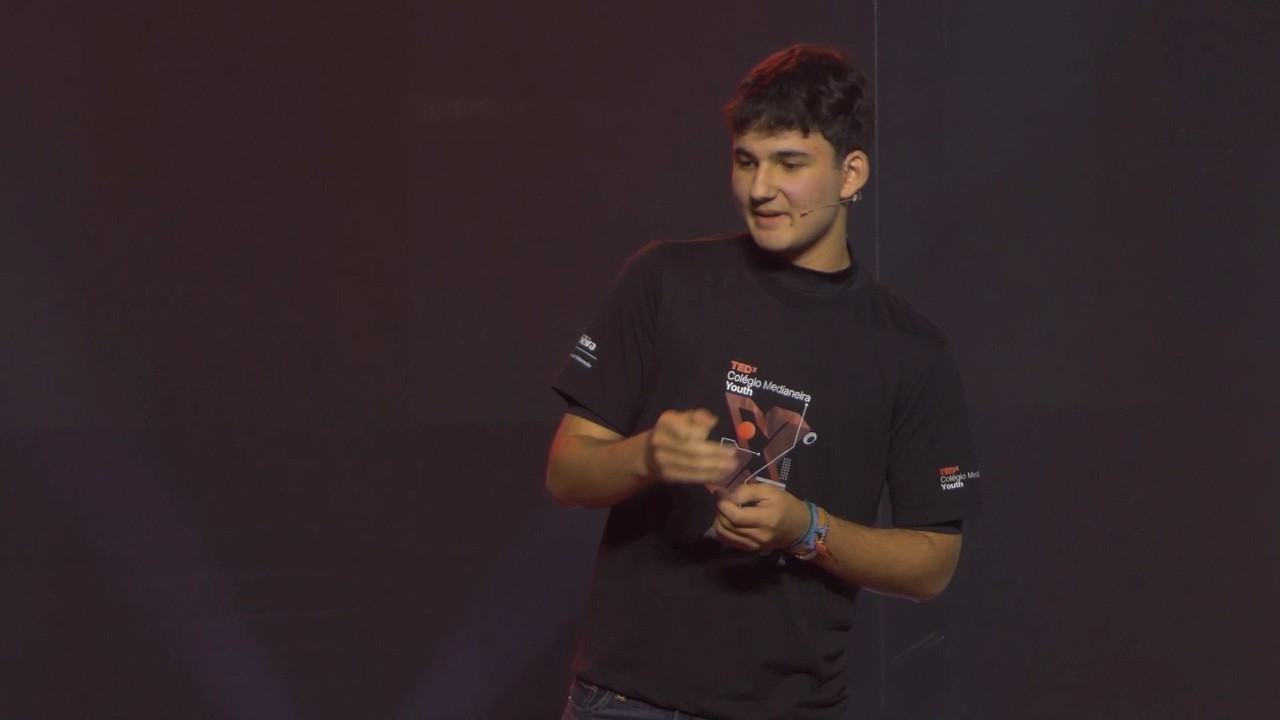
O preço de transformar arte em produto | Miguel Elias Neto | TEDxColégio Medianeira Youth
The price of turning art into a product | Miguel Elias Neto | TEDxColégio Medianeira Youth
Keywords
Summary
166 words
Critical Evaluation
Value of the Information & Strength of the Argument
The talk’s value lies in its accessible comparison between two forms of music, provided through vivid storytelling. The argument is coherent and follows a clear structure, but it relies on a binary categorization that may oversimplify the complexities of the music industry. While the speaker’s personal engagement and the interactive finale add authenticity, the reasoning is not supported by empirical data or extensive scholarly references. The reasoning primarily draws from a few philosophical abstractions and real-life anecdotes, making the argument persuasive on an emotional level but not purely analytical.
Scientific Rigor, Source Quality, Title Accuracy
The scientific rigor is limited; sources are minimal, with only passing references to Descartes and Plato, and no citations of scholarly works or industry reports. The talk is more philosophical and anecdotal than evidence-based. The title accurately reflects the content, focusing on the cost of transforming art into product. The speaker’s reliance on personal experience and general references makes the talk more persuasive than scholarly, but it remains well-structured and coherent.
175 words
Title / Content Match
The title accurately reflects the central theme, contrasting artistic music with commercial product.
Quality & Reliability
6/10
The talk offers a personal perspective on the music industry and artistic expression, referencing Descartes and Plato, but lacks robust scientific sourcing and is a personal narrative rather than systematic research.
Key Moments
Markers derived by PSI from the transcript: the creator did not define chapters.
- Introduction: 'Art, or rather music, as we know it, is dying.'
- Story 1: Brandon Flowers and The Killers' 'Mr. Brightside' – written after a personal betrayal.
- Story 2: Pedro Sampaio's carnival hit – created intentionally for commercial success.
- Definitions: music as organization of sound/silence; art as personal interpretation of reality (Descartes, Plato).
- Discussion of industrial dominance and its impact on human expression.
- Interactive moment: creating a song from audience-chosen words, ending with a call to practice artistic expression.
Cited Sources
- TEDx official page — General information about independently organized TEDx events, mentioned in the talk's description.
Contribution & Novelties
The talk contributes a fresh perspective on the music industry’s impact on artistic authenticity, using concrete examples and a relatable narrative. Its originality lies in blending personal experience with philosophical references to encourage critical listening.
Pour aller plus loin :
- Culture industry — Concept from critical theory directly addressing the commodification of art.
- Music industry — Overview of the economic and production aspects relevant to the talk.
- Plato’s aesthetics — Background on Plato’s theory of art as imitation, as cited in the talk.
83 words
Radar Profile
The radar profile shows moderate scores in information quantity and quality, with lower technical depth and reliability. This reflects a talk that is engaging and informative for a general audience but lacks rigorous scientific grounding.