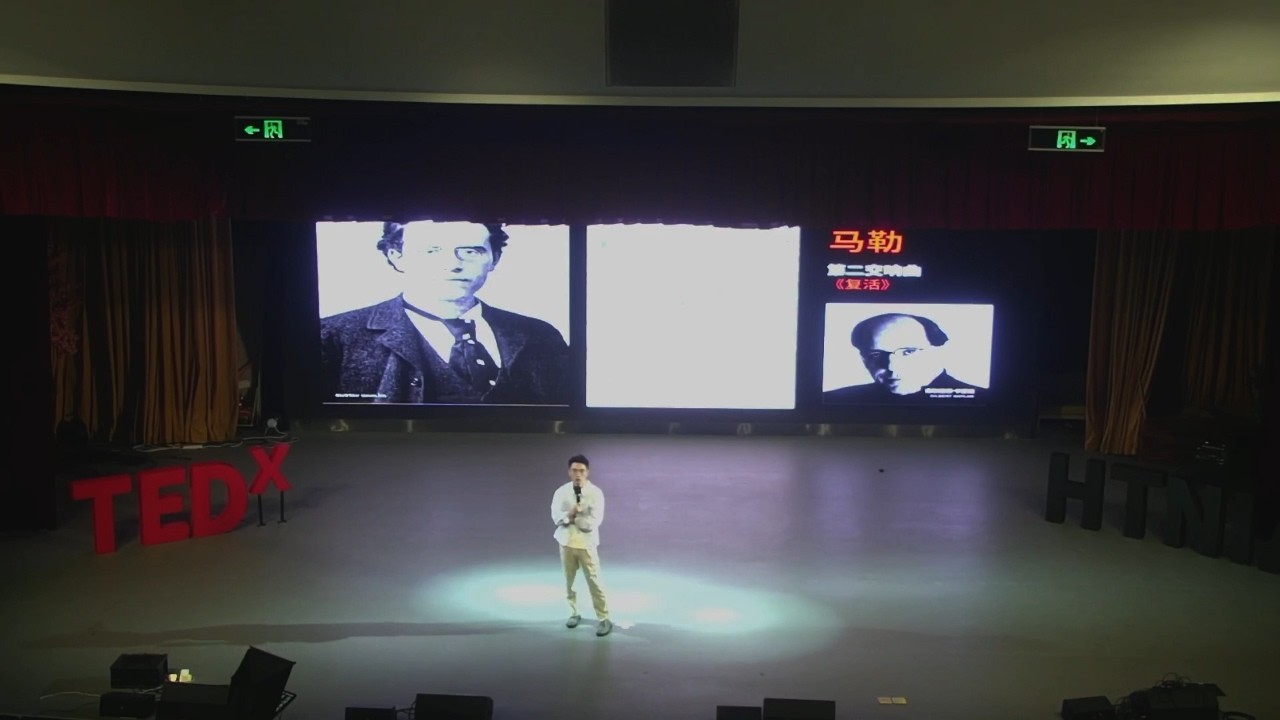
三重梦 | 鹿哥 Gustav | TEDxHTNIA Youth
Triple Dream | Gustav | TEDxHTNIA Youth
Title history
- 三重梦 | 鹿哥 Gustav | TEDxHTNIA Youth — observed on 20261101-0213 UTC (YouTube)
Keywords
Summary
198 words
Critical Evaluation
Value of the Information & Strength of the Argument
The value of the information lies in its integrative approach, connecting neuroscience of sleep with artistic creativity and personal motivation. The speaker effectively communicates complex ideas like REM sleep and memory consolidation using relatable analogies. The argumentation is persuasive but largely anecdotal; for instance, he cites specific researchers (e.g., ‘Katami’, ‘Dr. Plow Vs’) without clear citations, relying on personal credibility. The use of historical examples (Dali, Mozart/Salieri) adds rhetorical force but lacks empirical depth. The third section, based on personal experience, is authentic but less scientifically rigorous. Overall, the talk offers valuable conceptual insights but does not systematically substantiate its claims, and the transition from science to personal narrative is smooth yet not deeply argued.
Scientific Rigor, Source Quality, Title Accuracy
The talk demonstrates moderate scientific rigor. While the sleep science content is generally accurate, no primary sources are explicitly referenced, and the speaker does not provide a bibliography. The only source mentioned is the TEDx platform itself, with a link to https://www.ted.com/tedx . The speaker’s past roles in major pharmaceutical companies lend credibility, but this does not replace formal citations. The title ‘Three Dreams’ is highly adequate, as it precisely maps onto the three-part structure: scientific dreaming, creative dreaming, and aspirational dreaming. The content aligns well with the title, and each section is clearly delineated. Audience engagement (based on limited data) is not analyzed due to lack of comments, but the talk’s structure is coherent.
245 words
Title / Content Match
The title 'Three Dreams' accurately reflects the three thematic sections: scientific understanding of dreams, creative inspiration from dreams, and the pursuit of personal dreams. The content directly follows this structure.
Quality & Reliability
6/10
The talk presents sleep science and creative cognition in an accessible manner, supported by anecdotes and personal experience. However, scientific sources are not explicitly cited, and some claims are simplified for a general audience. The speaker has a credible background in healthcare communication.
Key Moments
Markers derived by PSI from the transcript: the creator did not define chapters.
- Introduction of the three types of dreams: science, art, and personal pursuit.
- Explanation of sleep stages, REM sleep, and the importance of dreams for memory and emotion.
- Discussion of creativity, Dali's hypnagogic technique, and divergent thinking.
- Story of Mozart and Salieri as an illustration of artistic genius and creative rivalry.
- Personal career transition, reference to The Secret Life of Walter Mitty, and the message that the journey matters more than the goal.
Cited Sources
- TEDx Program — The talk was given at a TEDx event, following the TED conference format but independently organized by a local community.
Contribution & Novelties
The talk’s original contribution is the synthesis of three distinct disciplines—sleep neuroscience, creativity research, and motivational psychology—into a cohesive ’three dreams’ framework. It bridges scientific knowledge with artistic and personal narratives, offering a holistic perspective on the role of dreams in human life. The perspective that sleep is non-negotiable and that 99% of daily concerns are not worth sacrificing it is a practical takeaway. Additionally, the emphasis on embracing divergent thinking and enjoying the process aligns with contemporary views on creativity and mindfulness.
Pour aller plus loin :
- Rapid eye movement sleep — Explains the physiological basis of REM sleep, the stage associated with vivid dreams, directly relevant to the first dream.
- Divergent thinking — A cognitive process that generates creative ideas by exploring many possible solutions, featured in the second dream’s discussion.
- The Secret Life of Walter Mitty (film) — The 2013 film referenced by the speaker to illustrate the importance of the journey in pursuing dreams.
- Memory consolidation — An NIH article on how sleep supports memory consolidation, reinforcing the scientific claims about dreaming.
176 words
Radar Profile
The radar profile shows a talk with moderate quantity (7) and quality (6) of information, a technical level that is accessible to a general audience (5), and an overall reliability score of 6. This suggests a balanced presentation that is informative and engaging, but not deeply technical or heavily sourced. The relatively lower technical score indicates that the speaker prioritized clarity over depth, while the moderate reliability reflects the reliance on anecdotes rather than explicit citations.