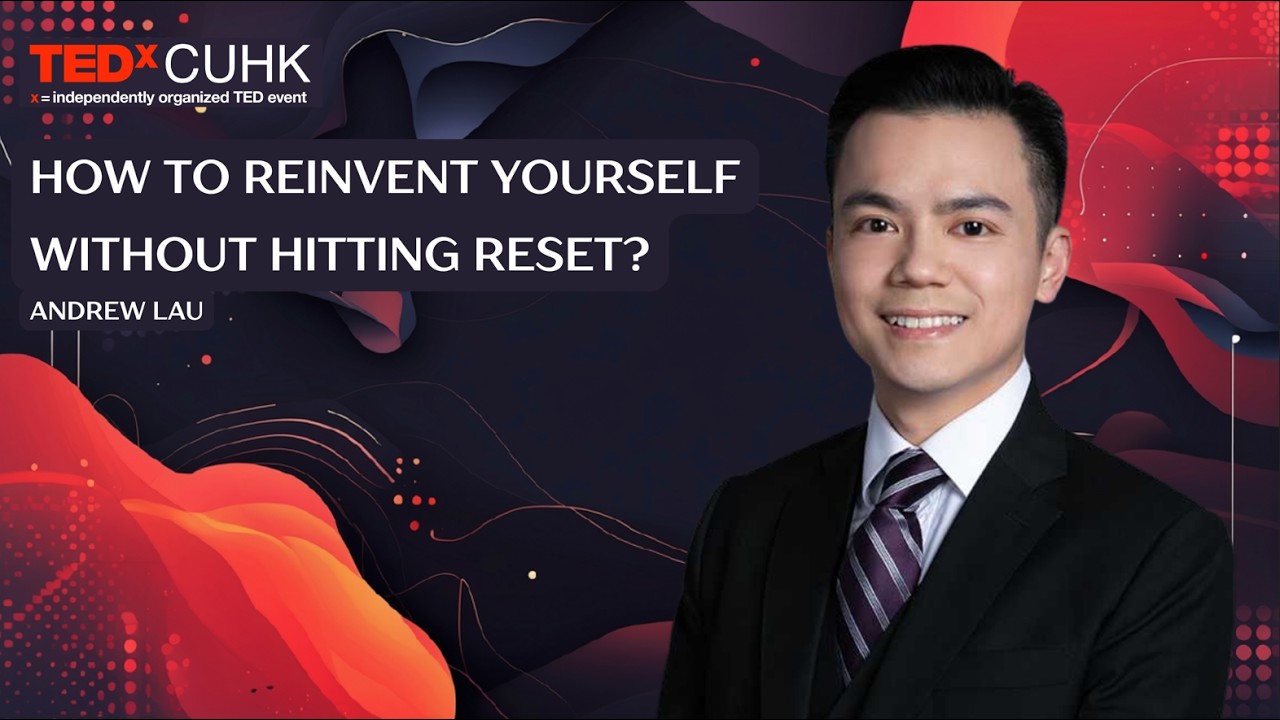
How to Reinvent Yourself Without Hitting Reset? | Andrew Lau | TEDxCUHK
Title history
- How to Reinvent Yourself Without Hitting Reset? | Andrew Lau | TEDxCUHK — observed on 20261101-0409 UTC (YouTube)
Keywords
Summary
188 words
Critical Evaluation
Value of the Information & Strength of the Argument
The value of this talk lies in its accessible metaphor of ’new game plus’ and a clear three-step framework for personal reinvention. Lau’s personal stories provide concrete illustrations of how skills like simplification, questioning, and resilience transfer across domains. His argument that reinvention is an ongoing process of ’transfer’ rather than a disruptive reset is compelling and actionable, encouraging micro-moves over grand plans. However, the argumentation is primarily anecdotal, relying on a single statistic from the World Economic Forum without deeper analysis or counterexamples. The framework, while intuitive, lacks rigorous validation or evidence of its effectiveness beyond the speaker’s own experience. Nonetheless, the logical flow is coherent: he identifies the problem, illustrates it, and proposes a solution, all within a consistent narrative.
Scientific Rigor, Source Quality, Title Accuracy
The talk does not present original research or a systematic literature review. It references one statistic from the World Economic Forum about job skills changing by 2030, but no formal citation is provided. The only source explicitly mentioned is the TEDx program itself via the description link. Lau’s ethos as a former journalist and current lawyer lends credibility, but the content remains personal opinion rather than evidence-based science. The title aptly matches the content, as the talk consistently revolves around the theme of reinvention without resetting. There is no sponsorship or advertising segment in the provided transcription.
234 words
Title / Content Match
The title accurately reflects the content, which discusses reinvention as a transfer of skills rather than a complete reset.
Quality & Reliability
5/10
The talk is a personal narrative with anecdotal evidence, referencing the World Economic Forum but without detailed sources or empirical data.
Key Moments
Markers derived by PSI from the transcript: the creator did not define chapters.
- Introduction: Andrew the anchorman, his TV career, and the concept of reinvention.
- Discussion of the statistic that 40% of core job skills will change by 2030, and the idea of skill transfer.
- Exhibit A: Live TV experience and learning the mantra 'shorter, sharper, simpler'.
- Exhibit B: Egypt assignment, military base incident, and the ability to ask questions under pressure.
- Exhibit C: Court reporting failure that sparked his interest in law.
- The three buttons: check your stats, unlock skills, and run a side quest.
- Reflections on the question 'Where do you see yourself in 10 years?' and the conclusion: reinvention is new game plus.
Cited Sources
- TEDx Program — General information about TEDx events, referenced in the video description.
Contribution & Novelties
The talk’s original contribution is framing career reinvention through the video game metaphor of ’new game plus,’ which allows the audience to see skill transfer as an accretion rather than a loss. It offers a practical, memorable framework (check stats, unlock skills, run side quests) that democratizes the idea of career change. The emphasis on micro-moves and existing attributes rather than drastic resets provides a less intimidating perspective on personal development.
Pour aller plus loin :
- Career change — Overview of the concept and factors influencing career transitions.
- Skill transferability — Definition and relevance of transferable skills in the workforce.
- World Economic Forum Future of Jobs Report — Source for the statistic about changing job skills (note: the exact report year may differ; the speaker cites 2030).
127 words
Radar Profile
The scores show a moderate profile with relatively higher quantity of information (6) and lower technical level (3), reflecting the anecdotal and non-technical nature of the talk. Fiabilité globale (4) lags behind, consistent with the lack of rigorous sourcing. The overall score of 3/5 reflects a personally valuable perspective but limited scientific grounding.