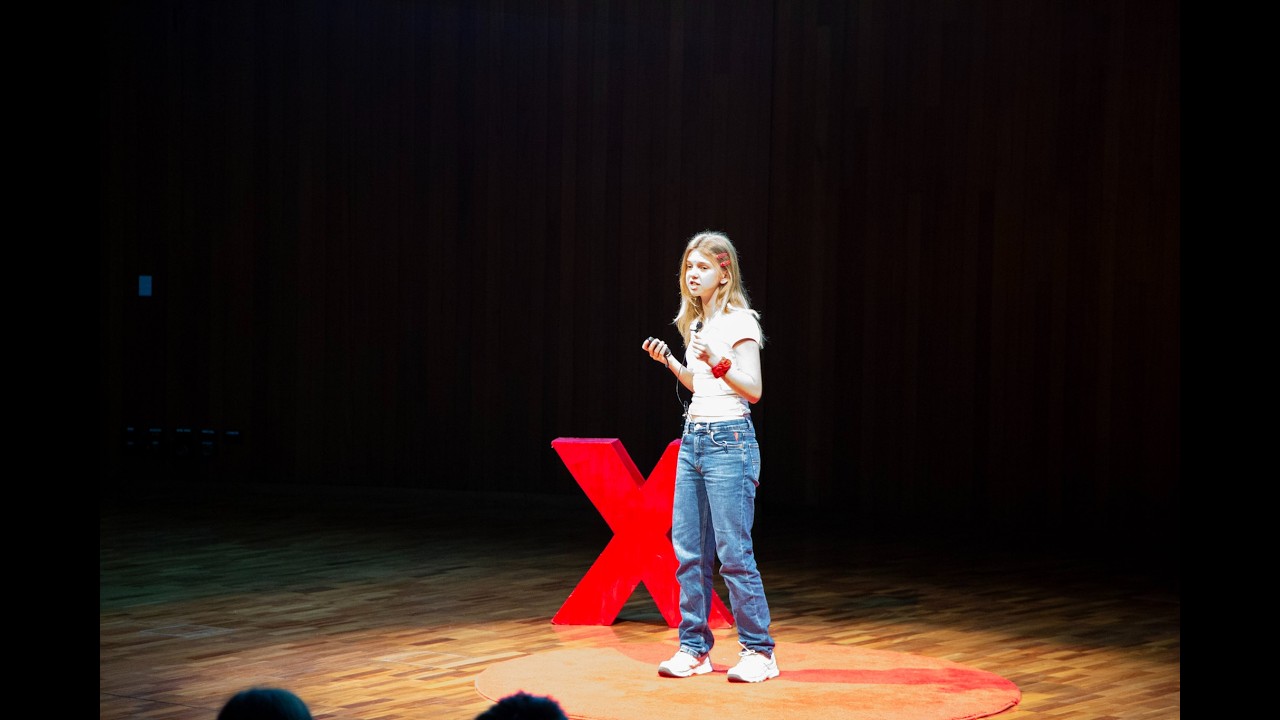
The Teenage Paradox | Pippa Janz | TEDxReddam House Youth
Title history
- The Teenage Paradox | Pippa Janz | TEDxReddam House Youth — observed on 20261027-1621 UTC (YouTube)
Keywords
Summary
126 words
Critical Evaluation
Value of the Information & Strength of the Argument
VALUE OF INFORMATION: The talk provides insight into the teenage experience from a first-person perspective. It highlights societal pressures and the influence of social media on identity formation. The references to a youth survey and social media trends give some empirical weight, although the survey details are not fully provided. The argument is coherent and accessible. SOLIDITY OF ARGUMENTATION: The argument is structured logically, moving from personal anecdote to broader observations and then to a call for change. However, it relies heavily on anecdotal evidence and lacks rigorous scientific backing. The speaker’s youth adds authenticity but not authority. The argument would be stronger with more concrete data and cited sources.
Scientific Rigor, Source Quality, Title Accuracy
SCIENTIFIC RIGOR: The talk is not a scientific study but an opinion piece. The speaker mentions a survey and dictionary definitions but does not provide full citations. The use of social media examples is illustrative but not systematically analyzed. Therefore, scientific rigor is moderate. QUALITY OF SOURCES: Only the TEDx official page is referenced in the description. No peer-reviewed research is cited. The reliance on personal observation and a single survey (without details) limits the quality of sources. ADÉQUATION TITRE/CONTENU: The title ‘The Teenage Paradox’ is highly appropriate, as the content discusses the contradictory pressures teenagers face. The talk stays on topic and delivers a coherent message.
232 words
Title / Content Match
The title accurately reflects the central theme of the paradox faced by teenagers.
Quality & Reliability
5/10
The talk presents personal observations and references to surveys without full citations, limiting reliability.
Key Moments
Markers derived by PSI from the transcript: the creator did not define chapters.
- Introduction of the clothing metaphor highlighting the lack of a 'teen' section.
- Definition of teenager and social media's distorted image.
- Description of two extreme types of teenagers: those clinging to childhood and those rushing into adulthood.
- Citing the 2025 Australian youth survey and its findings on priorities.
- Discussion of peer, academic, and financial pressures exacerbating the rush to adulthood.
- Conclusion proposing to rewrite the definition of being a teenager and embrace the present.
Cited Sources
- TEDx Official Page — Official description of the TEDx event format and licensing.
Contribution & Novelties
Original contribution: The talk offers a unique perspective from a 13-year-old on the pressures of growing up, synthesizing personal experience with societal observations. It highlights the paradox of being pushed both forward and backward. The argument that society misrepresents teenagers and sets unrealistic expectations is a valuable addition to the conversation on youth development.
Pour aller plus loin :
- Emerging adulthood — A developmental theory that describes the period between adolescence and young adulthood, relevant to the talk’s themes.
- Social comparison theory — Explains how individuals evaluate themselves based on others, a key factor in social media pressure.
- Adolescence — Provides an overview of the biological and social changes during this period.
112 words
Radar Profile
The radar profile shows moderate scores in information quantity and quality, a low technical level, and moderate reliability. This reflects an engaging and personal talk that is accessible but not deeply grounded in scientific research.