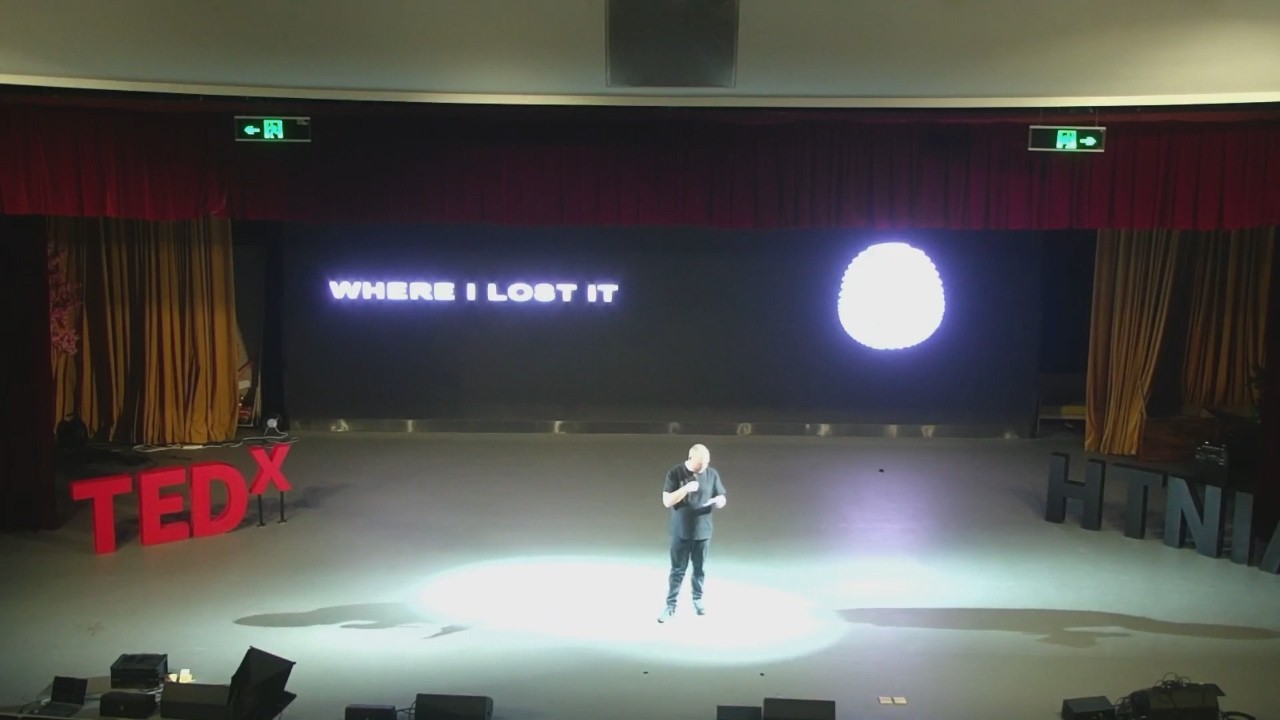
Dream | Jan van Greunen | TEDxHTNIA Youth
Keywords
Summary
153 words
Critical Evaluation
Value of the Information & Strength of the Argument
The value of this talk lies in its authentic personal narrative, offering a relatable example of reconnecting with a dormant passion. The argument is straightforward: dreams persist like fingerprints, but they only materialize through concrete effort. Jan supports this with a clear timeline of events, from his childhood to his present success, illustrating cause and effect. However, the argumentation relies solely on anecdotal evidence and lacks broader research or statistical backing, which limits its scientific weight but enhances its motivational appeal.
Scientific Rigor, Source Quality, Title Accuracy
The talk is a personal testimony, so scientific rigor is not expected; however, the speaker provides a coherent and plausible story. He does not cite external sources or studies, relying instead on his lived experience. The title ‘Dream’ is apt, encompassing the entire narrative about the importance of nurturing and acting upon one’s dreams. The content is well-structured, moving chronologically from childhood to present, with a clear moral. No external sources are referenced, but the link to TEDx is provided as the hosting platform, which is appropriate. The title accurately matches the content, and the delivery is sincere and engaging.
196 words
Title / Content Match
The title 'Dream' accurately reflects the central theme of the speaker's lifelong dream and his journey to realize it.
Quality & Reliability
6/10
Personal testimony and inspirational story; no empirical research or external data, but presented with authenticity and self-reflection.
Key Moments
Markers derived by PSI from the transcript: the creator did not define chapters.
- Introduction: fingerprint metaphor introduced as constant element of identity.
- Childhood passion for action figures and drawing; dream of becoming a concept artist.
- High school years: abandonment of art, focus on sports and academics.
- University and move to China; dream forgotten for 20 years.
- Rediscovery through miniature painting during COVID; beginning of practice and mentoring.
- First commissioned painting: dream becomes real; start of creative business.
- Conclusion: message about taking action, never too late to pursue dreams.
Cited Sources
- TEDx Program — Official platform for independently organized TED-style events, providing context for the talk.
Contribution & Novelties
The talk’s originality lies in using the fingerprint metaphor to link identity continuity with the persistence of childhood dreams. It offers a practical perspective on how reconnecting with a seemingly forgotten passion can lead to a fulfilling career change. The speaker’s journey from corporate life to creative entrepreneurship is inspirational and resonates with anyone facing similar crossroads.
Pour aller plus loin :
- The Hero’s Journey — Common narrative pattern in personal transformation stories, relevant to the speaker’s arc.
- Ikigai — Japanese concept of finding purpose, aligning with the speaker’s search for meaning.
- Growth Mindset — Psychological framework that supports the idea of learning and developing new skills later in life.
110 words
Radar Profile
The radar profile shows high scores in qualitative information and global reliability relative to the low technical level, reflecting a personal anecdote-driven talk with strong emotional authenticity but limited analytical depth. The low technical score indicates a non-specialist audience, while the moderate information quantity suggests a concise narrative.