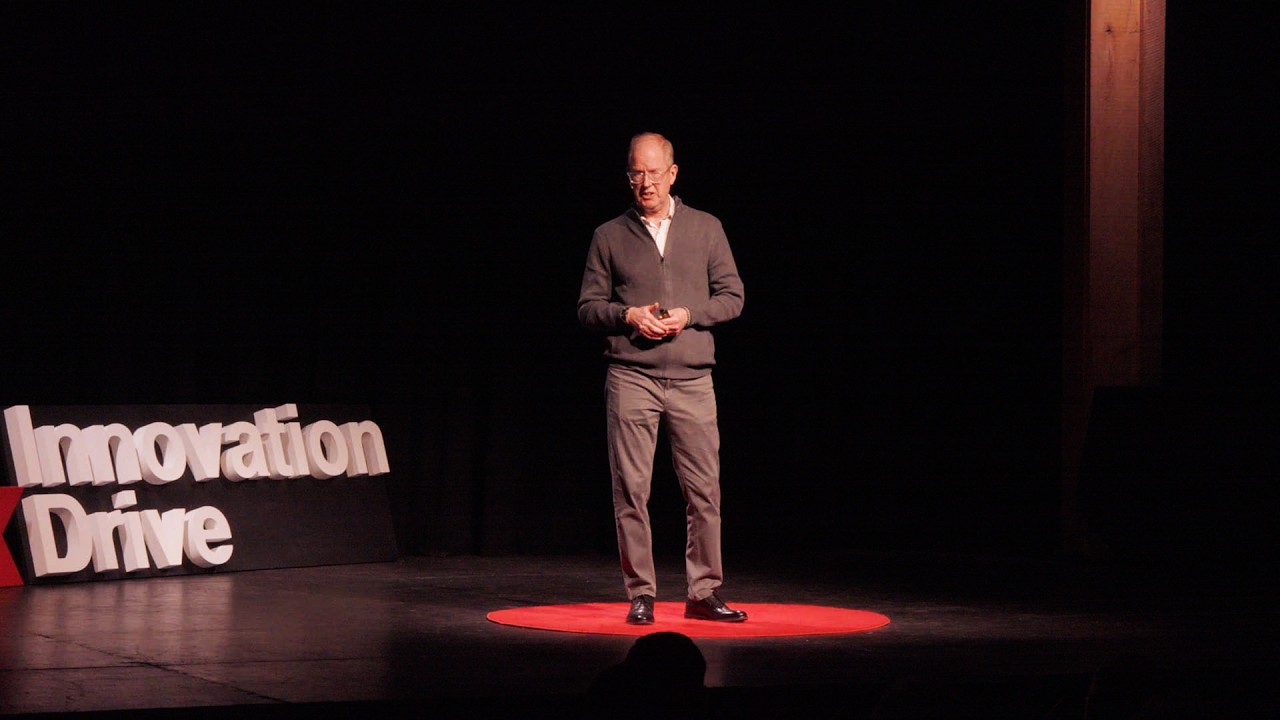
Every breakthrough starts with a question | Warren Berger | TEDxInnovation Drive
Keywords
Summary
161 words
Critical Evaluation
Value of the Information & Strength of the Argument
The talk’s core value lies in its accessible synthesis of established creativity theories into a memorable and applicable framework. Berger’s argument is built on compelling case studies (Polaroid, Netflix, Uber) that illustrate the power of questioning in real-world innovation. He supports his claims with references to studies, such as the UK study on children’s questioning frequency, and wisdom from figures like Einstein. The progression from Why to What If to How is logically presented and can be directly implemented. While the evidence is largely anecdotal and lacks systematic empirical support, the argument is persuasive and well-structured. The strength of the presentation is its practical utility: it gives the audience a clear method to approach problems creatively.
Scientific Rigor, Source Quality, Title Accuracy
The talk is a TEDx presentation, so it follows the typical format of personal narrative and expert opinion. The speaker, Warren Berger, is a credible author on the topic, having written best-selling books on questioning. However, scientific rigor is limited: specific studies are mentioned without full citations, and the evidence often relies on illustrative anecdotes. The quality of sources is moderate; the speaker references the Right Question Institute and an unnamed UK study, but no direct links or peer-reviewed publications are provided in the description. The title is perfectly aligned with the content, promising and delivering a discussion on the role of questions in breakthroughs. No discrepancies between title and content were identified.
244 words
Title / Content Match
The title accurately captures the core message of the talk: that breakthroughs originate from questions. It is concise and directly reflects the content.
Quality & Reliability
6/10
The talk relies heavily on anecdotal evidence and personal experience, but the speaker is a recognized expert on innovation and questioning. He mentions the Right Question Institute and Einstein's quote, but no formal citations are provided. The framework presented is logical and practical, but its scientific basis is not rigorously detailed.
Key Moments
Markers derived by PSI from the transcript: the creator did not define chapters.
- Opening and story of Edwin Land's daughter asking 'Why do we have to wait for the picture?' leading to the Polaroid invention.
- Examples of companies like Netflix, Airbnb, and Uber that started with a simple question.
- Discussion of great questioners, including Einstein's quote and the idea of the 'greatest questioner' being a four-year-old girl.
- Reasons why questioning declines: fear, knowledge accumulation, and undervaluing questions in education and business.
- Introduction of the Why-What-If-How framework for innovation, with practical application instructions.
Cited Sources
- TEDx — Official page of TEDx events, mentioned in video description for more information about the event format.
Contribution & Novelties
The talk contributes a clear, memorable framework (Why-What-If-How) that distills existing creativity theories into an actionable guide. Its novelty lies in the explicit linkage of question types to innovation stages, making the process of breakthrough thinking more accessible to a general audience. The speaker emphasizes the importance of rekindling childlike curiosity and provides a simple exercise to apply the framework.
Pour aller plus loin :
- Innovation — Foundational concept underlying the talk.
- Question — Linguistic and philosophical treatment of questioning.
- The Right Question Institute — Organization mentioned in the talk, dedicated to promoting better questioning.
95 words
Radar Profile
The radar profile shows a talk with moderate quantitative information and technical depth, but strong quality of information and overall reliability. The balance between accessible storytelling and actionable advice makes it effective for a wide audience.