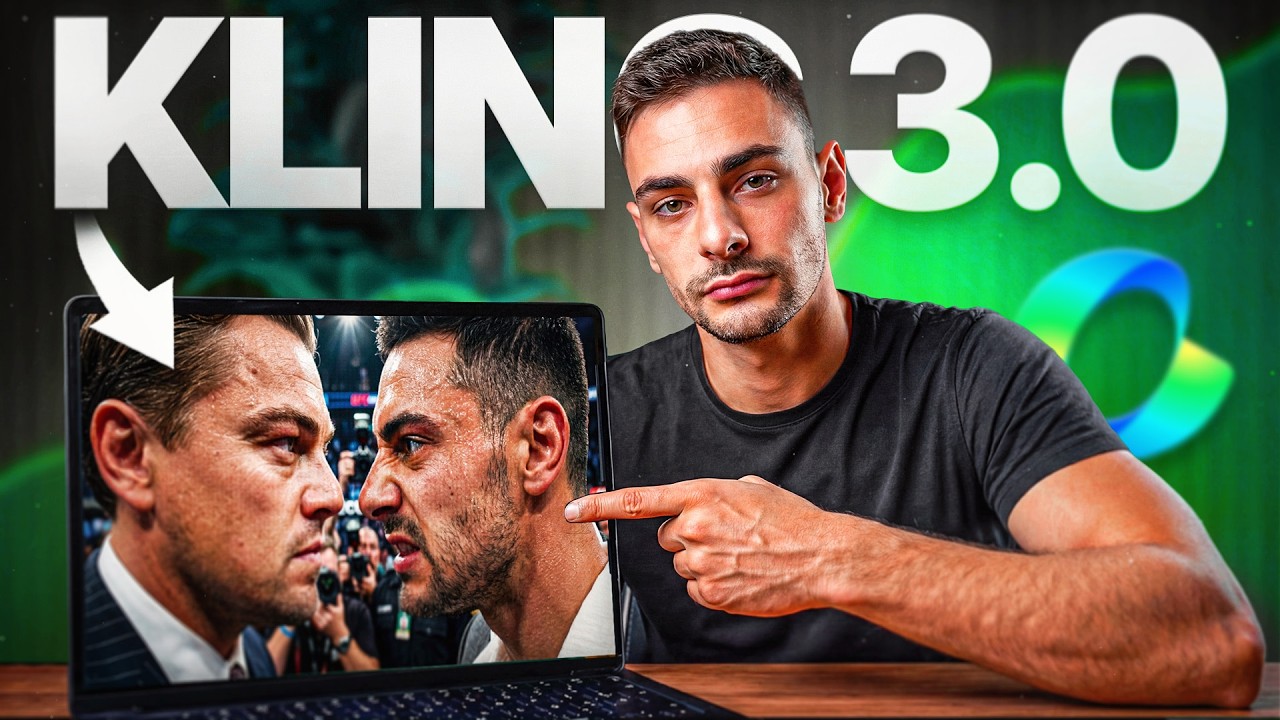
Kling 3.0 : Maîtrise l'IA Vidéo N°1 en 2026 (Tuto Complet)
Kling 3.0: Master the #1 Video AI in 2026 (Complete Tutorial)
Title history
- Kling 3.0 : Maîtrise l'IA Vidéo N°1 en 2026 (Tuto Complet) — observed on 20261112-0057 UTC (YouTube)
Keywords
Summary
165 words
Critical Evaluation
Value of the Information & Strength of the Argument
The video offers clear, actionable value for creators interested in AI video generation. The demonstrations are concrete, showing real outputs and explaining the workflow meticulously. The argumentation is convincing when showcasing the model’s capabilities, especially the multishot and elements features, which solve common coherence issues. However, the presenter occasionally relies on subjective claims (e.g., ‘best model on the market’) without comparative data, and the promotional segments for his community and agency somewhat dilute the objective value. The reasoning is logical, but the factual evidence is mostly anecdotal, based on his own tests rather than systematic evaluation.
Scientific Rigor, Source Quality, Title Accuracy
The video does not cite external scientific sources, but relies on the creator’s hands-on experience and demonstrations. The description provides links to the tool (Fal.ai) and the meta-prompt, which are direct resources. The title accurately reflects the content: it is indeed a full tutorial on Kling 3.0. The chapter timestamps align with the topics discussed. The scientific rigor is moderate: while the approach is methodical, the lack of independent validation or comparison with other models limits the reliability. There are no explicit inaccuracies, but the promotional tone affects the perceived objectivity.
202 words
Title / Content Match
The title accurately describes the video as a comprehensive tutorial on Kling 3.0, matching the content.
Quality & Reliability
7/10
The video provides a hands-on tutorial with practical demonstrations, but is partly promotional as it directs viewers to the creator's own community and services.
Chapters
- Introduction à Kling 3.0 : le générateur de vidéo IA révolutionnaire
- Où utiliser Kling 3.0 et économiser sur les abonnements IA
- Les 6 fonctionnalités clés de Kling 3.0 : l'IA vidéo qui change tout
- Le métaprompt : votre outil indispensable pour maîtriser Kling 3.0
- Tutoriel complet : créer des vidéos pro avec Kling 3.0 et votre métaprompt
- Kling 3.0 : créer du contenu viral et lancer un business avec l'IA
Cited Sources
- Kling 3.0 on Fal.ai — The platform used to generate videos with Kling 3.0, demonstrating the workflow.
- Meta-prompt resource — Link to retrieve the free meta-prompt discussed in the video.
- Club IA VIP — The creator's community, where the meta-prompt is shared.
- Work with us — Contact link for professional projects involving AI content creation.
- AIOS — Website for an AI operating system service mentioned briefly.
- Thomas Berton LinkedIn — Professional profile of the presenter.
- Recommended YouTube videos — Other videos suggested in the description.
External References
Contribution & Novelties
The video provides a practical, up-to-date tutorial on Kling 3.0, showcasing novel features like multishot prompting and element-based character consistency. The original contribution is the meta-prompt workflow, which automates prompt generation using Claude, lowering the barrier for novices. It also highlights the cost-effective use of Fal.ai compared to subscription models.
Pour aller plus loin :
- Text-to-video model — Background on the technology behind video generation from text.
- Prompt engineering — Further insight into crafting effective prompts for AI models.
- Generative artificial intelligence — Overview of the broader field.
- Fal.ai — The platform used in the video, with a catalog of AI models.
102 words
Radar Profile
The radar profile shows strong scores in information quantity and technical level, but lower reliability due to the promotional slant. This indicates a tutorial that is rich in practical details yet somewhat biased toward the creator's own interests.