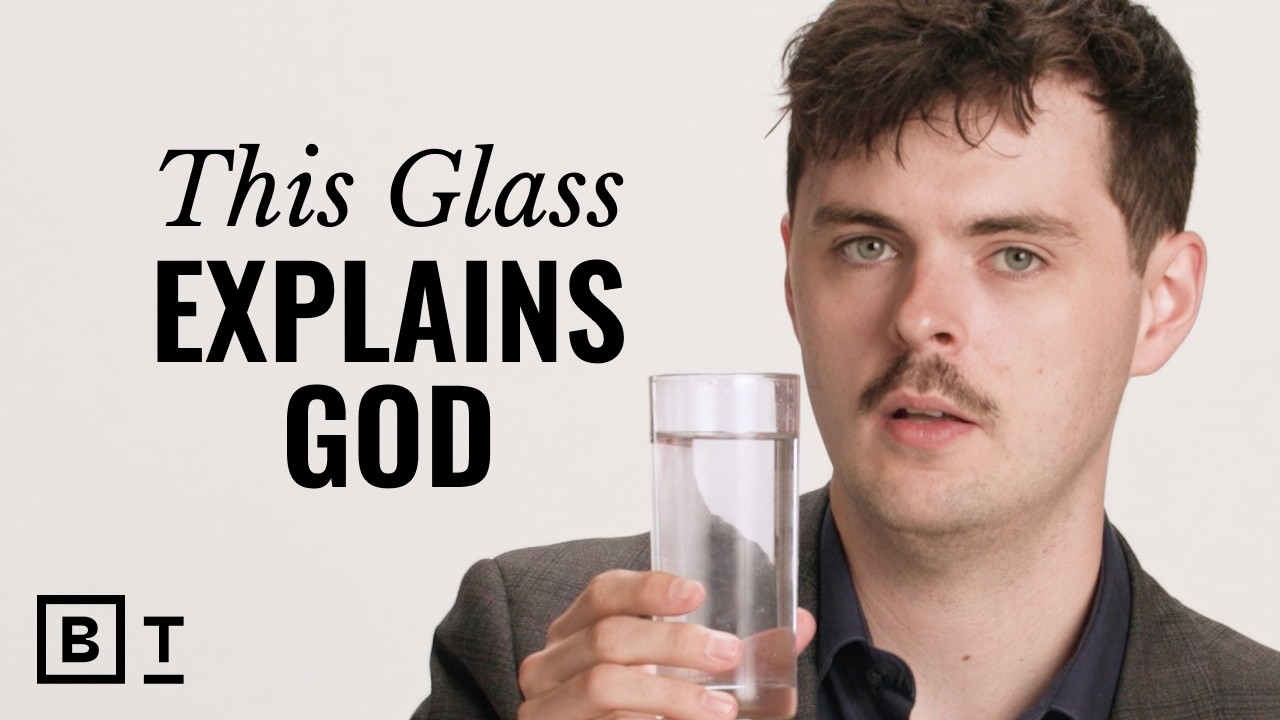
An atheist explains the most convincing argument for God | Alex O'Connor
Keywords
Summary
225 words
Critical Evaluation
Value of the Information & Strength of the Argument
The video’s value lies in its clear and accessible explanation of a sophisticated philosophical argument. O’Connor effectively uses analogies (dominoes, family lineage, the glass of water) to distinguish between temporal and hierarchical causation, a distinction that is often misunderstood. His argumentation is logically structured and he anticipates potential objections, such as the possibility of an infinite regress, by explaining why it fails in the hierarchical case. He also honestly acknowledges the limits of the argument, noting that it does not prove the existence of a personal God. The presentation is balanced, as he also gives a fair hearing to the problem of suffering as a counter-argument. However, the argument is not novel; it is a restatement of classical cosmological arguments, and O’Connor does not engage with more recent philosophical critiques in depth.
Scientific Rigor, Source Quality, Title Accuracy
The video demonstrates a good level of scientific and philosophical rigor. O’Connor accurately references Thomas Aquinas’s ‘Five Ways’ and Aristotle’s concept of the unmoved mover, and he uses technical terms like ‘per se’ and ‘per accidens’ causal chains correctly. The sources are primarily philosophical classics, which are appropriate for the topic. The title is accurate and not misleading. The video is an opinion piece, but O’Connor is transparent about his own views and the argument’s limitations. The description provides a link to Big Think membership, but no additional sources are cited. The comments section shows a generally positive reception, with many viewers appreciating the clarity of the explanation, though some raise philosophical objections.
260 words
Title / Content Match
The title accurately reflects the content: Alex O'Connor, an atheist, presents and evaluates the first cause argument, which he considers the most convincing argument for God's existence.
Quality & Reliability
8/10
The argument is presented with philosophical rigor, clearly distinguishing between temporal and hierarchical causation, and referencing Aquinas and Aristotle. The speaker is transparent about his own position and the limits of the argument. However, the video is an opinion piece rather than a peer-reviewed analysis, and some technical terms are simplified for a general audience.
Key Moments
Markers derived by PSI from the transcript: the creator did not define chapters.
- Introduction: Alex O'Connor presents the first cause argument as the most powerful for God's existence.
- Distinguishes between horizontal (temporal) and hierarchical (simultaneous) causation using the glass of water example.
- Explains why hierarchical causation cannot be an infinite regress: each cause borrows its power from a more fundamental cause.
- Contrasts hierarchical causation with horizontal causation (dominoes, family lineage) where earlier causes can disappear.
- Introduces Aquinas's argument from motion and the concept of an 'unactualized actualizer' or 'pure act'.
- Explains how the first cause can be argued to be immaterial, timeless, and spaceless.
- Presents the problem of suffering as the strongest argument against a good God, citing evolution by natural selection.
- Concludes by rejecting deism and affirming belief in a sustaining foundational principle, while remaining skeptical of specific religious traditions.
Cited Sources
- Big Think Membership — Link in video description to Big Think membership, not directly related to the content.
Concurring Sources
- Summa Theologica — Aquinas's work where he presents the Five Ways, including the argument from motion and causation.
- Metaphysics — Aristotle's work where he discusses the unmoved mover and the nature of causation.
Dissenting Sources
- The God Delusion — Richard Dawkins's book, which O'Connor mentions as a source of 'new atheist' arguments that he finds less sophisticated than the classical arguments.
Contribution & Novelties
The video’s original contribution is its pedagogical clarity in explaining the hierarchical version of the cosmological argument, which is often overshadowed by the more common temporal version. O’Connor’s use of everyday analogies makes the abstract concept of ‘per se’ causation accessible to a broad audience. He also offers a nuanced personal perspective, distinguishing between belief in a foundational principle and adherence to a specific religious tradition.
Pour aller plus loin :
- Cosmological argument — Overview of various cosmological arguments, including the Kalam and Thomistic versions.
- Thomas Aquinas — Background on Aquinas’s philosophical and theological system, including his Five Ways.
- Problem of evil — Discussion of the philosophical problem of evil and suffering as an argument against theism.
- Aristotle’s unmoved mover — Explanation of Aristotle’s concept of a prime mover, which influenced Aquinas.
- Natural selection — The mechanism of evolution that O’Connor cites in the problem of suffering.
147 words
Radar Profile
The radar profile shows high scores in quantity and quality of information, reflecting the video's substantive philosophical content. The technical level is also high, indicating a sophisticated audience. The overall reliability is strong, as the speaker is knowledgeable and transparent about his reasoning.
💬 Positive. The comments are overwhelmingly appreciative of O'Connor's clear and respectful explanation, with many viewers sharing their own philosophical reflections and questions. Some comments engage critically with the argument, but the overall tone is constructive and curious.