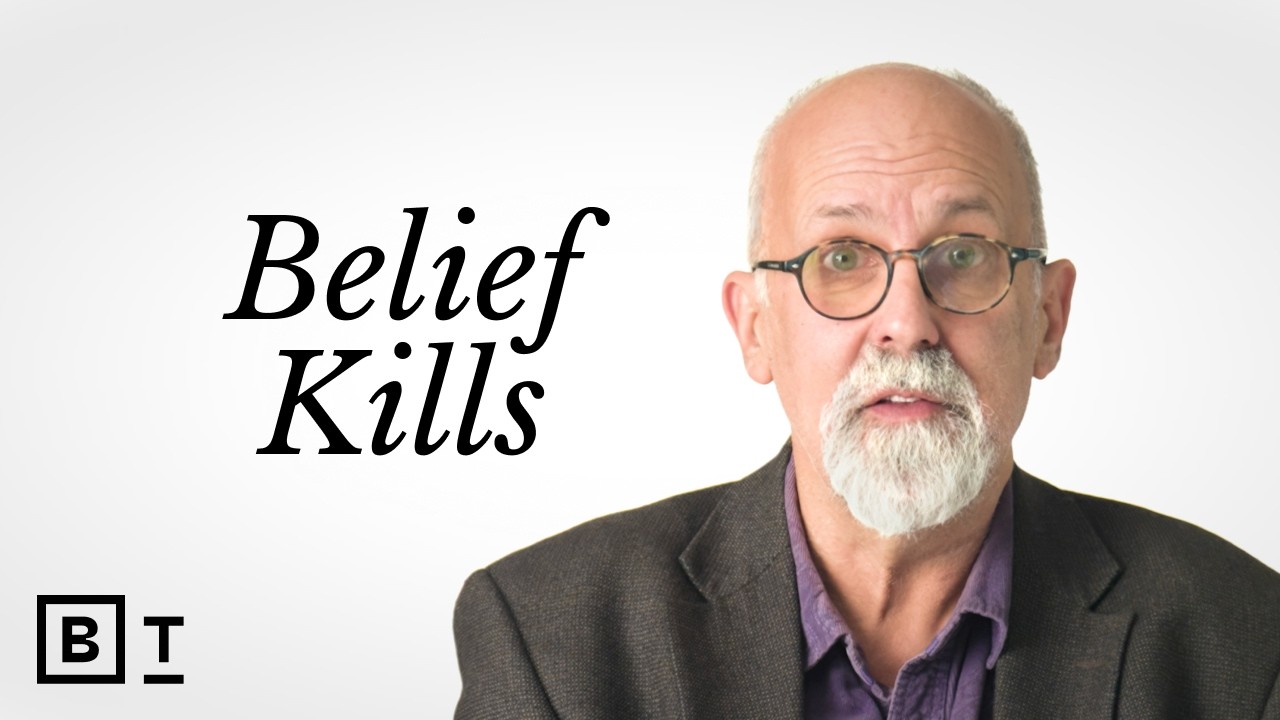
The strange science of placebos | David Linden
Keywords
Summary
124 words
Critical Evaluation
Value of the Information & Strength of the Argument
The video provides valuable insights into the biological reality of placebo and nocebo effects, moving beyond anecdote to explain mechanisms. The argumentation is solid, using well-documented examples and referencing specific studies (e.g., Walter Cannon’s work, naloxone blockade). The speaker’s expertise lends credibility. However, some claims, like the reason for the increasing placebo effect in the US, are presented as hypotheses rather than established facts.
Scientific Rigor, Source Quality, Title Accuracy
The scientific rigor is high, with the speaker citing specific papers and mechanisms. The sources are not explicitly listed, but the references to Walter Cannon and the use of naloxone are verifiable. The title accurately reflects the content. The video is an expert opinion piece, not a systematic review, so it lacks a comprehensive citation list.
135 words
Title / Content Match
The title accurately reflects the content, which focuses on the biological mechanisms and surprising aspects of placebo effects.
Quality & Reliability
8/10
The content is presented by a recognized neuroscientist from Johns Hopkins, with references to established scientific literature and mechanisms (e.g., naloxone blocking placebo analgesia). The claims are generally well-supported, though some extrapolations (e.g., the cause of the increasing placebo effect in the US) are speculative.
Key Moments
Markers derived by PSI from the transcript: the creator did not define chapters.
- Introduction to the topic and the speaker's background.
- Discussion of voodoo death and Walter Cannon's 1942 paper.
- Explanation of the physiological mechanism of voodoo death (sympathetic and parasympathetic nervous system).
- Case of fatal misdiagnosis and its link to voodoo death.
- Introduction to broken heart syndrome (takotsubo cardiomyopathy) and its link to grief.
- Explanation of the placebo effect and its biological basis (endorphins and enkephalins).
- Discussion of associative learning and placebo effects (Pavlovian conditioning).
- The increasing strength of the placebo effect in the US and possible reasons.
- Open-label placebo and its counterintuitive effectiveness.
- Future directions: brain stimulation and new therapies exploiting mind-body signaling.
Cited Sources
- Big Think Membership — Link in the video description to the channel's membership page.
Concurring Sources
- Placebo effect - Wikipedia — General reference on placebo effects, supporting the video's claims.
Contribution & Novelties
The video offers a clear and accessible synthesis of current research on placebo and nocebo effects, emphasizing their biological reality and potential for therapeutic exploitation. It highlights the surprising phenomenon of open-label placebos and the geographical variation in placebo strength, which are not widely known.
Pour aller plus loin :
- Placebo effect - Wikipedia — Provides a broad overview of the placebo effect, its history, and mechanisms.
- Nocebo effect - Wikipedia — Explains the negative counterpart of the placebo effect.
- Takotsubo cardiomyopathy - Wikipedia — Details the heart condition linked to grief and stress.
- Naloxone - Wikipedia — The drug used to block opioid receptors, demonstrating the role of endorphins in placebo analgesia.
113 words
Radar Profile
The radar profile shows high scores in information quantity, quality, and reliability, with a moderate technical level. This indicates a well-balanced, informative, and credible presentation that remains accessible to a general audience.
💬 Positif. Sur les 30 commentaires analysés, la plupart expriment un intérêt pour le sujet et partagent des expériences personnelles, avec quelques critiques sur le système médical.