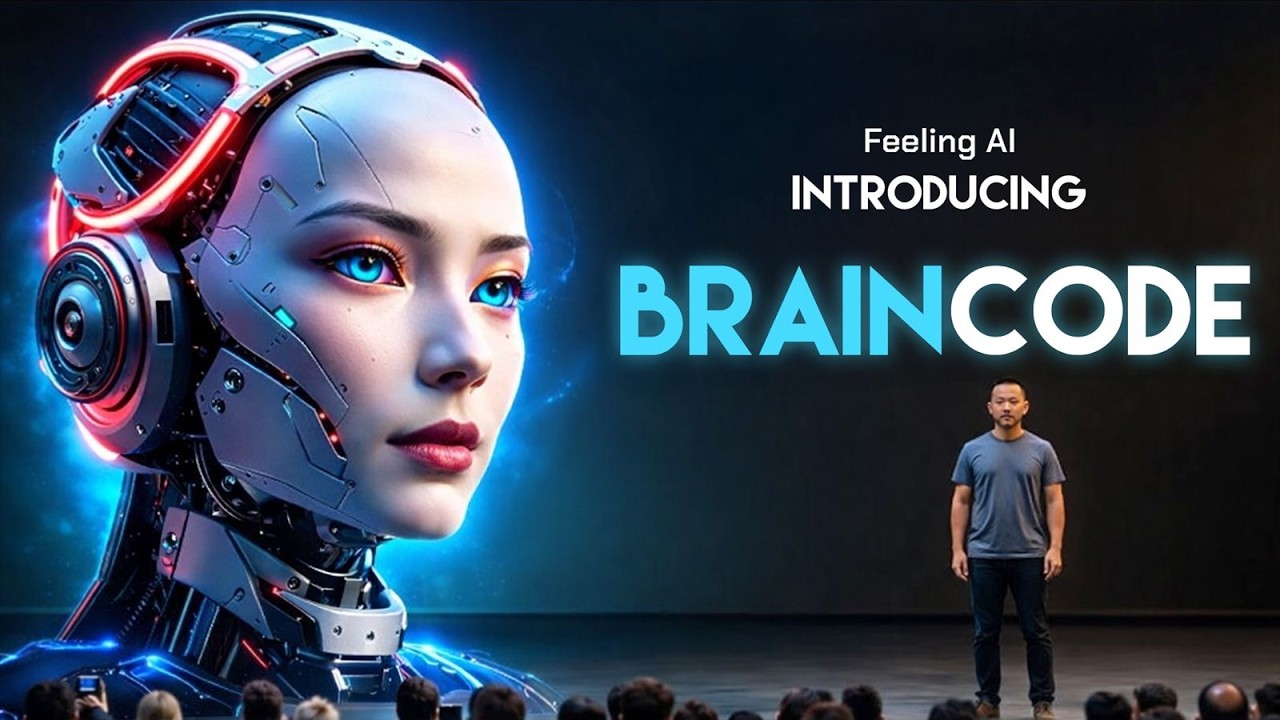
New Chinese AI Agent Breaks TerminalBench and Destroys Claude Opus 4.6
Keywords
Summary
131 words
Critical Evaluation
Value of the Information & Strength of the Argument
The video provides a broad overview of recent AI developments, offering specific benchmark numbers and technical details for each model. The argumentation is largely descriptive, presenting claims without deep critical analysis or independent verification. The value lies in the aggregation of multiple news items, but the lack of sources and the promotional tone reduce its scientific rigor.
Scientific Rigor, Source Quality, Title Accuracy
The video cites no specific sources for the benchmark results or model capabilities, relying on the narrator’s assertions. The description includes a link to Higgsfield’s promotional page, which is not a scientific source. The title is somewhat clickbait, emphasizing a single benchmark result while the video covers multiple topics. The content aligns with the title’s main focus on the Chinese AI agent, but the ‘destroys’ claim is exaggerated.
140 words
Title / Content Match
The title is somewhat sensationalist, focusing on one benchmark result, while the video covers multiple AI developments. The title accurately reflects the main topic but overstates the 'destroys' aspect.
Quality & Reliability
6/10
The video reports on several AI breakthroughs, but provides limited verifiable sources and relies heavily on promotional content. Claims are plausible but not independently verified.
Key Moments
Markers derived by PSI from the transcript: the creator did not define chapters.
- Introduction to multiple AI breakthroughs
- CodeBrain 1 achieves 72.9% on Terminal-Bench 2.0
- Technical details of CodeBrain 1's approach
- Seedance 2.0 for AI video generation
- Impact on content creation industries
- Qwen-Image-2.0 capabilities and benchmarks
- Fine-R1 for fine-grained recognition
- Conclusion and summary
Concurring Sources
- Terminal-Bench paper — Provides the benchmark used for evaluating AI agents, supporting the video's claims about CodeBrain 1's performance.
Dissenting Sources
- No direct conflicting sources found — The video's claims are not contradicted by available sources, but lack independent verification.
External References
Contribution & Novelties
The video aggregates recent AI news, providing a snapshot of advancements in agents, video, image, and vision models. Its original contribution is the compilation of these developments in a single narrative, though it lacks in-depth analysis.
Pour aller plus loin :
- Terminal-Bench — The benchmark used to evaluate CodeBrain 1.
- Language Server Protocol — The protocol used by CodeBrain 1 for code understanding.
- ByteDance Seedance — Official site for ByteDance, developer of Seedance 2.0.
- Qwen-Image-2.0 — Official blog post about Qwen-Image-2.0.
- Fine-R1 — Paper on fine-grained recognition with minimal data.
90 words
Radar Profile
The radar profile shows moderate scores across all dimensions, with slightly higher quantity of information and lower reliability, reflecting the video's broad but unverified content.