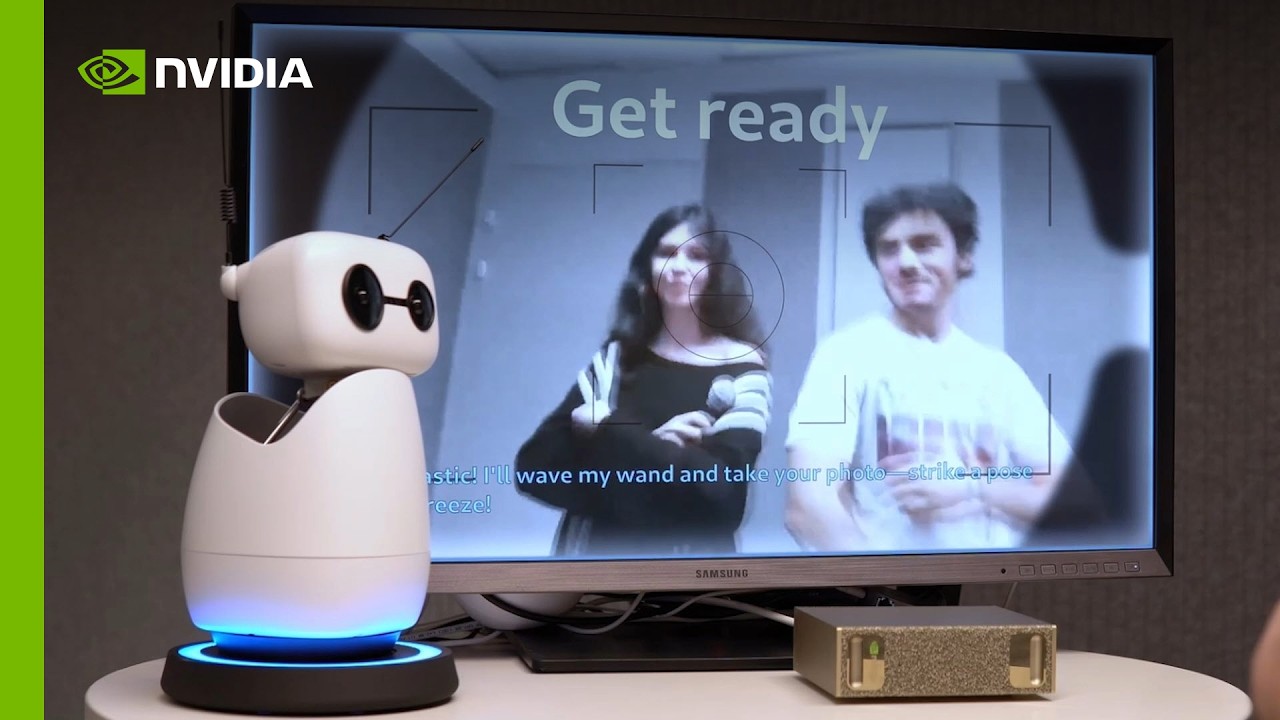
NVIDIA DGX Spark & Reachy Photo Booth Playbook
Keywords
Summary
208 words
Critical Evaluation
Value of the Information & Strength of the Argument
The video provides substantial value by offering a concrete, step-by-step tutorial for building a complex multimodal AI system. It clearly explains the architecture, the role of each component, and the integration points. The argumentation is solid, as it demonstrates the functionality through a live example and provides code-level details for extension. The tutorial is well-structured, with clear chapters and logical progression from setup to customization. The value is enhanced by the practical tips, such as handling first-run delays and troubleshooting common issues. The argumentation is convincing because it is based on a working implementation, not just theoretical concepts.
Scientific Rigor, Source Quality, Title Accuracy
The video demonstrates a high level of technical rigor, with precise instructions and references to official documentation. The sources cited include the NVIDIA build platform and the NeMo Agent Toolkit documentation, which are authoritative. The title accurately reflects the content, and the video stays focused on the playbook walkthrough. The tutorial is reproducible, as it provides all necessary commands and configuration steps. However, the video does not delve into the scientific principles behind the AI models used, and it does not provide independent verification of the results. The quality of sources is good, but the video could benefit from more in-depth explanations of the underlying technologies.
219 words
Title / Content Match
The title accurately reflects the content, which is a walkthrough of the DGX Spark and Reachy Photo Booth Playbook.
Quality & Reliability
8/10
The video is a practical tutorial from NVIDIA Developer, demonstrating a concrete implementation. It provides step-by-step instructions, clear explanations of the architecture, and references to official documentation. The content is technically accurate and reproducible, though it lacks in-depth theoretical discussion and independent verification.
Chapters
Cited Sources
- DGX Spark & Reachy Photo Booth Playbook — The playbook referenced in the video, providing the full instructions and code.
Concurring Sources
- NVIDIA DGX Spark — The hardware platform used in the playbook.
Contribution & Novelties
The video provides a novel contribution by demonstrating a practical integration of a multimodal agent with a physical robot for a creative application. It showcases the use of NVIDIA DGX Spark as an edge AI platform and provides a detailed guide for developers to replicate and extend the system. The playbook itself is a valuable resource for the community.
Pour aller plus loin :
- NeMo Agent Toolkit — Official documentation for the framework used to build the agent.
- Flux.1 ContextDiff — The image generation model used in the playbook.
- Reachy Mini — The robot platform from Pollen Robotics.
98 words
Radar Profile
The radar profile shows high scores in information quantity, quality, and reliability, with a slightly lower technical level. This indicates a well-rounded tutorial that is both informative and trustworthy, though it may not require advanced technical expertise to follow.
💬 No comments were provided for analysis.