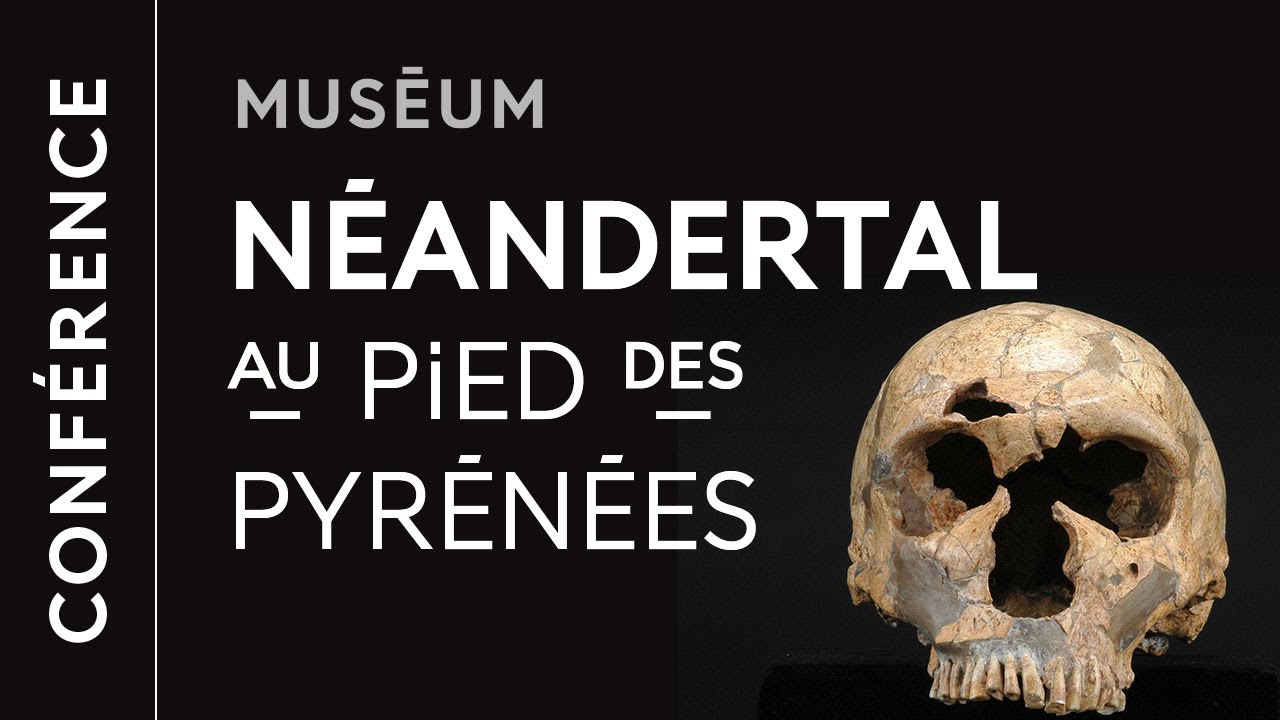
L'Homme de Néandertal au pied des Pyrénées
Neanderthals at the Foot of the Pyrenees
Keywords
Summary
167 words
Critical Evaluation
Value of the Information & Strength of the Argument
The value of the information is high, as it provides an expert overview of current research on Neanderthal origins, with specific focus on the Montmaurin sites. The argumentation is solid, based on morphological comparisons and stratigraphic context. Vialet presents hypotheses clearly, distinguishing between established facts and interpretations. She effectively uses comparative anatomy to illustrate Neanderthal features and discusses the variability among Middle Pleistocene fossils, which strengthens the scientific rigor of the talk.
Scientific Rigor, Source Quality, Title Accuracy
The scientific rigor is commendable, with references to well-known sites and fossils, and the speaker’s expertise is evident. The sources are primarily the speaker’s own research and established paleoanthropological knowledge, though specific citations are not provided in the talk. The title accurately reflects the content, focusing on Neanderthal remains in the Pyrenees. The talk is well-structured and informative, though it could benefit from more explicit references to published studies.
156 words
Title / Content Match
The title accurately reflects the content, focusing on Neanderthal remains in the Pyrenean foothills, particularly the Montmaurin sites.
Quality & Reliability
8/10
The conference is delivered by a recognized paleoanthropologist from the Muséum national d'Histoire naturelle, presenting ongoing research with a multidisciplinary approach. The information is consistent with current scientific knowledge, though some interpretations are hypotheses. The talk is well-structured and references specific sites and fossils.
Key Moments
Markers derived by PSI from the transcript: the creator did not define chapters.
- Introduction to the conference and the Montmaurin sites.
- Overview of human evolution and the place of Neanderthals.
- Discussion of early European fossils and the Atapuerca sites.
- Description of Neanderthal morphology and characteristics.
- Comparison of Middle Pleistocene fossils and the question of Neanderthal ancestors.
- Focus on the Montmaurin mandible and its significance.
- Recent excavations at Montmaurin and the discovery of a Neanderthal tooth.
- Discussion of paleogenetics and complex evolutionary scenarios.
- Conclusion and future research directions.
Cited Sources
- Toutes les conférences — Playlist of all conferences from the Musée de l'Homme.
- Les vidéos autour de Néandertal — Playlist of videos about Neanderthals.
Concurring Sources
- Neanderthal anatomy — Supports the description of Neanderthal morphological traits.
- Atapuerca Mountains — Relevant to the discussion of early European fossils.
Contribution & Novelties
The talk provides an update on the ongoing research at Montmaurin, highlighting new discoveries and the revival of a site that had been somewhat forgotten. It contributes to the discussion on Neanderthal origins by presenting morphological data from the Pyrenean region.
Pour aller plus loin :
- Neanderthal anatomy — Overview of Neanderthal skeletal features.
- Atapuerca Mountains — Key site for early human fossils in Europe.
- Homo heidelbergensis — Species often considered ancestral to Neanderthals.
- Paleogenetics — Field providing insights into human evolution.
82 words
Radar Profile
The radar profile shows high scores in information quantity, quality, and reliability, with a slightly lower technical level, indicating a well-balanced and accessible scientific talk.