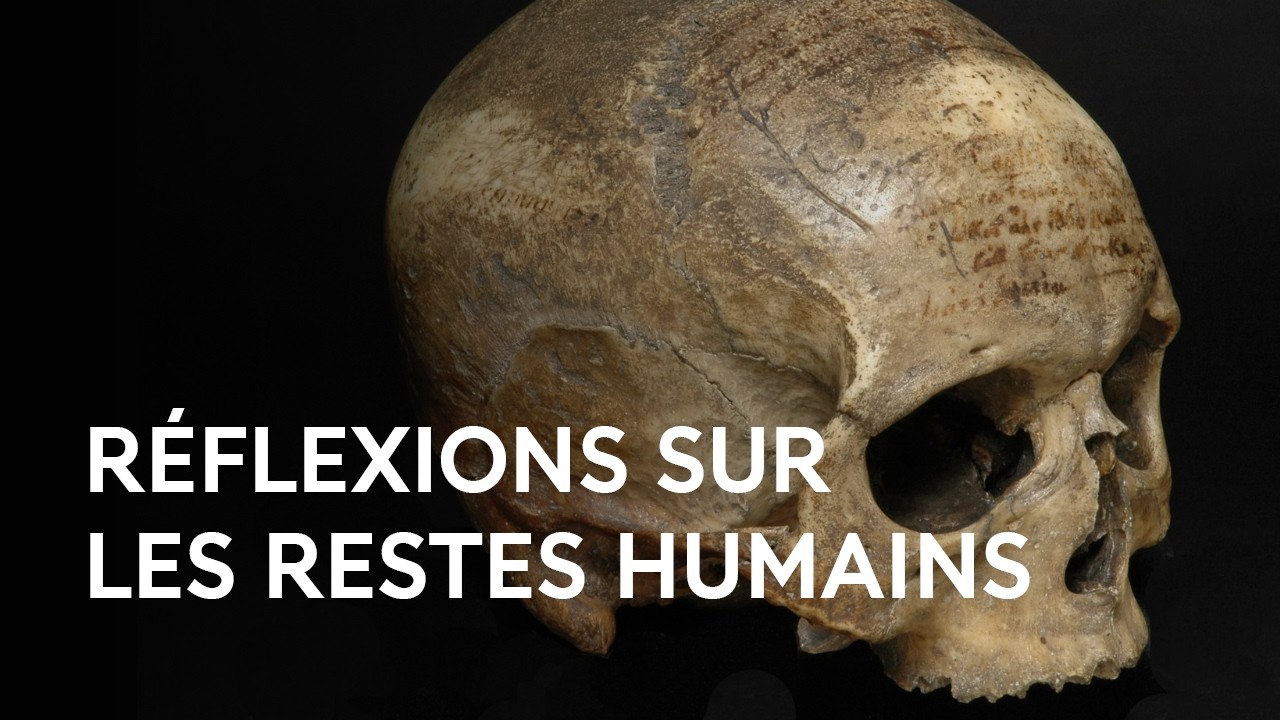
Les restes humains dans la Cité : pratiques et déontologie
Human Remains in the City: Practices and Ethics
Keywords
Summary
172 words
Critical Evaluation
Value of the Information & Strength of the Argument
The conference provides valuable insights into the complex issues surrounding human remains, offering a multidisciplinary perspective that is both informative and thought-provoking. The panelists present their arguments based on professional experience and legal expertise, grounding the discussion in concrete examples. The value lies in the diversity of viewpoints, which allows for a nuanced understanding of the subject. The argumentation is solid, with each speaker contributing to a coherent narrative about the need for ethical and legal frameworks that respect human dignity while allowing for scientific advancement.
Scientific Rigor, Source Quality, Title Accuracy
The scientific rigor is high, with panelists citing specific laws, regulations, and professional practices. The sources mentioned include the French Heritage Code, the ICOM Code of Ethics, and recent legislative developments. The title accurately reflects the content, focusing on the practices and ethics of handling human remains. The discussion is well-structured and avoids sensationalism, maintaining a professional tone throughout. The conference is part of a series that aims to bridge archaeology, anthropology, and society, and it successfully achieves this goal.
181 words
Title / Content Match
The title accurately reflects the content, which focuses on the practices and ethical considerations surrounding human remains in an urban and institutional context.
Quality & Reliability
8/10
The conference features experts in paleogenetics, conservation, archaeology, and legislation, providing a multidisciplinary and authoritative perspective. The discussion is well-structured and grounded in professional experience, though it remains a debate rather than a peer-reviewed study.
Key Moments
Markers derived by PSI from the transcript: the creator did not define chapters.
- Introduction by Anne and Aurélie, setting the context of the conference and introducing the panelists.
- Panelists share their professional relationships with human remains, including personal motivations and experiences.
- Discussion on the legal status of human remains, including the recent French law on restitution and the concept of 'vestige anthropobiologique'.
- Ethical considerations and the balance between scientific research and respect for the deceased.
- Future perspectives and evolving deontological principles in the handling of human remains.
Cited Sources
- Conference page on Musée de l'Homme website — Official page for the conference, providing details and context.
- Exhibition 'Momies' at Musée de l'Homme — Related exhibition that provided the context for the conference.
Concurring Sources
- ICOM Code of Ethics — Provides ethical guidelines for handling human remains in museums.
- French Heritage Code — Legal framework for cultural heritage, including archaeological remains.
Contribution & Novelties
The conference offers a unique multidisciplinary perspective on the handling of human remains, bringing together legal, scientific, and conservation expertise. It highlights recent legislative developments and the evolving concept of ‘vestige anthropobiologique’, which is a significant contribution to the field. The discussion also emphasizes the importance of ethical considerations and the need for ongoing dialogue between scientists, conservators, and policymakers.
Pour aller plus loin :
- ICOM Code of Ethics — Relevant for museum professionals dealing with human remains.
- French Heritage Code — Legal framework for cultural heritage in France.
- Convention on the Protection of the Underwater Cultural Heritage — International context for heritage protection.
104 words
Radar Profile
The radar profile shows high scores in information quality and reliability, reflecting the expertise of the panelists and the structured discussion. The technical level is moderately high, indicating a professional audience. The overall balance suggests a well-rounded and informative conference.