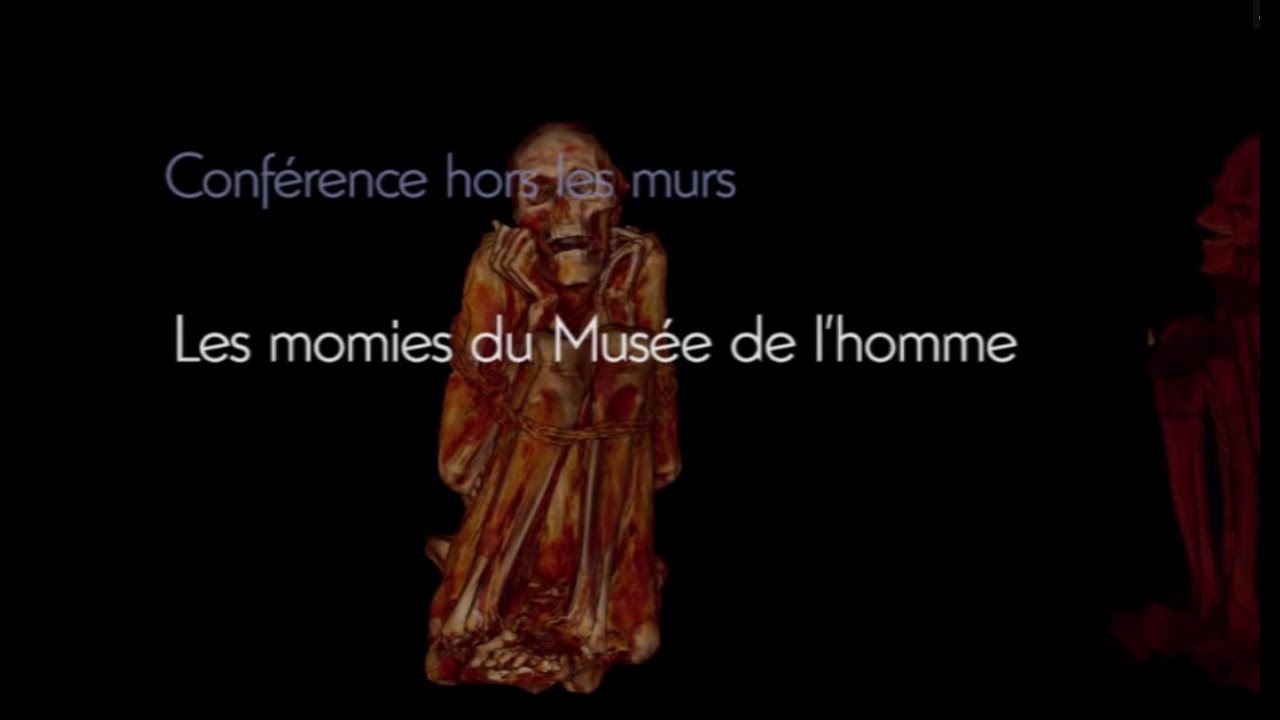
Les momies du Musée de l'Homme
The mummies of the Musée de l'Homme
Keywords
Summary
210 words
Critical Evaluation
Value of the Information & Strength of the Argument
The value of the information lies in its comprehensive overview of the mummy collection at the Musée de l’Homme, providing historical context and technical details about mummification practices. The speaker’s expertise lends credibility, and he presents a balanced view, acknowledging the limitations of current knowledge and the need for further research. The argumentation is generally solid, but some claims, such as the diffusion of mummification techniques from Egypt to the Canary Islands, are presented without strong evidence, relying on cultural diffusion hypotheses that are debated. The speaker also makes a critical comparison between morphological and genetic approaches in anthropology, which is insightful but somewhat subjective.
Scientific Rigor, Source Quality, Title Accuracy
The scientific rigor is moderate: the speaker is a recognized specialist, but the talk is an oral presentation without formal citations. The sources mentioned are primarily the museum’s collections and historical figures, but no specific publications are cited. The title accurately reflects the content, which focuses on the mummy collection and its study. The speaker’s historical narrative is well-structured, but some statements, such as the claim that mummification techniques spread from Egypt to the Canaries, are speculative and not backed by concrete evidence. The talk would benefit from referencing specific studies or archaeological findings to strengthen its scientific credibility.
219 words
Title / Content Match
The title accurately reflects the content, which focuses on the mummy collection of the Musée de l'Homme, its history, and the scientific study of mummies.
Quality & Reliability
7/10
The conference is delivered by a specialist in mummies and paleopathology, with a clear historical and technical narrative. However, it is an oral presentation without formal citations, and some claims (e.g., diffusion of mummification from Egypt to the Canaries) are presented without strong evidence.
Key Moments
Markers derived by PSI from the transcript: the creator did not define chapters.
- Introduction and acknowledgments; the speaker introduces the topic and the context of the conference.
- Historical background of the Muséum national d'Histoire naturelle, from royal garden to scientific institution.
- Discussion of the decline of physical anthropology and the neglect of mummy collections.
- Overview of the mummy collection at the Musée de l'Homme, including numbers and origins.
- Explanation of Egyptian mummification techniques, including organ removal and desiccation.
- Discussion of the etymology of 'mummy' and the historical use of mummy powder in medicine.
- Presentation of specific mummies, including a Gallo-Roman mummy and mummified children.
- Discussion of head shrinking practices among the Jivaro and other cultural aspects.
- Conclusion and emphasis on the scientific value of studying mummies.
Cited Sources
- Rendez-vous du Muséum — Mentioned in the description as the event where the conference took place.
Concurring Sources
- Mummy (Wikipedia) — Provides general information on mummification, supporting the speaker's explanations.
- Paleopathology (Wikipedia) — Relates to the scientific study of mummies for health and disease insights.
Dissenting Sources
- Diffusion of mummification from Egypt to the Canaries — The speaker suggests that mummification techniques spread from Egypt to the Canary Islands, but this is a debated hypothesis without strong archaeological evidence.
Contribution & Novelties
The talk provides a unique insight into the mummy collection of the Musée de l’Homme, highlighting its historical significance and the recent efforts to study and preserve it. It also offers a critical perspective on the history of anthropology, particularly the decline of physical anthropology and the rise of genetics. The speaker’s emphasis on the importance of morphological studies and the potential of mummies to reveal information about past populations is a valuable contribution.
Pour aller plus loin :
- Mummy (Wikipedia) — Provides a general overview of mummification practices worldwide.
- Paleopathology (Wikipedia) — The study of ancient diseases, which is a key aspect of mummy research.
- Musée de l’Homme (Wikipedia) — Information about the museum and its collections.
118 words
Radar Profile
The radar profile shows high scores in quantity of information and technical level, reflecting the detailed historical and technical content. The quality and reliability scores are moderate, indicating that while the speaker is knowledgeable, the lack of formal citations and some speculative claims temper the overall reliability.