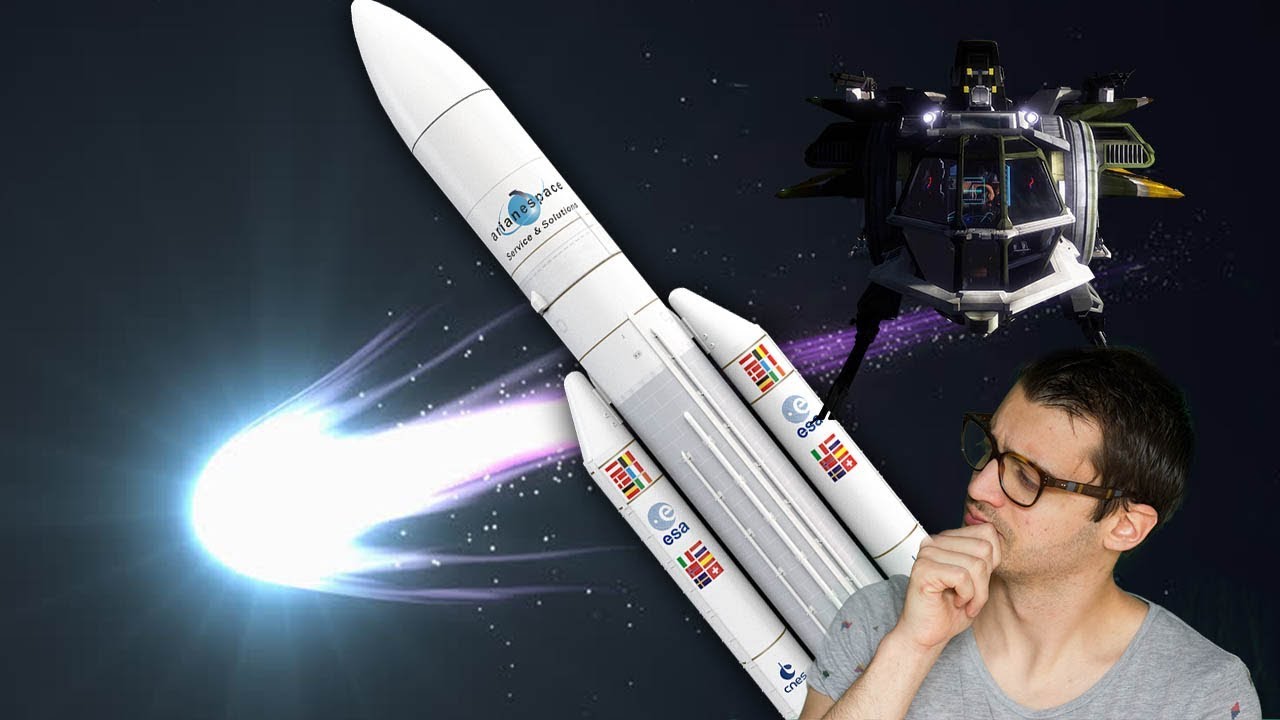
Petite frayeur pour Ariane / Star citizen patch Pré 3.1 - EC
A bit of a scare for Ariane / Star Citizen Pre-3.1 patch - EC
Keywords
Summary
158 words
Critical Evaluation
Value of the Information & Strength of the Argument
The video provides valuable and accurate information on space news and Star Citizen development. The creator supports his explanations with clear reasoning and references to official sources, such as SpaceX’s plans for Mars ISRU and statements from Chris Roberts. The argumentation is solid, though some topics are covered briefly due to the Q&A format.
Scientific Rigor, Source Quality, Title Accuracy
The creator demonstrates scientific rigor by providing precise details and citing official sources, such as Arianespace and CIG. The title accurately reflects the content, and the video is well-structured. The inclusion of viewer questions and answers adds credibility, but the lack of in-depth citations for some claims slightly reduces the overall rigor.
121 words
Title / Content Match
The title accurately reflects the content, which covers both the Ariane incident and the Star Citizen pre-3.1 patch.
Quality & Reliability
7/10
The video provides accurate and up-to-date information on space news and Star Citizen development, based on official sources and announcements. The creator demonstrates good knowledge of the topics, but the content is primarily a summary of existing information rather than original research.
Key Moments
Markers derived by PSI from the transcript: the creator did not define chapters.
- Introduction and overview of the video's content.
- Answer to question about producing oxygen on Mars using electrolysis and Sabatier reaction.
- Discussion on the largest known comets, including nucleus size and tail length.
- Answer about when bright comets will be visible, mentioning upcoming comets in 2018.
- Analysis of the Ariane 5 anomaly and its impact on satellite orbits.
- Update on Star Citizen pre-3.1 patch and bug fixes.
- Discussion on the Hull C removal from the roadmap and design issues.
- Explanation of plans to reduce ship popping by spawning in hangars.
- Answer about translating 'Reverse the Verse' and future plans.
Cited Sources
- Hugo Lisoir on Twitch — The creator's Twitch channel, mentioned in the video description as a way to follow him.
Concurring Sources
- SpaceX Mars ISRU plans — SpaceX's official page on Mars plans, which includes information on producing propellant on Mars using local resources.
Contribution & Novelties
The video provides a concise and accessible summary of recent space news and Star Citizen updates, with practical explanations of technical concepts like ISRU and cometary phenomena. It adds value by addressing viewer questions directly and clarifying common misconceptions.
Pour aller plus loin :
- Sabatier reaction — The chemical reaction used to produce methane from CO2 and hydrogen, relevant to Mars ISRU.
- Comet — Overview of comets, their structure, and behavior, relevant to the discussion on largest comets.
- Ariane 5 — Background on the Ariane 5 rocket, relevant to the anomaly discussed.
- Star Citizen — Overview of the game and its development, relevant to the game-related questions.
107 words
Radar Profile
The radar profile shows balanced scores across all dimensions, with slightly higher scores in information quantity and quality, reflecting the video's informative nature. The technical level is moderate, suitable for a general audience interested in space and gaming.
💬 Sur les 30 commentaires analysés, le climat est très positif. Les spectateurs expriment leur appréciation pour la qualité des vidéos, la clarté des explications et la diversité des sujets abordés, avec quelques demandes de contenu supplémentaire sur des sujets spécifiques comme le télescope James Webb.